
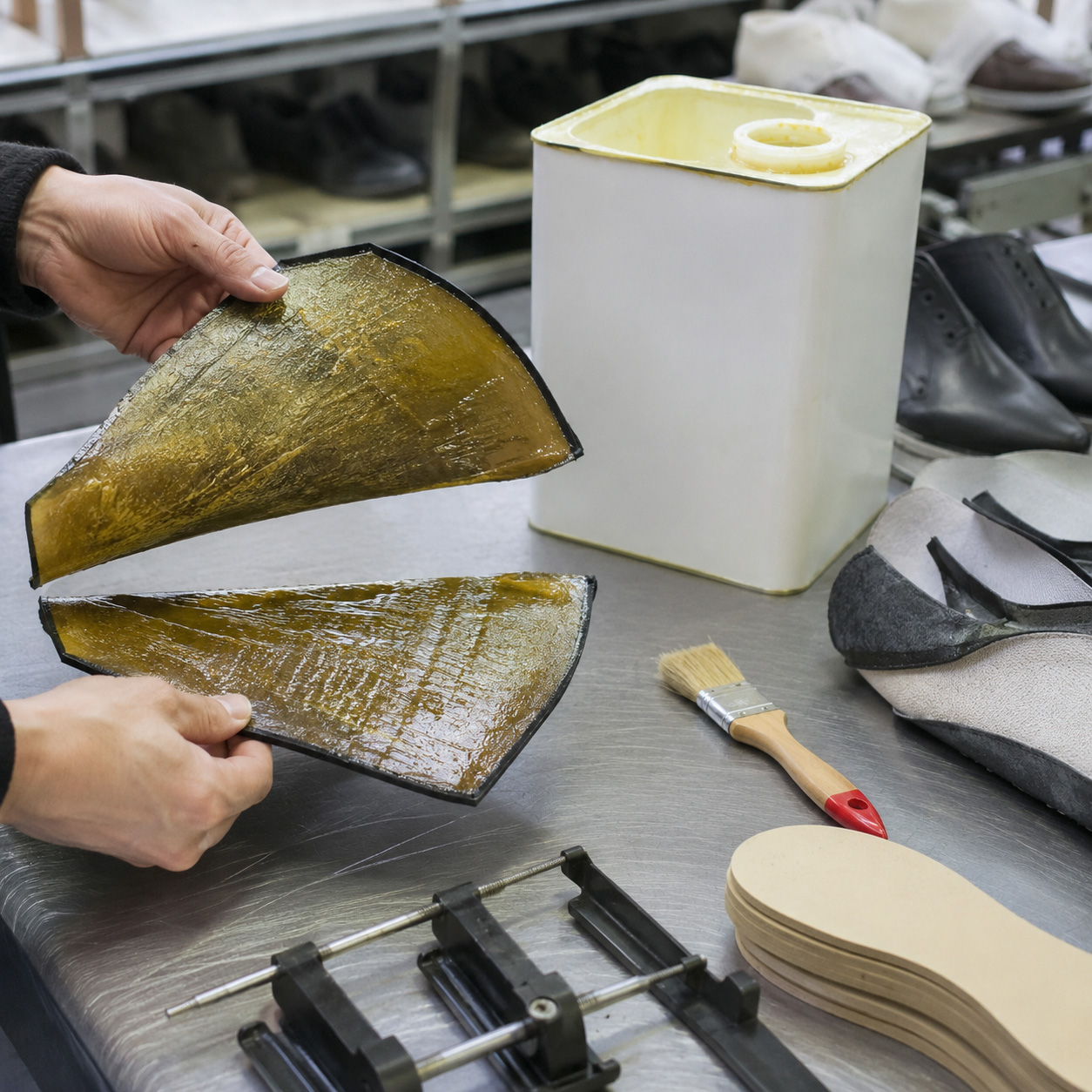
Yellow Neoprene Contact Adhesive For Shoe Upper Lamination, ShoeMaking Chloroprene Rubber Glue
Booth| Model Number | GLUE-NEO-01 |
| Brand | GISMA Guangzhou |
| Net Weight | 4.7 kg |
Yellow Neoprene Contact Adhesive For Shoe Upper Lamination, Shoe-Making Chloroprene Rubber Glue
Model: GLUE-NEO-01
| Specification | Parameter Details |
|---|---|
| Main Raw Material | Chloroprene rubber (neoprene) based contact adhesive |
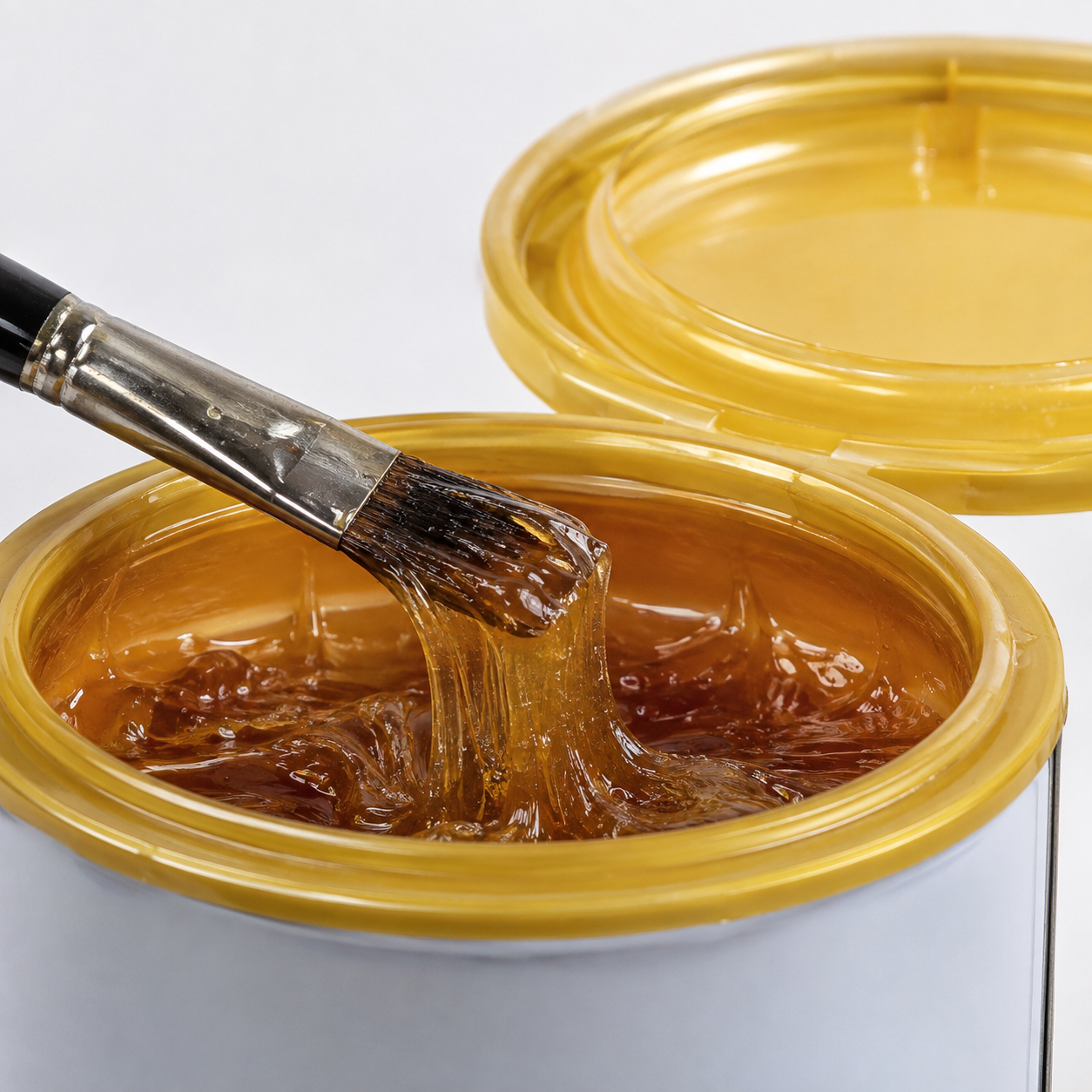
| Appearance | Uniform yellow viscous liquid |
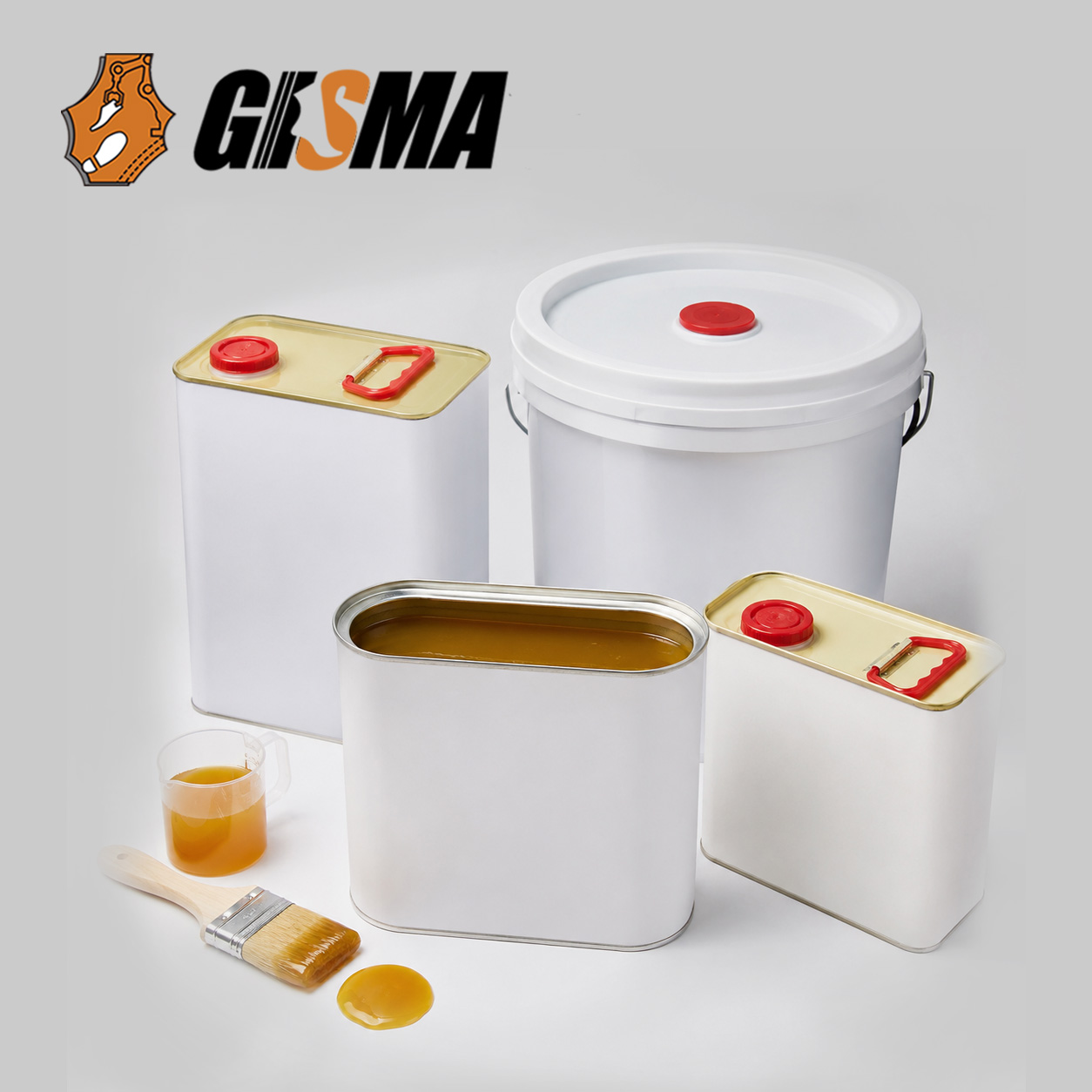
| Unified Packing Spec | 5L square tin can |
| Solid Content | 28%–32% |
| Open Time | 15–35 mins (varies with workshop temperature and humidity) |
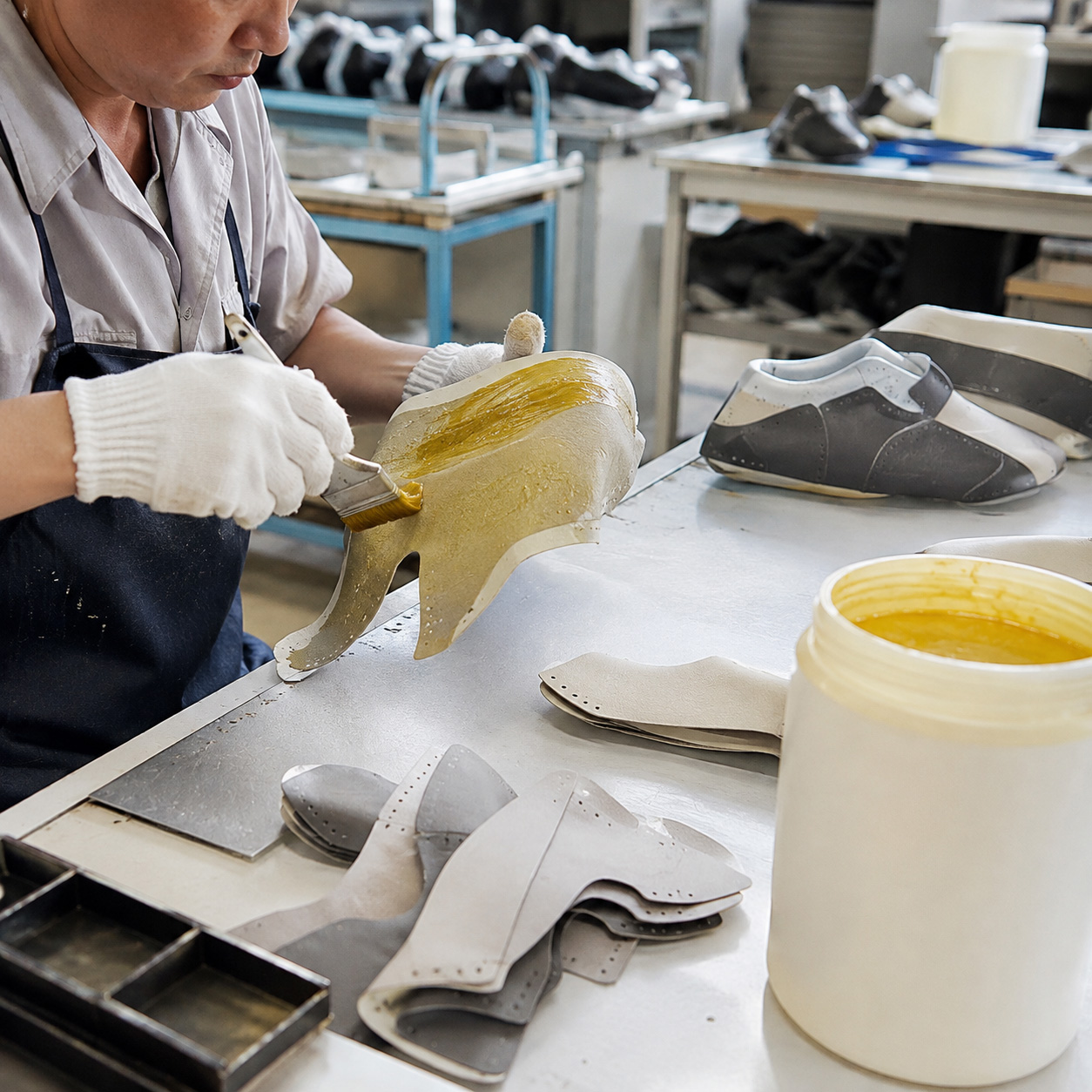
| Bonding Principle | Contact bonding: apply adhesive on two surfaces respectively, press tightly after tack formation |
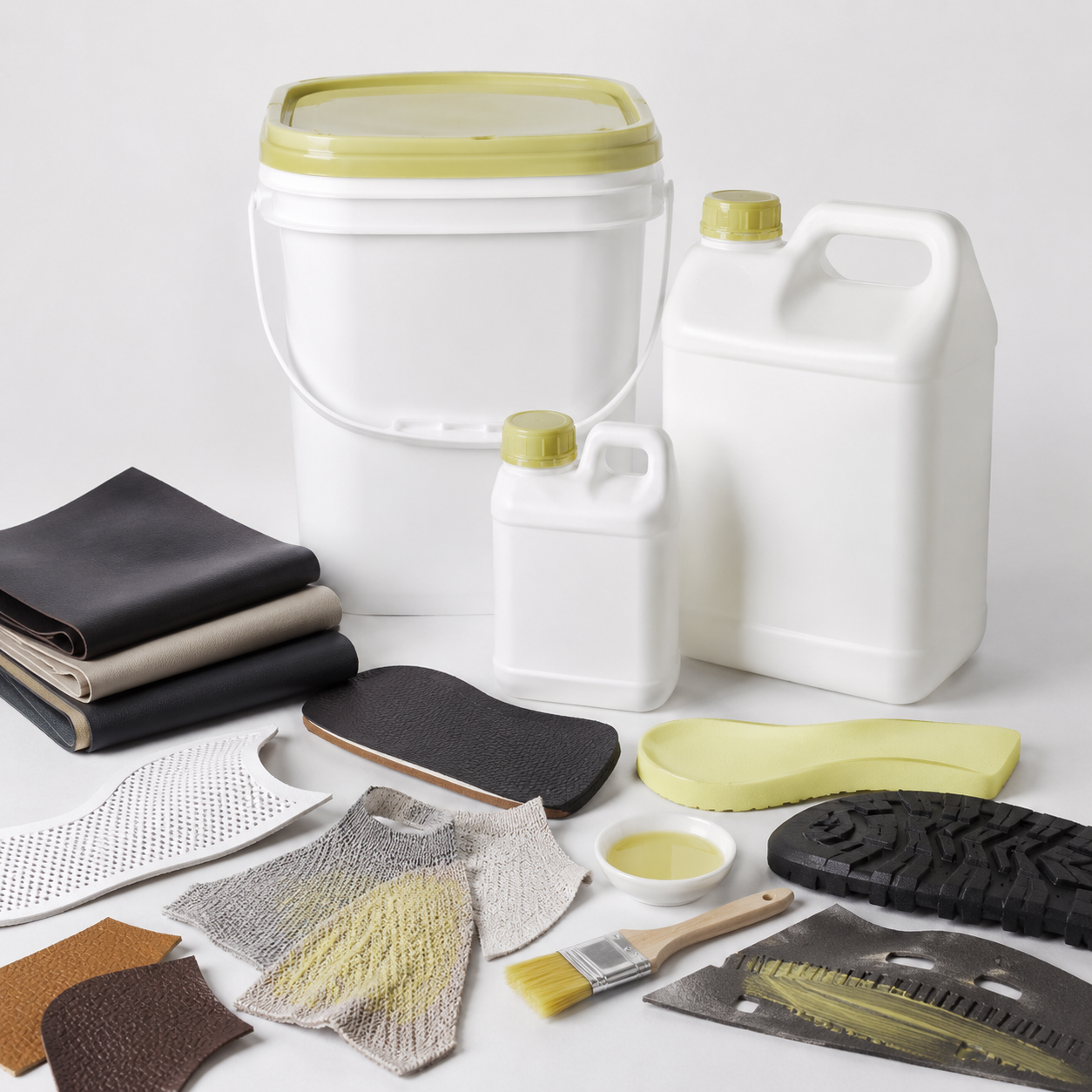
| Applicable Materials | Genuine leather, PU synthetic leather, microfiber, EVA, rubber outsole, flyknit fabric, canvas for shoemaking |
| Flash Point | Flammable liquid, keep far away from open flame strictly |
| Shelf Life | 12 months under sealed cool and ventilated storage |
| Export Carton Pack Quantity | 6 cans per carton (5L standard square tin) |
| Carton Dimension(L×W×H) | 330×270×290 mm |
| Carton Net Weight | 27.0 KG |
| Carton Gross Weight | 30.2 KG |
| Net Weight Per Can | Approx 4.5 KG |
Yellow Neoprene Contact Adhesive
This shoemaking contact adhesive adopts chloroprene rubber formula to deliver powerful initial tack and permanent bonding strength and resist peeling after shoe shaping, featuring broad material compatibility for almost all mainstream upper and sole raw materials in shoemaking industry, moderate viscosity for easy brush‑coating without sagging on vertical vamp surfaces, excellent heat‑resistant and anti‑aging properties to keep bonded joints stable under temperature variation in daily wear, and flexible dried glue film that will not harden or crack under repeated shoe bending.
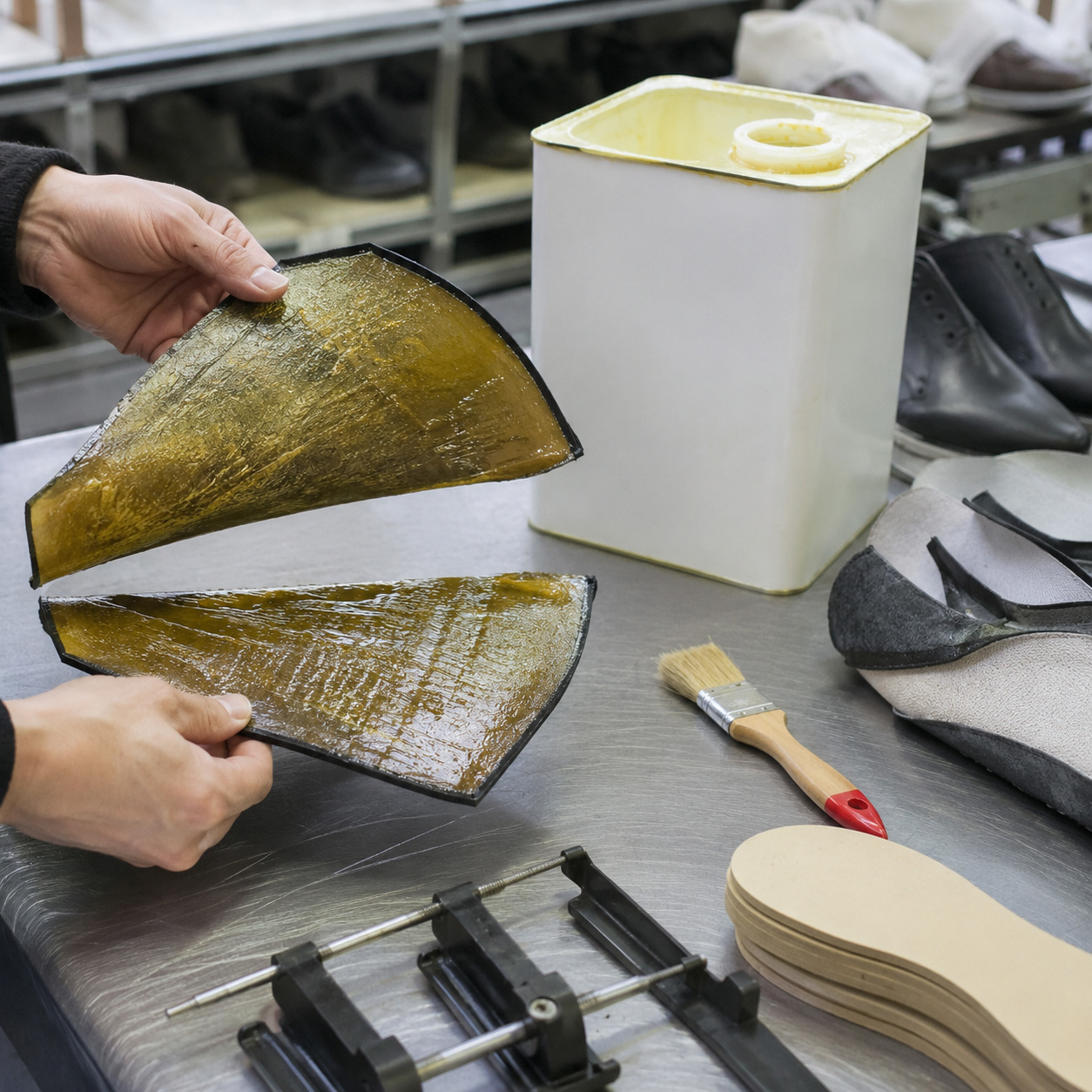
Unified 5‑liter square tin packaging facilitates warehouse management and batch purchasing for continuous production, strict factory filtration lowers impurities to prevent pinholes and bonding failures, and consistent performance supports long‑term mass‑production operation in shoemaking workshops; as special bonding adhesive for shoemaking processing, it is used for lamination of upper cut pieces, toe puff and heel counter fixation, pre‑bonding between upper and midsole and preliminary fitting for rubber outsoles in footwear industry, suitable for bonding leather bags, leather belts and handmade leather crafts in leather‑goods sector, applied for composite bonding of EVA foam, rubber sheets and diverse synthetic leathers in craft processing, and serves as adhesive matching for new shoe style trial assembly and sample testing within sample‑making workshops.
For operation, slightly polish bonding surfaces to wipe off dust and release agents prior to gluing for better adhesion, apply thin uniform coats on both bonding substrates and avoid excessive glue buildup, press aligned parts firmly when adhesive turns tacky without wet stickiness to fingertips, keep sufficient workshop ventilation and strictly ban smoking and open flames during handling, seal tin can tightly right after usage to stop solvent volatilization and glue thickening, and carry out pre‑production bonding tests with real shoe materials before mass‑processing.
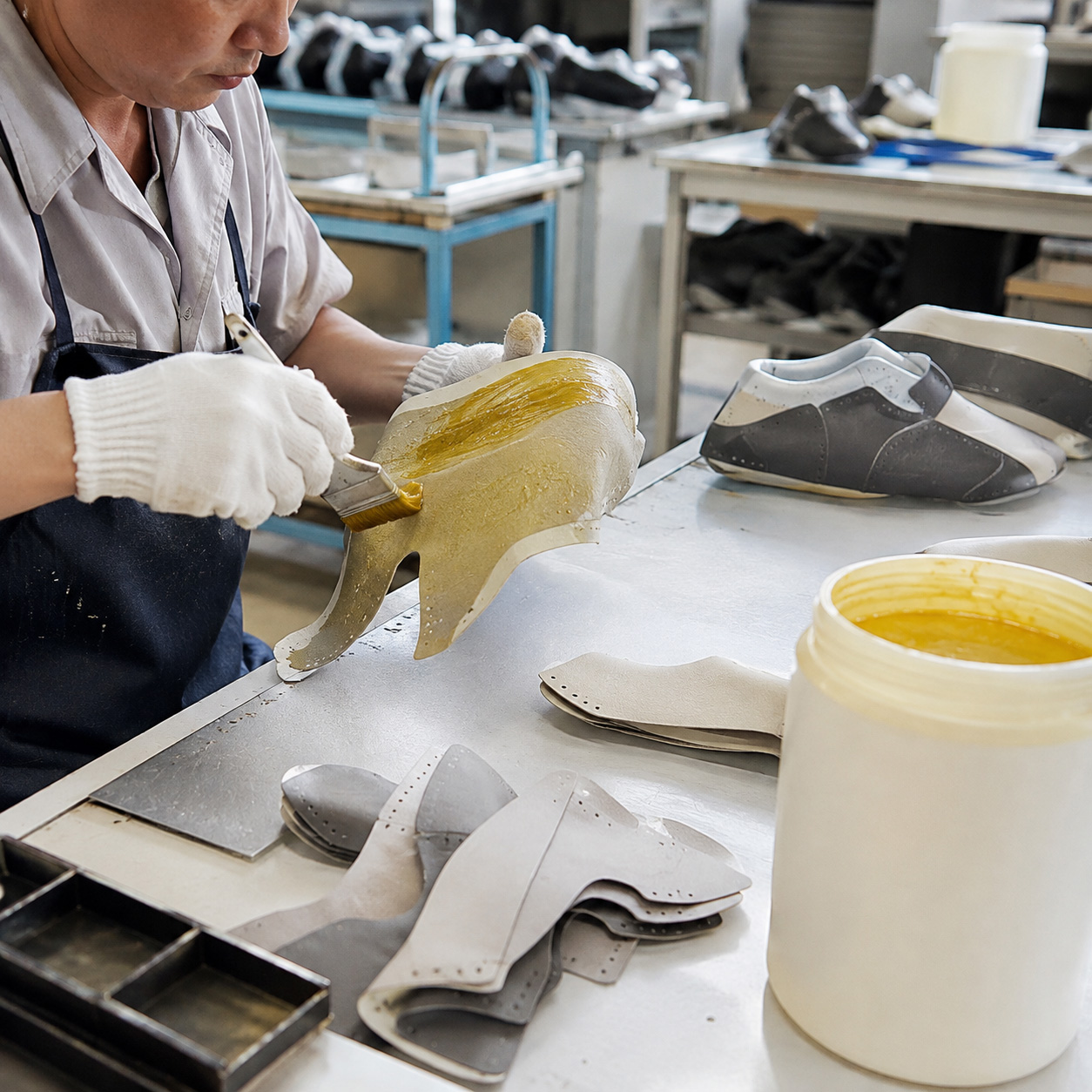
Optimized solvent formula brings lower odor and reduced VOC emission to satisfy mainstream footwear environmental standards, outer carton uses recycled corrugated cardboard with water‑based ink printing while tin cans are recyclable after professional cleaning, dependable bonding capability cuts finished‑shoe degumming defects and production material waste, full‑batch quality traceability is supported and complete MSDS together with material test reports can be supplied for overseas brand audits, and standardized workshop ventilation guidelines protect workers’ occupational health to fulfill corporate social responsibility, this neoprene‑based contact adhesive comes in uniform 5L square tins and bonds genuine leather, PU leather, microfiber, EVA, rubber, flyknit and canvas reliably, users must keep it away from open fire with good ventilation given its flammability, and it is also applicable for leather‑goods making and foam composite work with available MSDS, VOC and safety certification documents for supplier audit.