
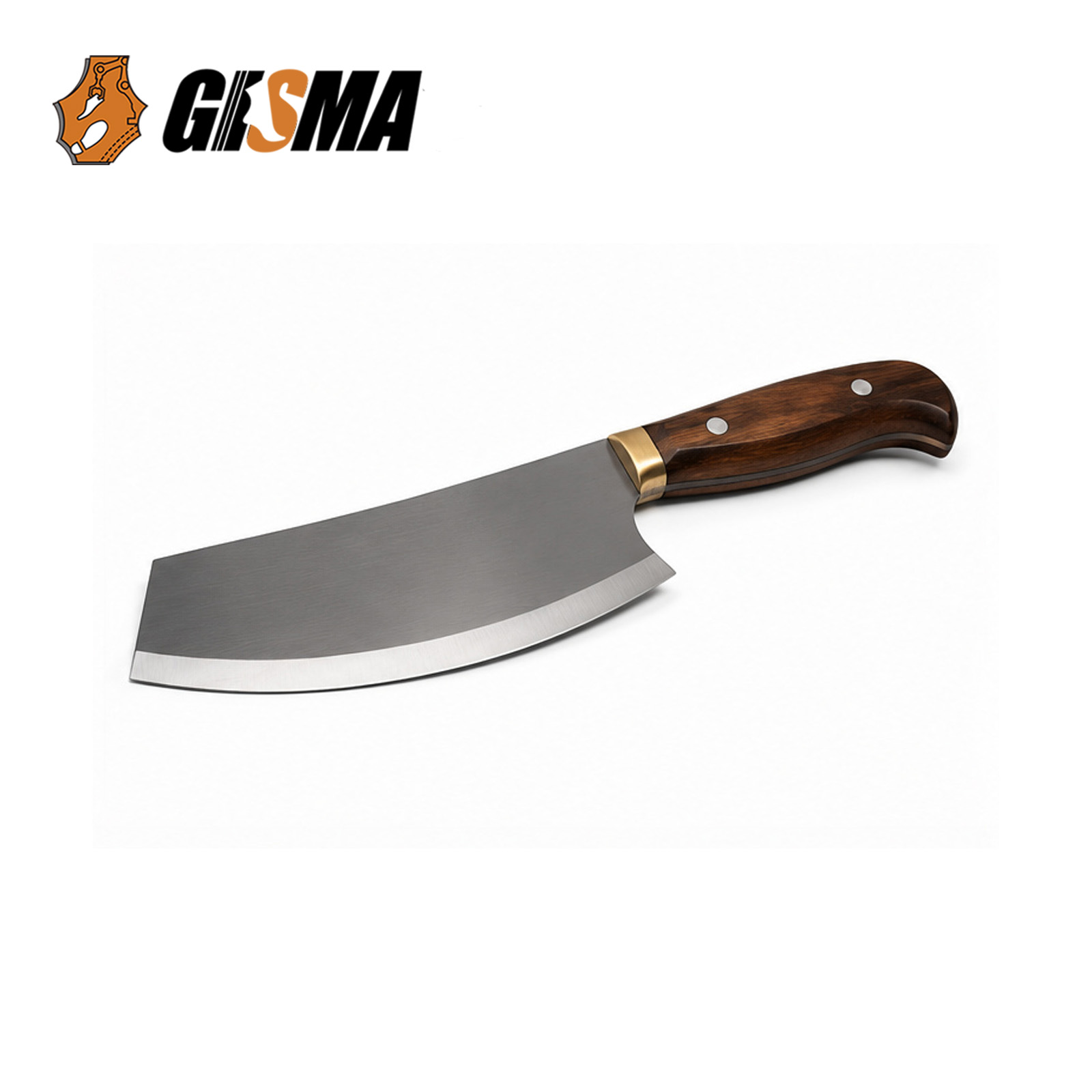
Clicker Knife For Shoe Making, High Carbon Steel Hand Cutting Knife For Leather PU Fabric Manual Pattern Blanking
Booth| Model Number | CK-SHOE-3S (3-size set) |
| Brand | GISMA Guangzhou |
| Net Weight | 383.3 g |
Clicker Knife For Shoe Making, High Carbon Steel Hand Cutting Knife For Leather PU Fabric Manual Pattern Blanking
Model:CK-SHOE-3S (3-size set)
| Specification | Parameter Details |
|---|---|
| Blade Material | Hardened high carbon steel, fine edge grinding |
| Handle Material | Solid walnut wood + brass ferrule + metal rivet fastening |
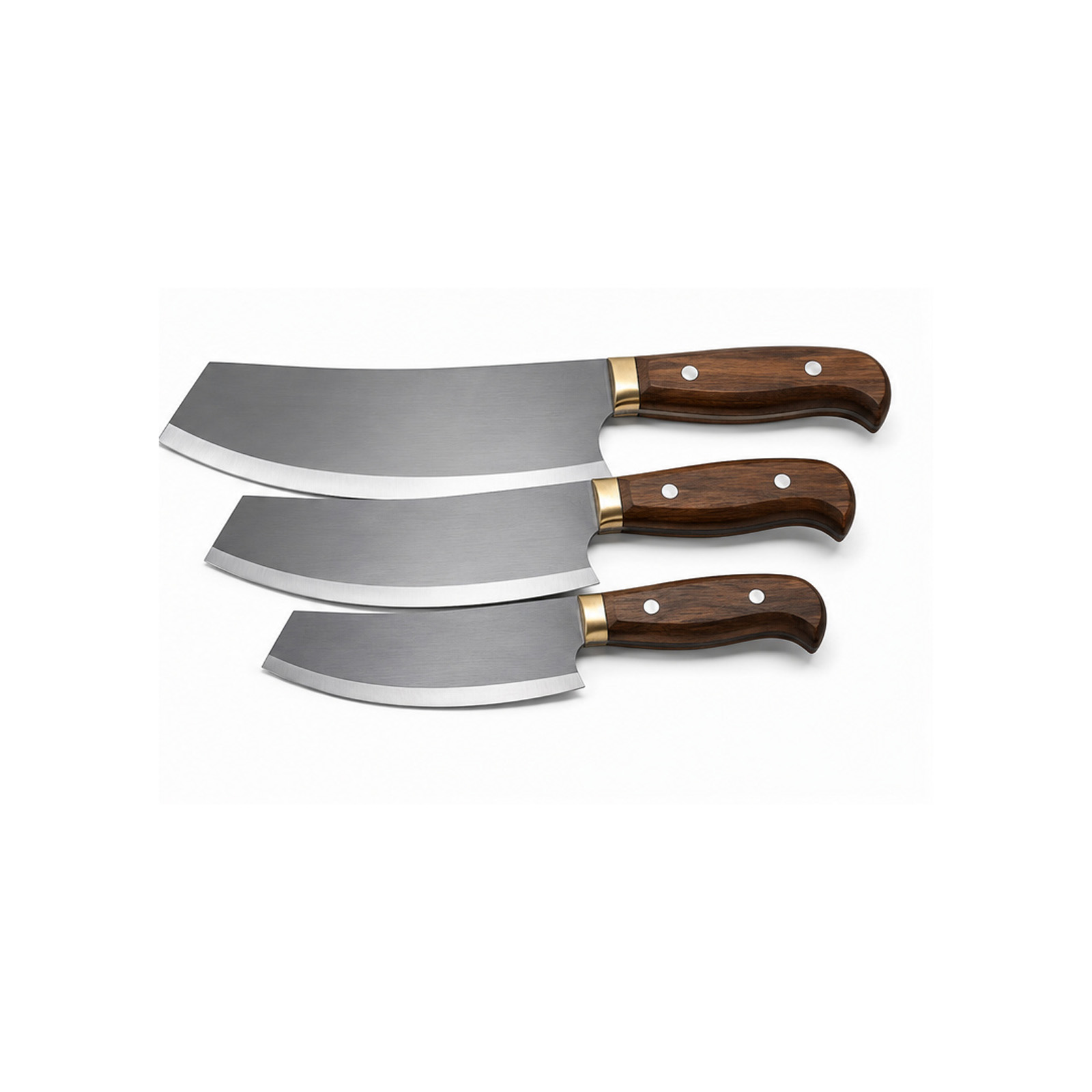
| Size Options | Large / Medium / Small three blade lengths for selection |
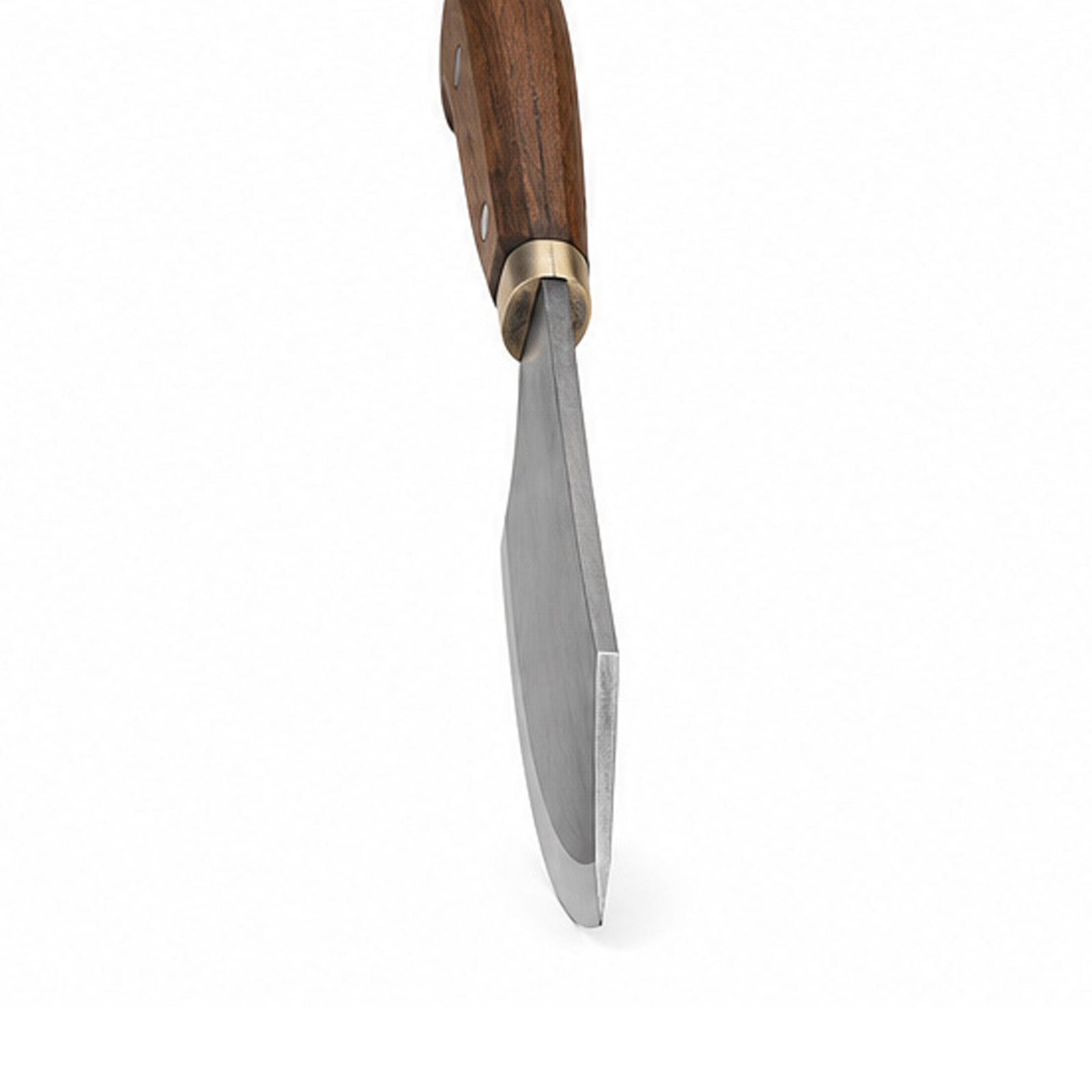
| Blade Edge Design | Curved sharp edge for smooth cutting of flexible shoe materials |
| Single Set Net Weight | 1.15 KG |
| Single Set Packaging | Fabric blade sleeve + individual gift box |
| Quantity Per Export Carton | 30 sets |
| Carton Dimension (L×W×H) | 480×340×200 mm |
| Carton Net Weight | 34.5 KG |
| Carton Gross Weight | 38 KG |
Clicker Knife For Shoe Making, High Carbon Steel Hand Cutting Knife
This professional hand‑curved cutting knife for shoemaking features a quenched‑hardened high‑carbon‑steel blade with sufficient hardness and long‑lasting sharpness, minimizing frequent resharpening during long continuous workshop cutting operations and reducing tool‑maintenance working hours; its curved‑profile blade follows shoe‑material contours to deliver smooth cutting trajectories and clean burr‑free sections without fabric tearing or edge damage when cutting genuine leather, PU synthetic leather, paper patterns and thin EVA sheets.
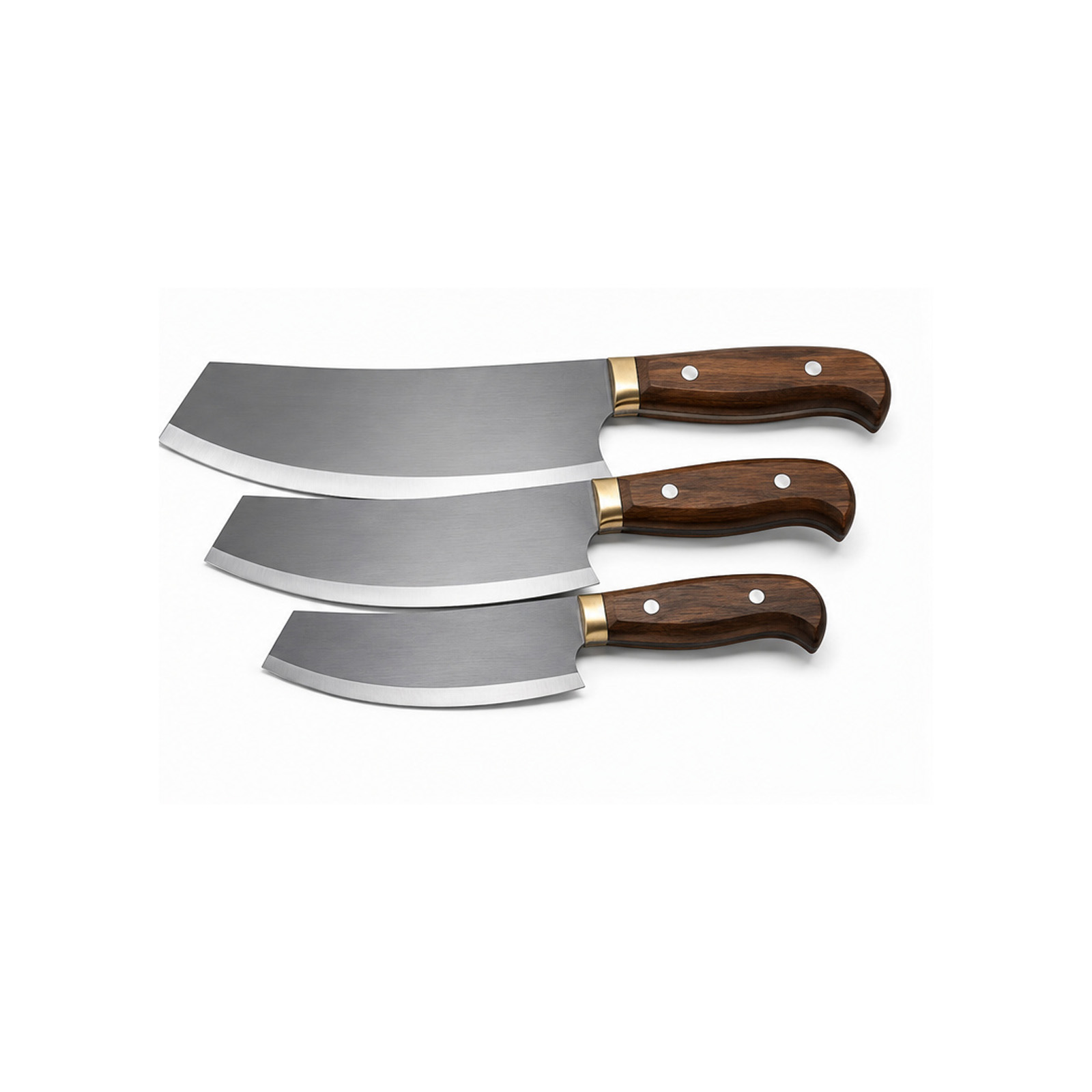
The handle is integrally machined from solid walnut with anti‑slip surface polishing and ergonomic curved shaping to relieve palm and wrist fatigue during prolonged manual pattern‑making and cutting, while a brass reinforcing ferrule at the blade‑handle joint forms a double‑locking structure to prevent blade loosening and offset, block moisture ingress and avoid metal rusting as well as wooden‑handle cracking caused by dampness. Supplied with three sizes of interchangeable blades, the large blade is for rough cutting of large‑area leather stock, the medium blade for regular pattern trimming, and the small pointed blade for fine cutting of narrow arcs and detailed contours, covering all manual‑cutting requirements in shoe factories.
The mirror‑polished blade with anti‑rust coating resists oxidation and rust under glue‑rich, humid conditions in pattern‑making rooms, delivers stable accurate cutting with low dimensional error and serves as a core tool for manual pattern drafting, template trimming and small‑batch shoe‑material cutting. Multiple metal rivets reinforce handle‑blade assembly for outstanding torsional resistance to prevent wooden‑handle cracking and blade twisting‑off hazards under cutting loads. Optimized blade thickness balances sharp cutting performance and impact toughness, resisting bending‑deformation under normal downward cutting force and retaining straight cutting edges even with frequent cutting of hard thin sheets.
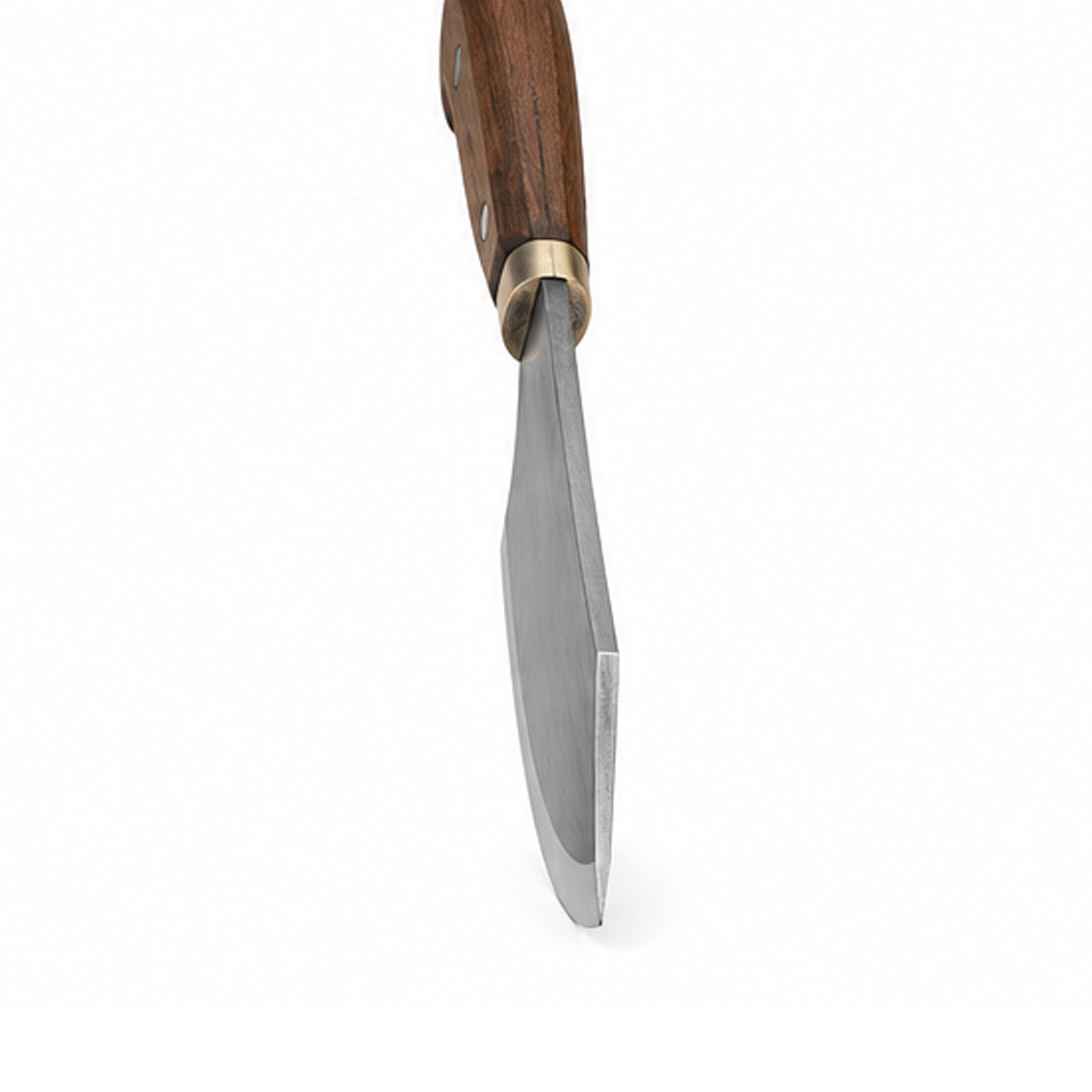
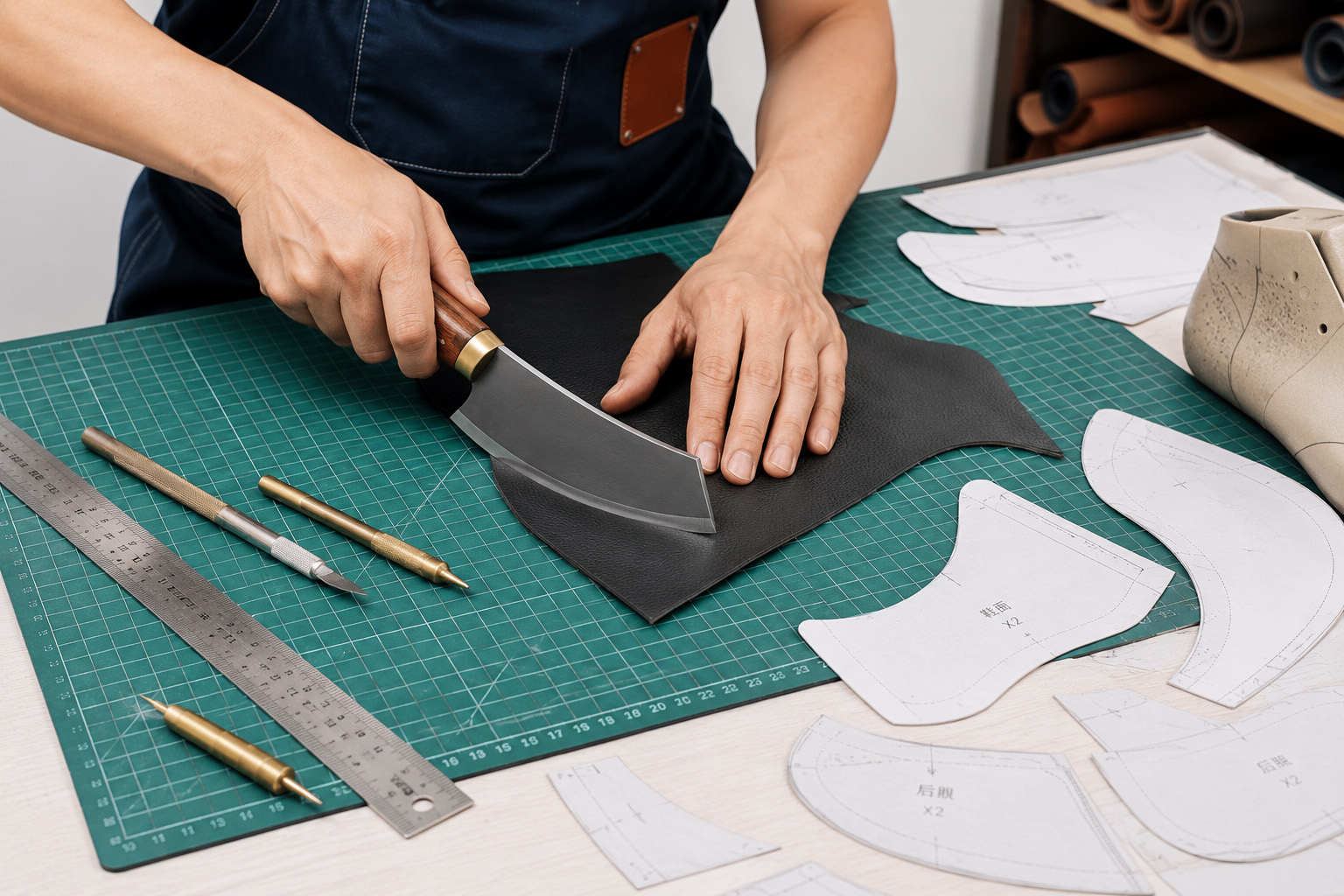
Hand‑ground cutting edges can be easily resharpened with ordinary oil stones after dulling for simple maintenance, well‑suited for repeated high‑frequency use in shoe‑sample‑development workshops. Widely adopted in shoemaking pattern‑making rooms, footwear sample‑development studios, small‑scale custom‑shoe workshops and leather‑processing workshops, this hand‑cutting curved knife is mainly used for manual blanking, contour trimming and detailed profiling of genuine leather, PU synthetic leather, lining fabric, hard paper patterns and thin EVA foam sheets, supporting pattern development, new‑product trial‑production and small‑batch fabric‑cutting tasks.
Follow standardized operating procedures: select matching‑size blades according to leather dimension and contour intricacy before cutting, lay cutting mat flat on workbench and place leather smoothly on the mat, hold the knife and advance steadily along paper‑pattern outlines with even vertical downward force, avoid lateral twisting‑pulling to prevent blade deformation and edge chipping; wipe off leather debris and glue stains from blade surface and apply a thin layer of anti‑rust oil after daily work, and fit the dedicated blade protector over edges during storage and transportation to avoid impact chipping and scratches on other tools. For storage, keep knives inside dry‑well‑ventilated dedicated tool cabinets away from moisture to prevent blade rusting and walnut‑handle mildew, store separately from sharp hard tools such as metal awls and heavy knives to avoid polished‑surface scratches and edge damage, and avoid long‑term direct sunlight exposure on walnut handles to prevent wood dehydration, cracking and warpage.
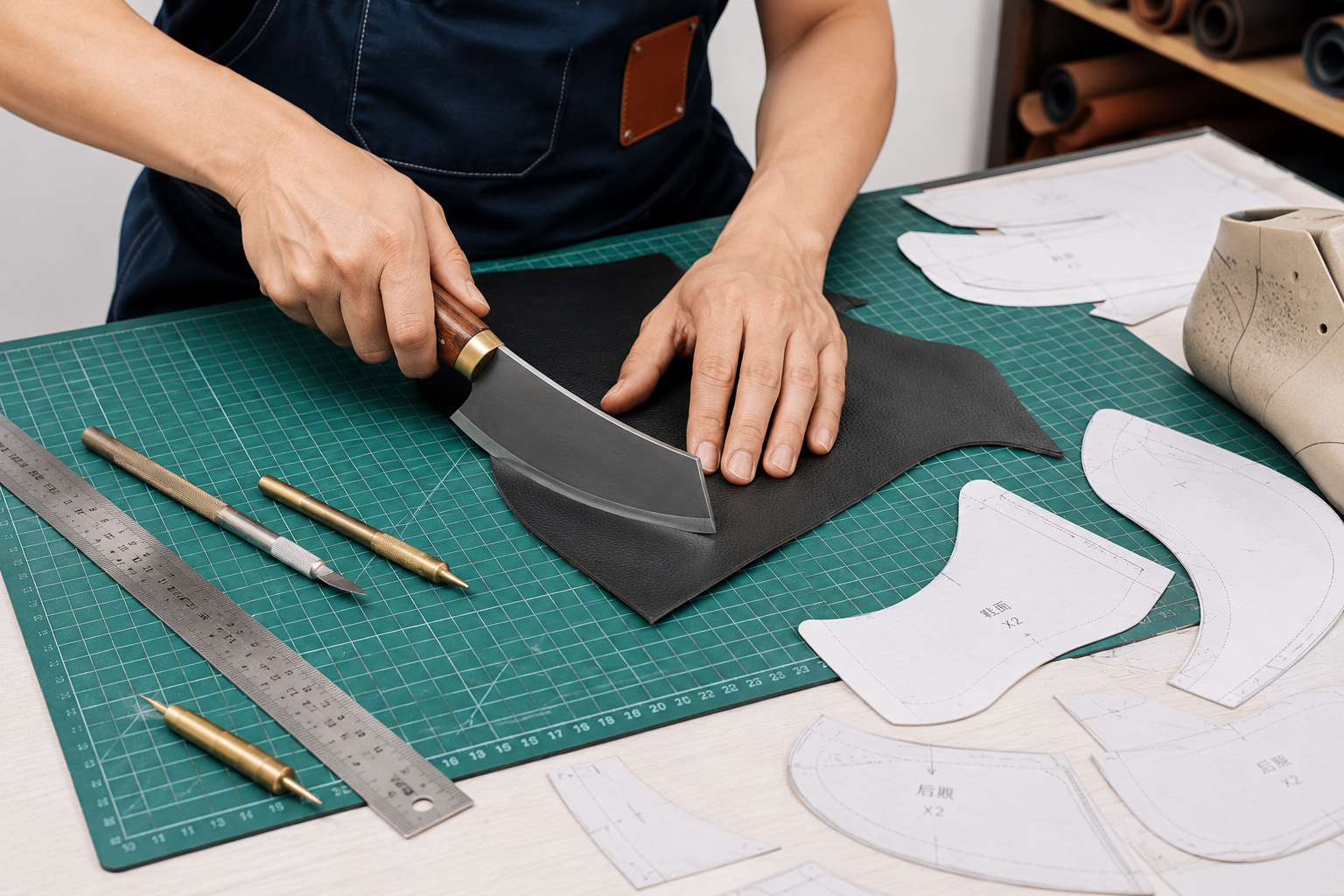
Implement graded inspection‑maintenance routines: wipe blade clean and check rivet tightness for timely reinforcement after daily use, inspect blade sharpness weekly and resharpen with oil stones when cutting resistance rises and cuts become rough. Never cut high‑strength hard materials such as metal and thick rigid plastic to prevent edge chipping and rolling‑over. Severely worn unrepairable blades can be collected for industrial‑metal recycling, while intact crack‑free walnut handles can be cleaned and refurbished for reuse to cut workshop waste discharge and support low‑carbon circular‑economy production. Boasting core advantages including long‑lasting sharp quenched high‑carbon‑steel blade, curved profile fitting shoe‑material contours, anti‑slip ergonomic solid‑walnut handle, brass ferrule for anti‑loosening and moisture‑blocking, multi‑size interchangeable blades for full‑process coverage, anti‑rust polished blade surface, stable cutting precision, rivet‑reinforced anti‑torsion structure and easy manual resharpening, this hand‑cutting knife is an indispensable basic hand tool for shoe‑pattern drafting and leather cutting in shoe‑factory pattern‑making rooms and custom‑shoe workshops.