
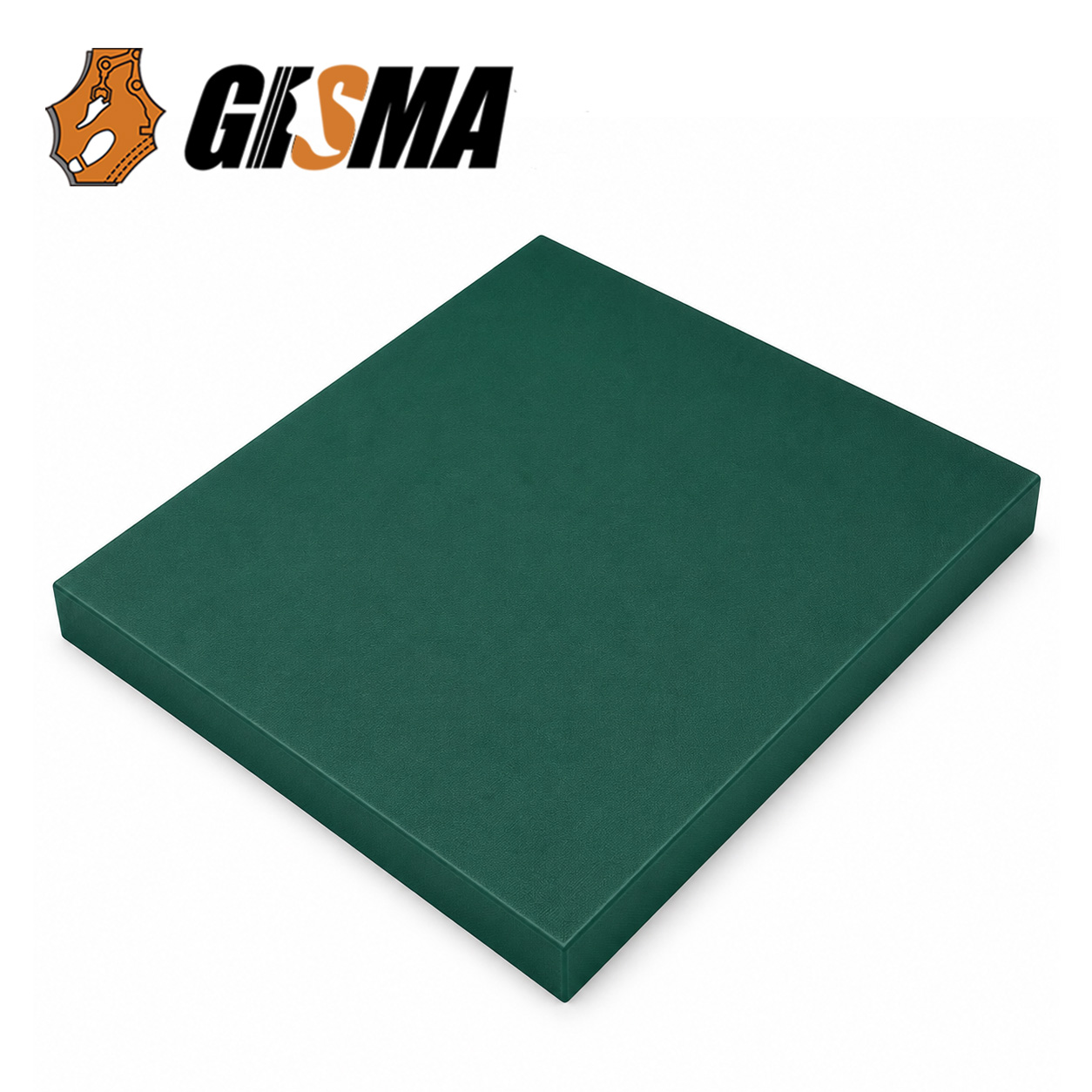
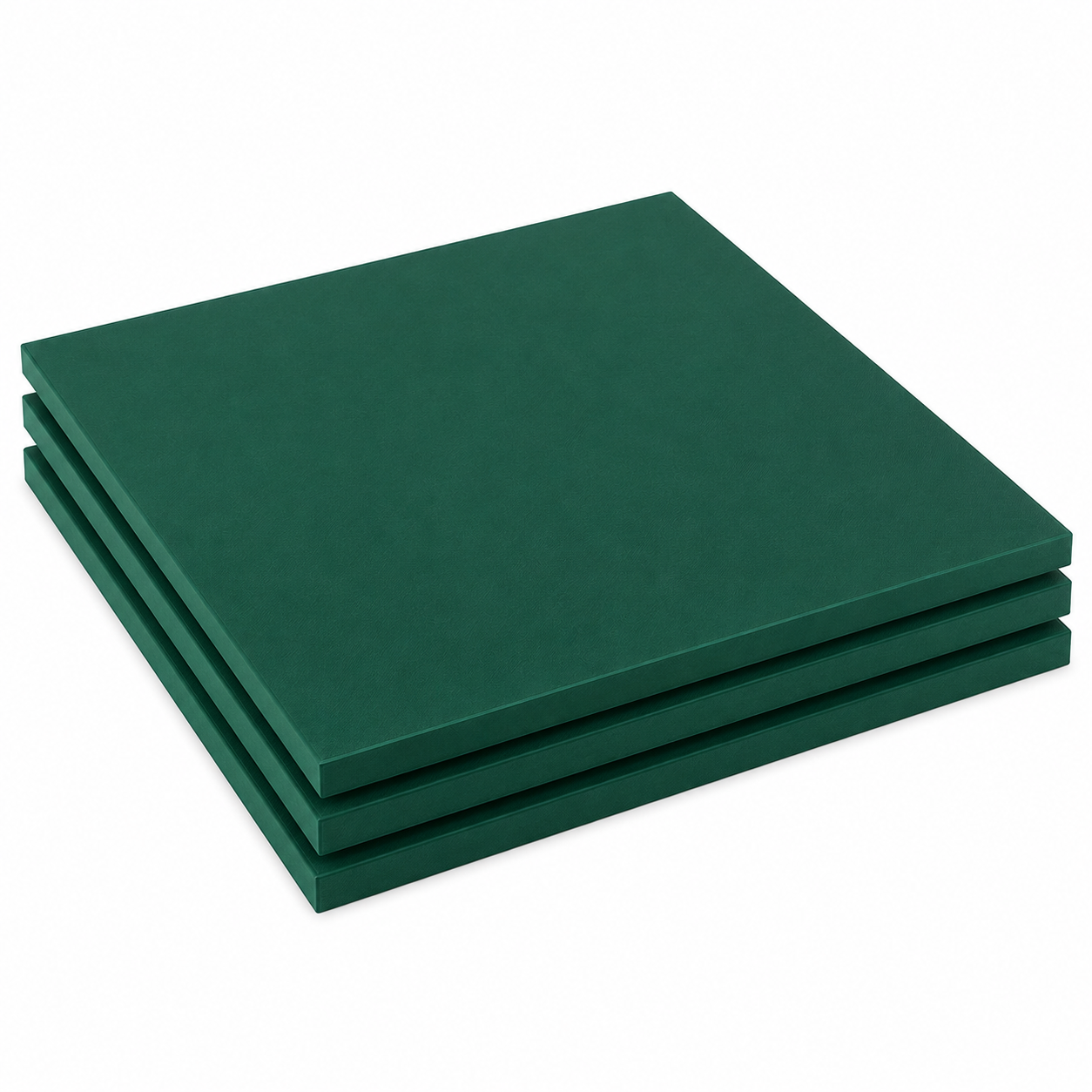
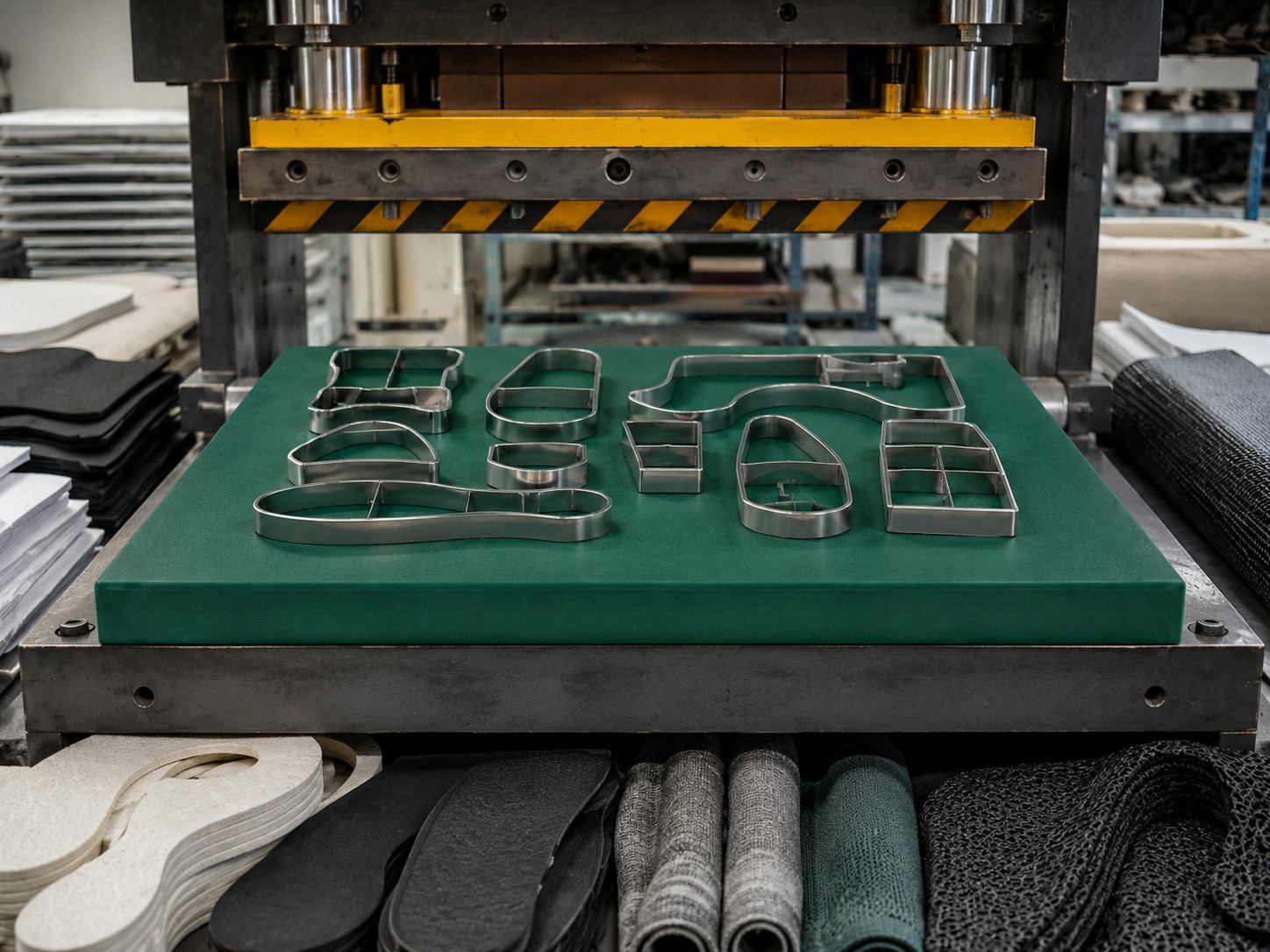
Die Cutting Rubber Pad For Shoe Making, Wear-resistant Cutting Press Board For Flyknit Fabric, Microfiber Leather, EVA Foam Blanking
Booth| Model Number | DC-RUBBER-PAD |
| Brand | GISMA Guangzhou |
| Net Weight | 28.8 kg |
Die Cutting Rubber Pad For Shoe Making, Wear-resistant Cutting Press Board For Flyknit Fabric, Microfiber Leather, EVA Foam Blanking
Model:DC-RUBBER-PAD
| Specification | Parameter Details |
|---|---|
| Core Material | High density wear-resistant vulcanized rubber composite |
| Standard Sheet Size | 1200mm×800mm; Custom cut-to-size available |
| Thickness Options | 15mm / 20mm / 25mm / 30mm |
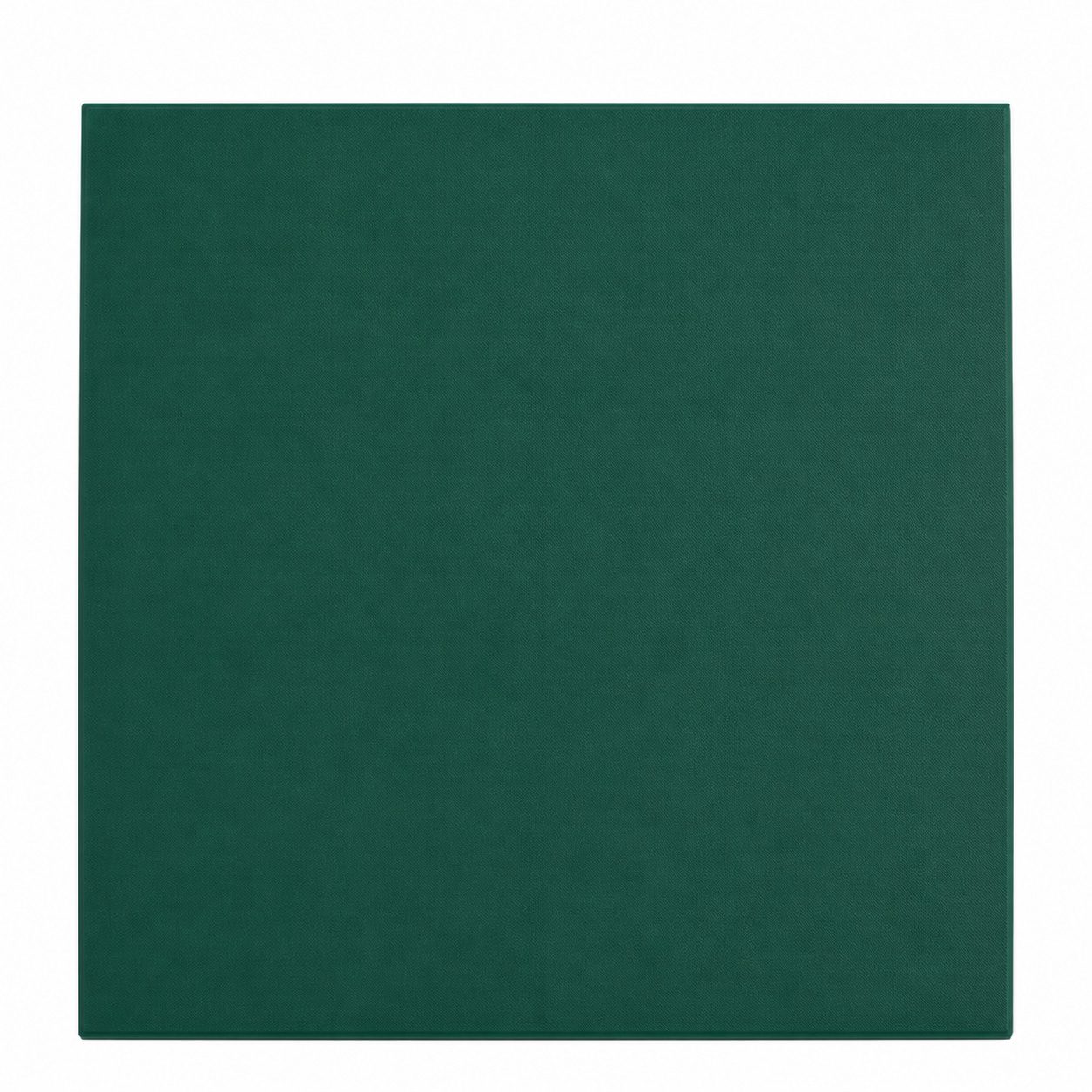
| Surface Feature | Matte dark green anti-slip texture, uniform compact internal structure |
| Single Sheet Weight | 28.8 KG (20mm benchmark thickness) |
| Packaging | Each rubber pad wrapped with dust-proof PE film, hard carton outer packaging |
| Quantity Per Export Carton | 2 pcs |
| Carton Dimension (L×W×H) | 1260×860×70 mm |
| Carton Net Weight | 57.6 KG |
| Carton Gross Weight | 64.3 KG |
Die Cutting Rubber Pad For Shoe Making
This high‑density vulcanized composite rubber die‑cut mat, integrally molded for shoemaking hydraulic clicker presses, features a compact pore‑free molecular structure with superior wear‑resistance and impact‑resistance to withstand long‑term high‑frequency reciprocating stamping by steel cutting dies, delivering far longer service life than ordinary rubber mats and lowering consumable replacement costs for shoe factories.
it provides excellent elastic buffering to evenly disperse press down‑force and cushion die impact, preventing die collapse and shoe‑material indentation while producing smooth burr‑free cut edges for fly‑knit fabric, engineering mesh, microfiber synthetic leather, suede PU, matte nubuck leather, EVA foam, non‑woven lining, TPU hot‑melt adhesive film, insole blanks, toe‑puff and heel‑counter support sheets, and its dense pore‑free vulcanized structure resists brittle cracking and surface peeling under continuous heavy‑duty stamping without generating rubber crumbs that contaminate cut shoe blanks.
Its matte dark‑green anti‑slip textured surface enhances friction among the mat, raw materials and steel dies to avoid material and die shifting during stamping, improve cut‑piece dimensional accuracy and reduce safety risks from die slipping. With well‑balanced hardness, it neither accelerates steel die wear nor causes incomplete cutting or defective blanks, and fits most die‑cutting processes for shoe‑making raw and auxiliary materials. Custom full‑plate or split sizes are available, and the standard 1200mm×800mm sheet is compatible with hydraulic clicker presses in sample‑development studios, small‑and‑medium‑sized processing plants and large automated shoe factories. Made with low‑odor eco‑friendly vulcanized formula, it releases no pungent smell or harmful volatile substances and meets both on‑site production control standards and export footwear safety test requirements.
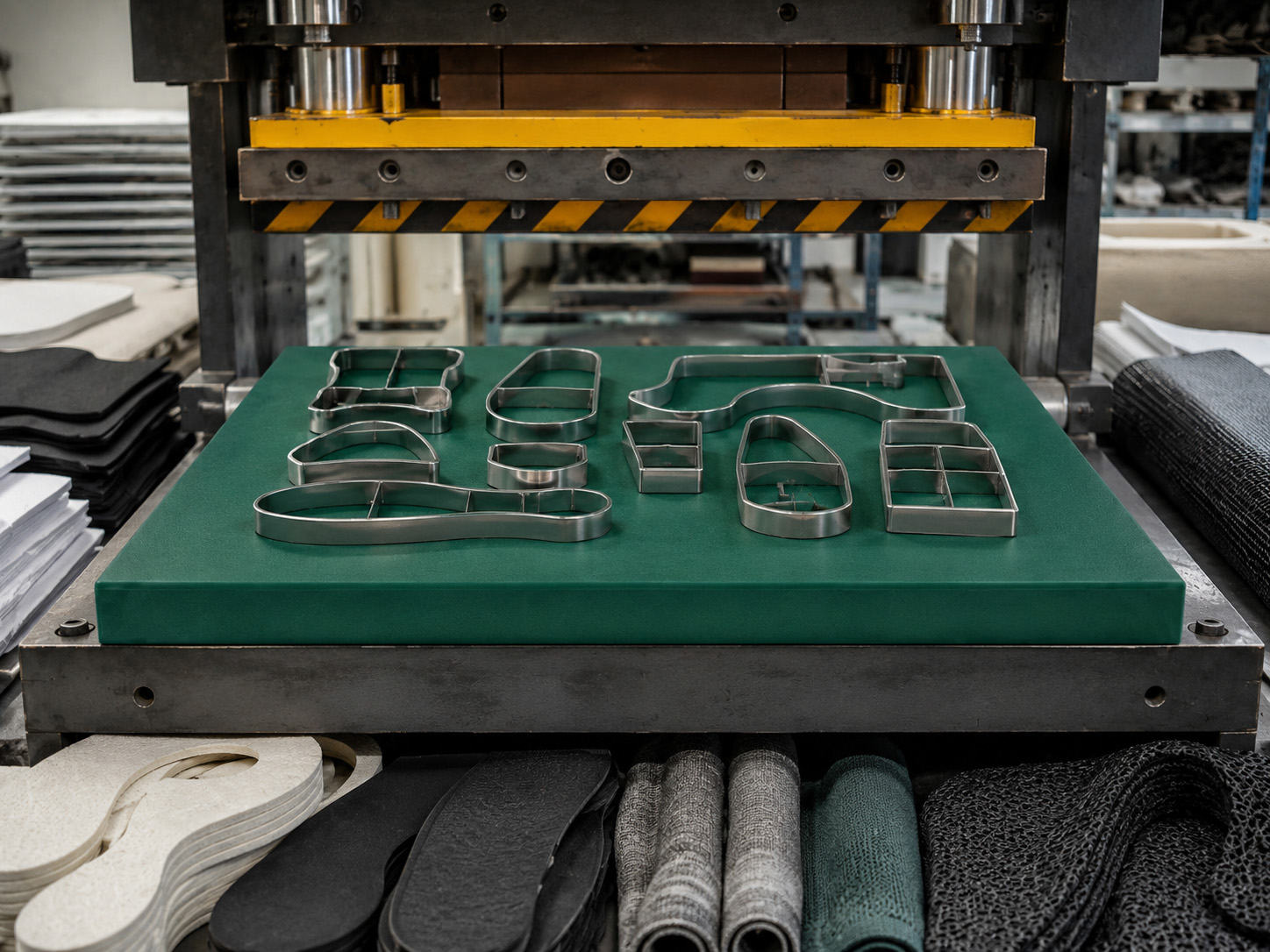
The mat has uniform thickness with zero factory‑out warpage or distortion, maintains flatness under long‑duration mass stamping to ensure even machine‑press force and avoid dimensional deviation of cut‑pieces caused by mat deformation. As an essential auxiliary consumable for shoemaking cutting workshops, sample‑development labs and automated production lines, it works with various hydraulic shoe‑material clicker presses for blanking of mainstream shoe‑materials and supports sample prototyping, small‑batch trial‑production and large‑scale mass‑production. Before installation, clean metal debris and impurities off the machine worktable, lay the mat fully flat against the table without tilting or hollow gaps, adjust stamping stroke and pressure according to shoe‑material thickness and hardness and avoid instantaneous over‑pressure; periodically rotate the mat for even wear and clear rubber debris and trimmings after daily work.
For storage, lay it flat in cool, dry and well‑ventilated space away from high temperature, direct sunlight, oil stains and corrosive solvents, avoid heavy compression and sharp‑object scratching, and wrap idle mats with PE dust‑proof film to slow oxidation. Factories shall implement daily, weekly and monthly graded inspection and maintenance routines, clean dirt, rotate mats timely and replace heavily worn or cracked mats. Discarded worn mats can be collected and sent to professional rubber recyclers for regeneration to realize waste recycling and support low‑carbon green production in shoe‑making plants.