
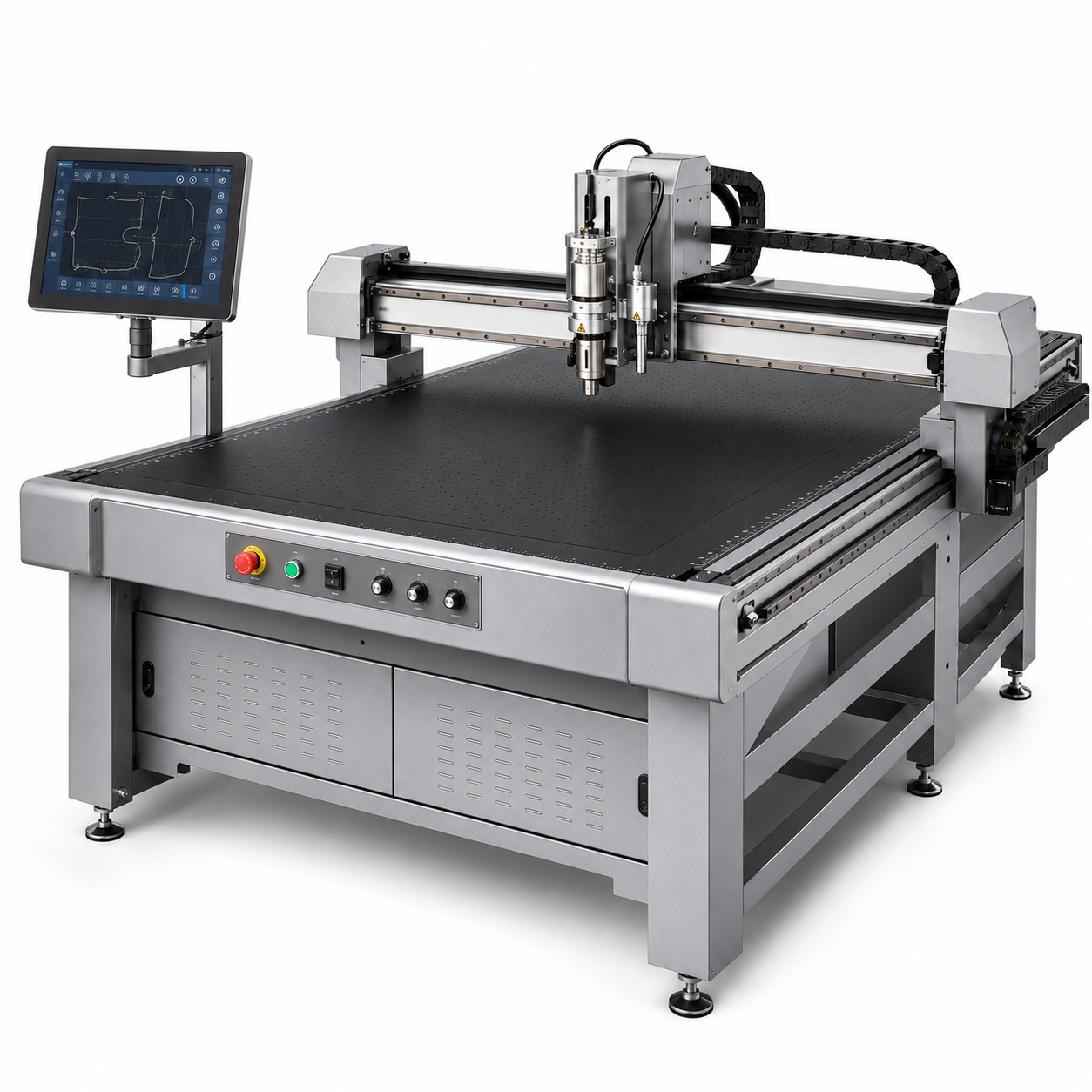
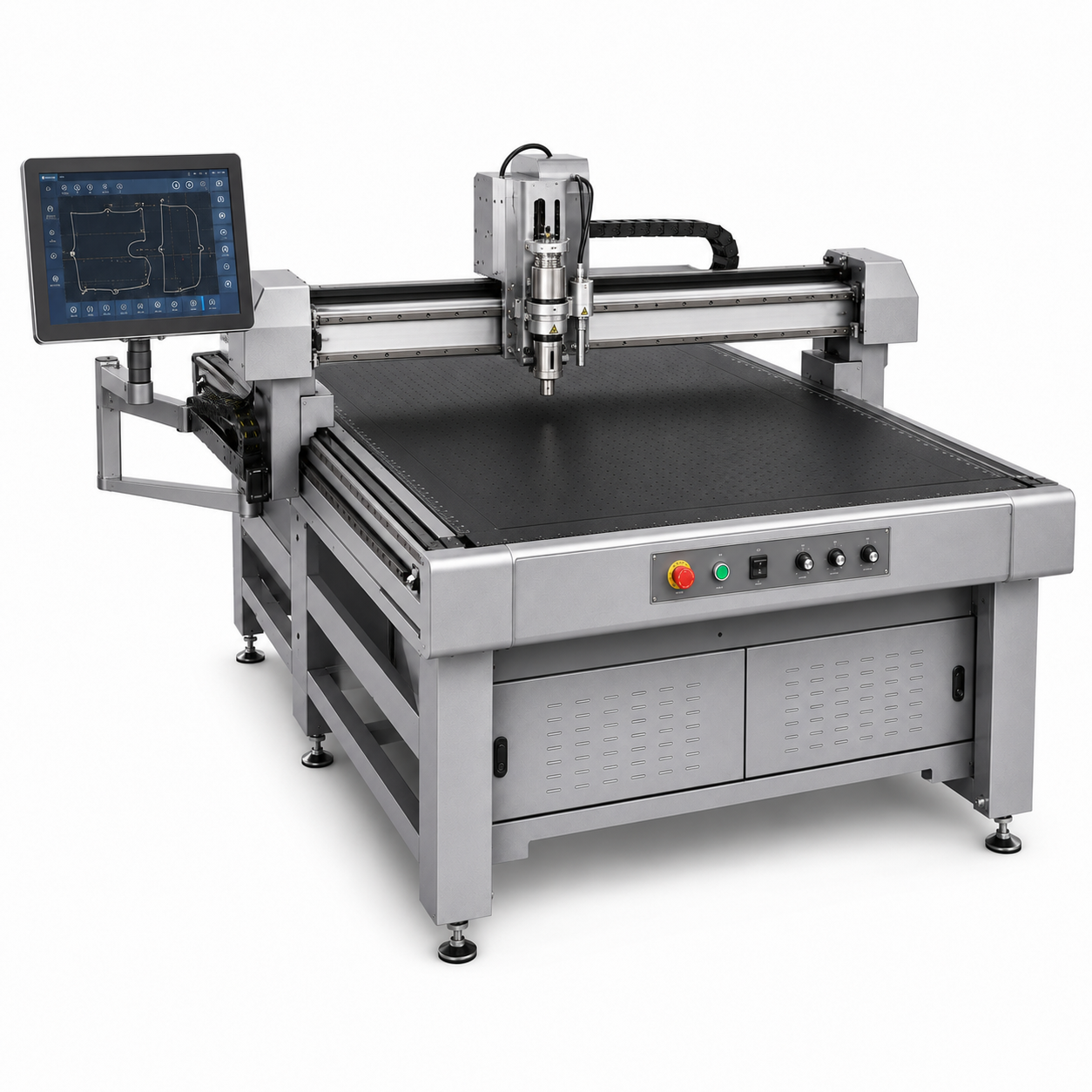
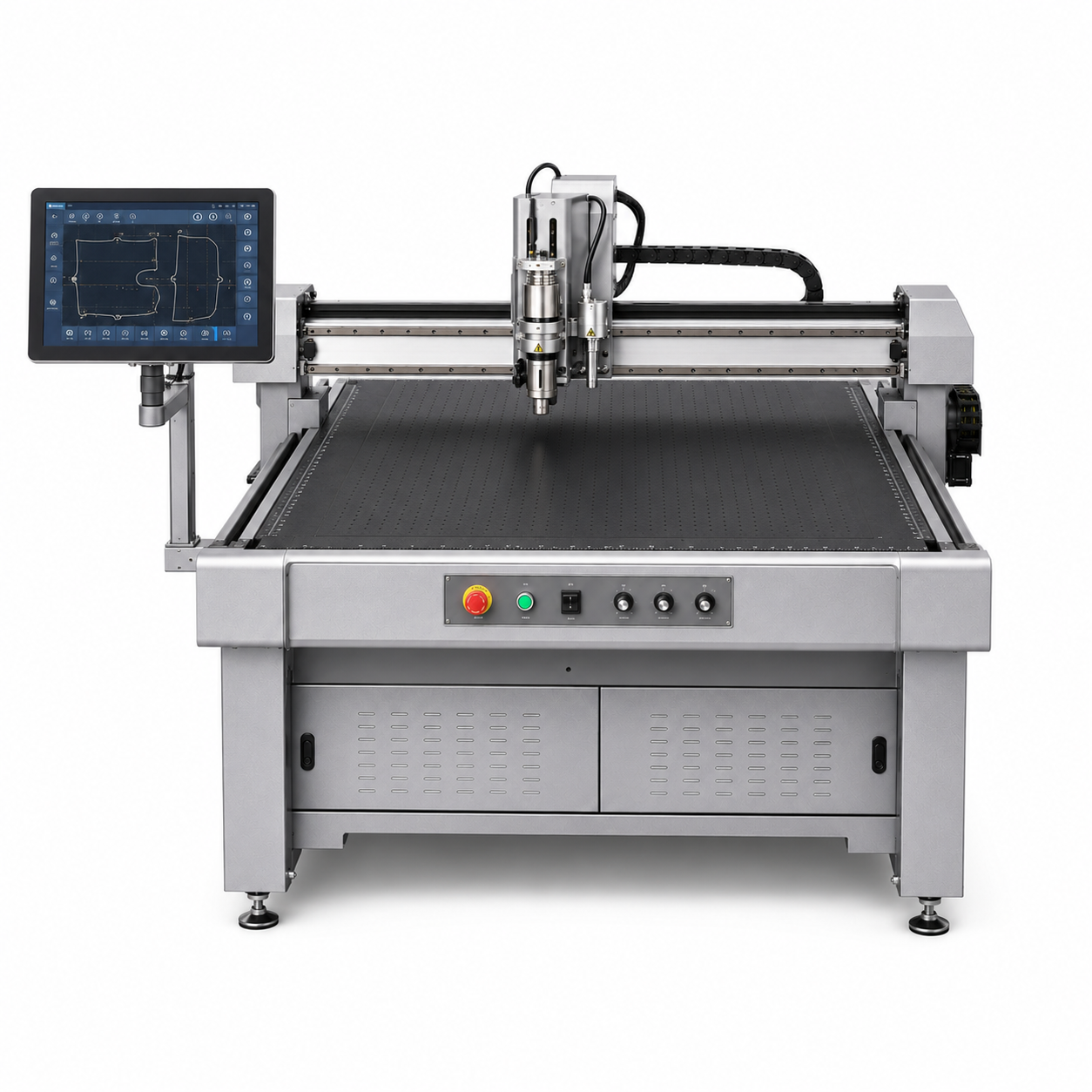
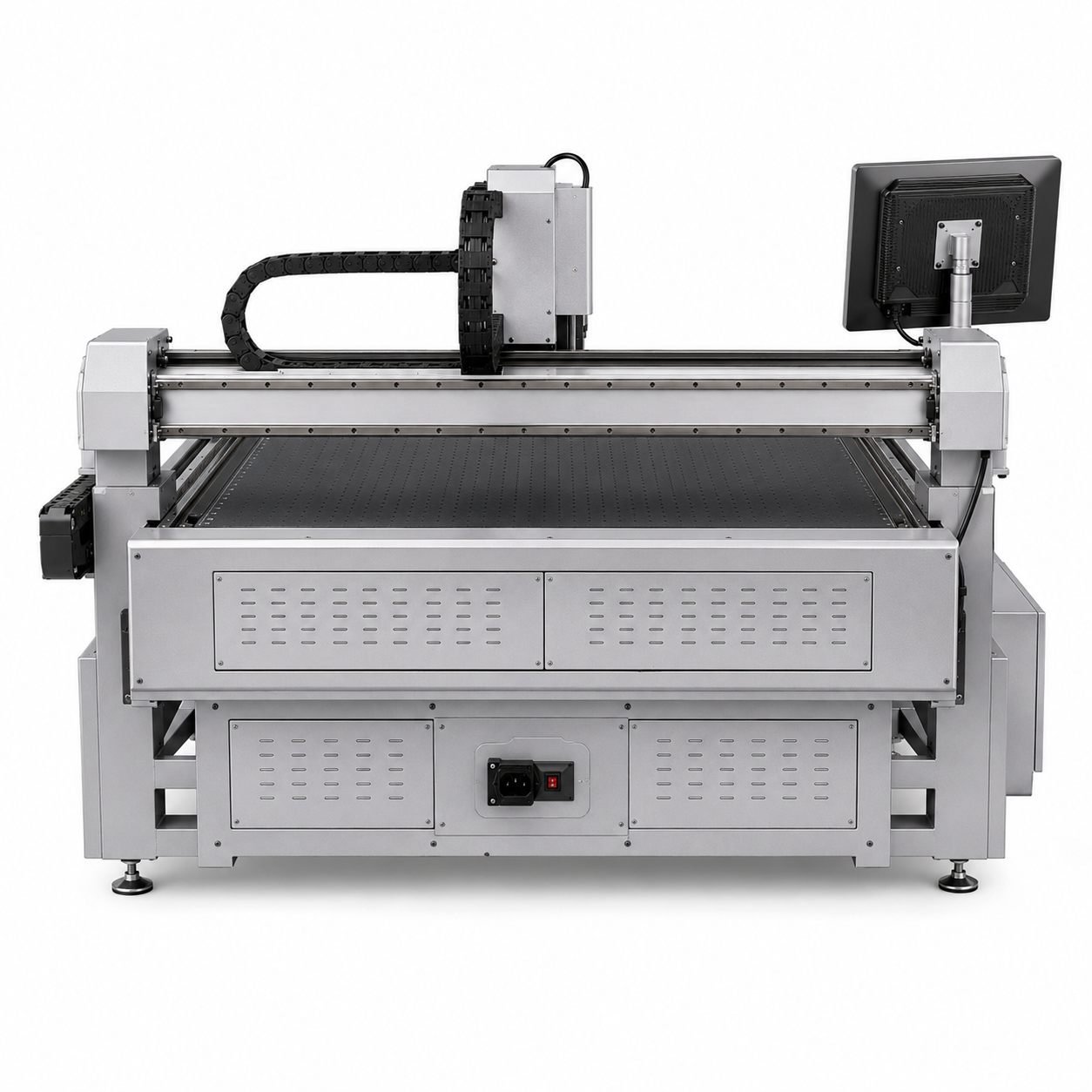
Computerized Footwear Pattern Drawing Plotter With Vacuum Adsorption CAD Shoe Paper Pattern Cutting Plotter for Upper Lining Midsole Template Making
Booth| Model Number | GD0906 / GD1209 |
| Brand | GISMA Guangzhou |
| Dimension(L*W*H) | 1260×980×720 mm / 1560×1180×760 mm |
| Net Weight | 180 KG / 230 KG |
| Voltage | AC220V 50Hz |
| Power | 1.5 KW |
Computer Shoe Pattern Grading & Cutting Machine
Model:GD0906 / GD1209
| Specification | GD0906 | GD1209 |
|---|---|---|
| Effective Cutting Area | 900×600 mm | 1200×900 mm |
| Cutting Speed | Speed can be adjusted smoothly, fastest 1000mm/s | Speed can be adjusted smoothly, fastest 1000mm/s |
| Drive Parts | Silent belt + smooth metal slide rail | Silent belt + smooth metal slide rail |
| Cutting Accuracy | ±0.05 mm, cut lines are even | ±0.05 mm, cut lines are even |
| Position Step | 0.025 mm tiny step control | 0.025 mm tiny step control |
| Max Material Thickness | 2 mm | 2 mm |
| Smallest Cut Circle | Φ1.6 mm | Φ1.6 mm |
| Fix Material Way | Strong vacuum table to hold paper tight | Strong vacuum table to hold paper tight |
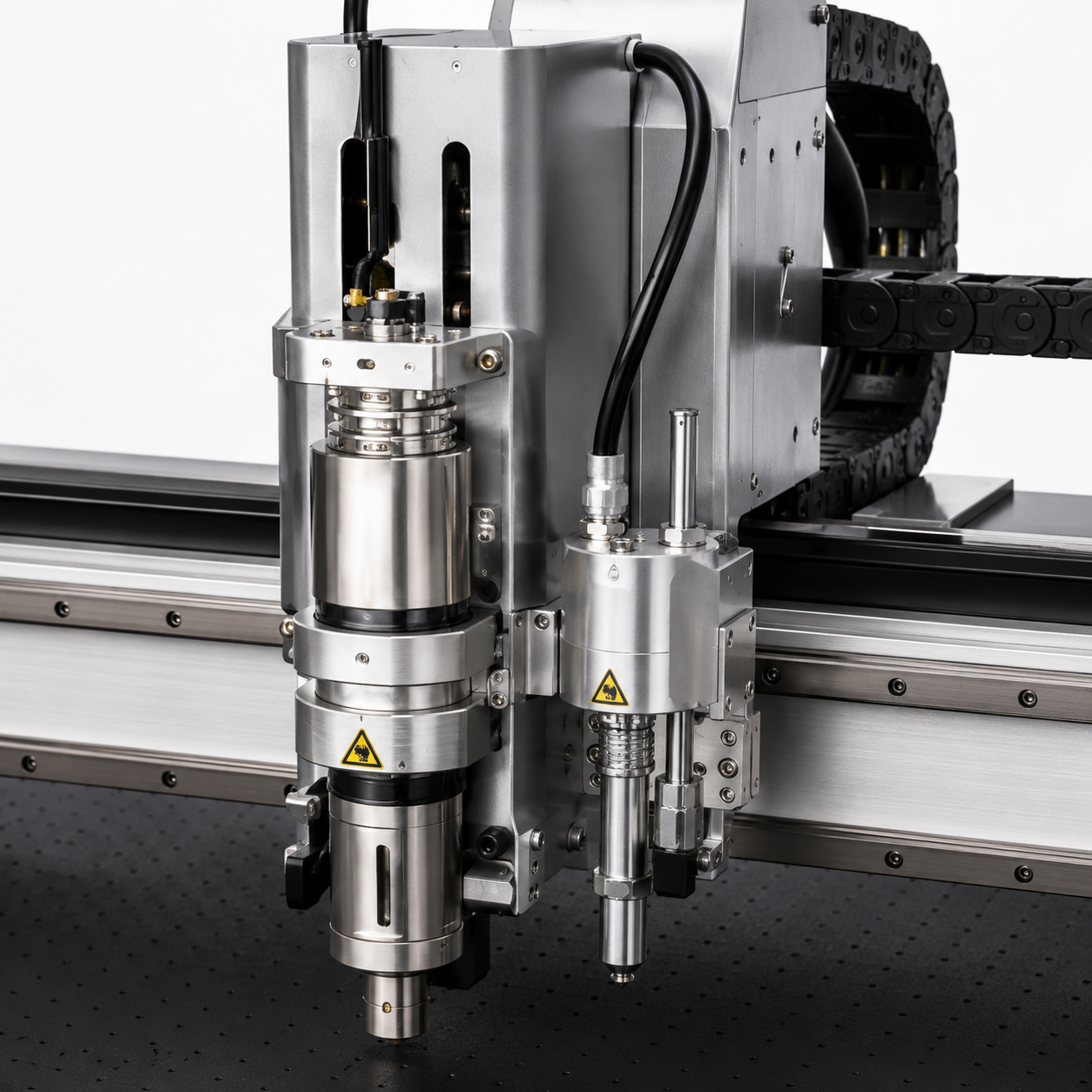
| Machine Head | Two heads in one: cut knife + draw pen | Two heads in one: cut knife + draw pen |
| Working Power | 1.5 KW | 1.8 KW |
| Working Voltage | AC220V 50Hz | AC220V 50Hz |
| Support File Types | DXF, PLT, HP-GL, GP-GL | DXF, PLT, HP-GL, GP-GL |
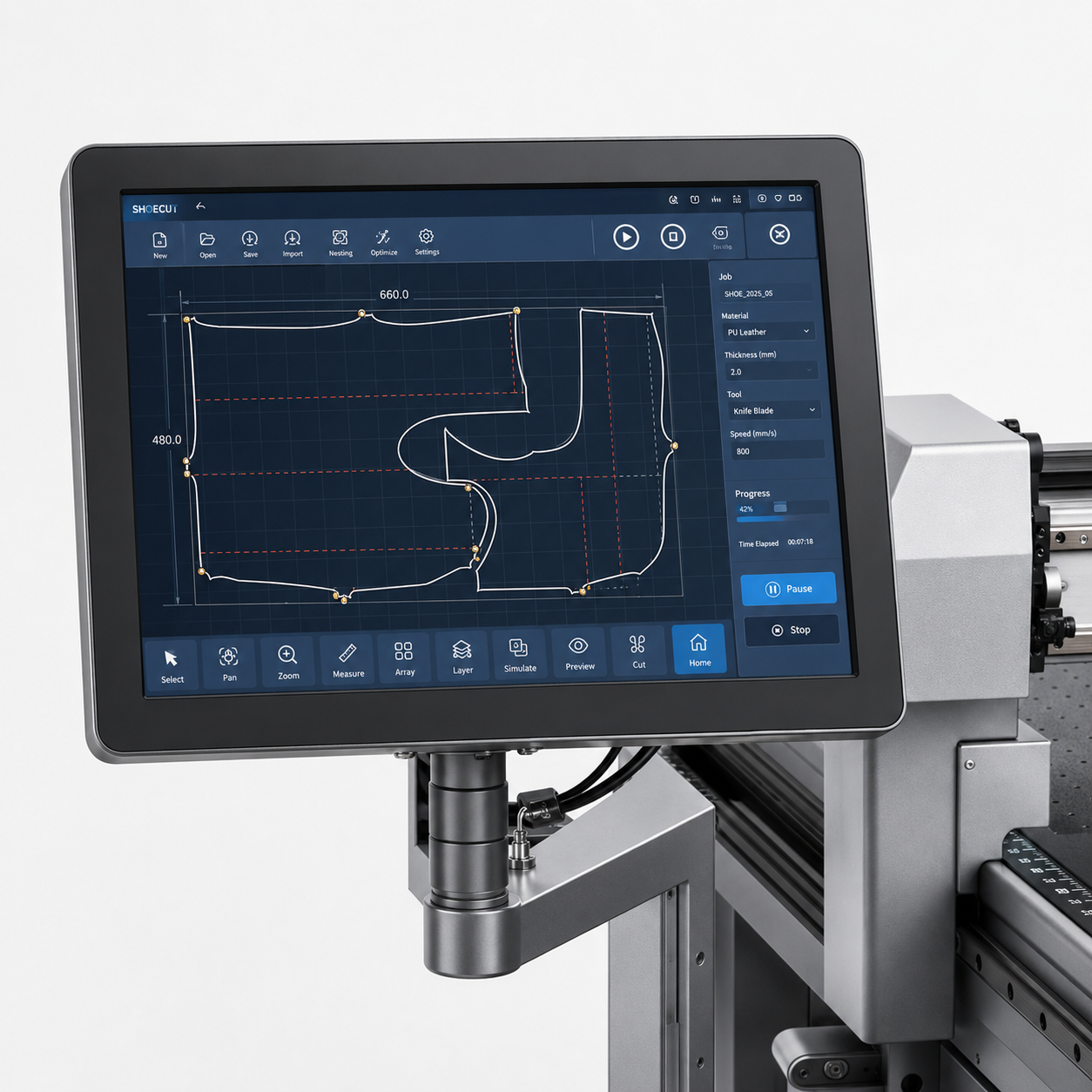
| Operation Screen | Touch screen | Touch screen |
| Machine Size (L×W×H) | 1100×780×1100mm | 1400×780×1100mm |
| Wooden Box Size (L×W×H) | 1180×850×1220mm | 1480×850×1220mm |
| Net Weight | 320 KG | 410 KG |
| Gross Weight | 360 KG | 450 KG |
Computerized Shoe Pattern Grading, Plotting and Cutting Machine
This machine features a host of core performance advantages. Equipped with silent precision linear guide rails, it operates stably and durably to greatly extend the overall service life. The machine supports multi-speed adjustable plotting modes compatible with both thin paper and thick template materials. Its worktable adopts a full vacuum adsorption design to firmly secure raw materials during operation and avoid material shifting, fundamentally preventing pattern deformation.
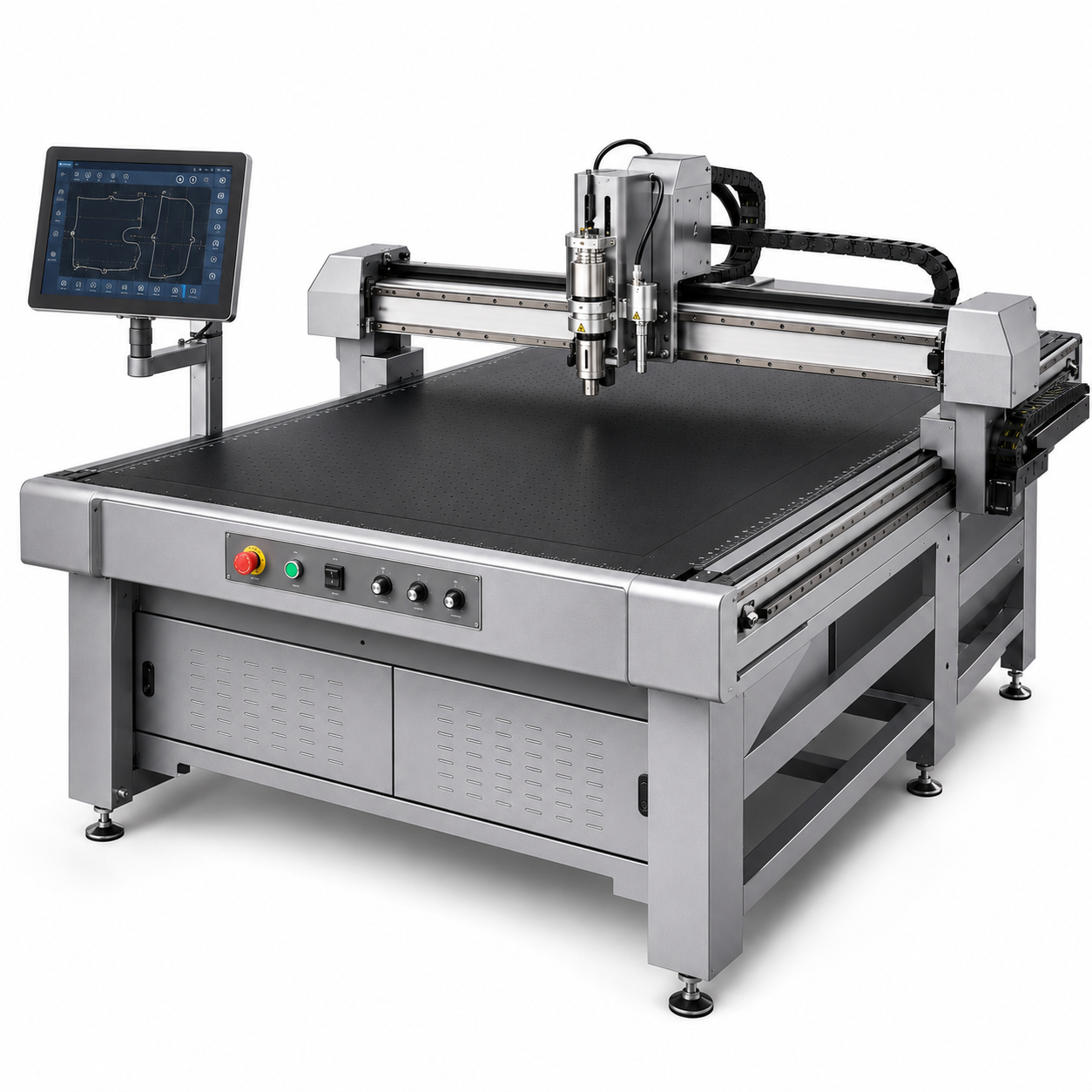
The equipment delivers stepless airflow speed regulation ranging from 100 to 800mm/s to accommodate the processing requirements of diverse shoe styles. Built-in one-click automatic color matching and intelligent nesting plotting functions spare operators from repeated parameter adjustments. A bilateral balanced pressure structure ensures uniform and smooth plotting lines across the entire working width. Fitted with an intuitive touch display screen, the machine allows footwear designers to edit all parameters directly on-screen.
It supports ultra-fine line plotting to perfectly reproduce intricate sneaker textures, sole contours and upper decorative patterns, and works with mainstream shoe pattern processing materials including kraft pattern paper and plastic film. The pen holder and vacuum adsorption worktable plate are detachable for convenient daily cleaning and equipment maintenance. Equipped with wear-resistant drive belts with low attrition, it effectively cuts down costs incurred by later maintenance and part replacement.
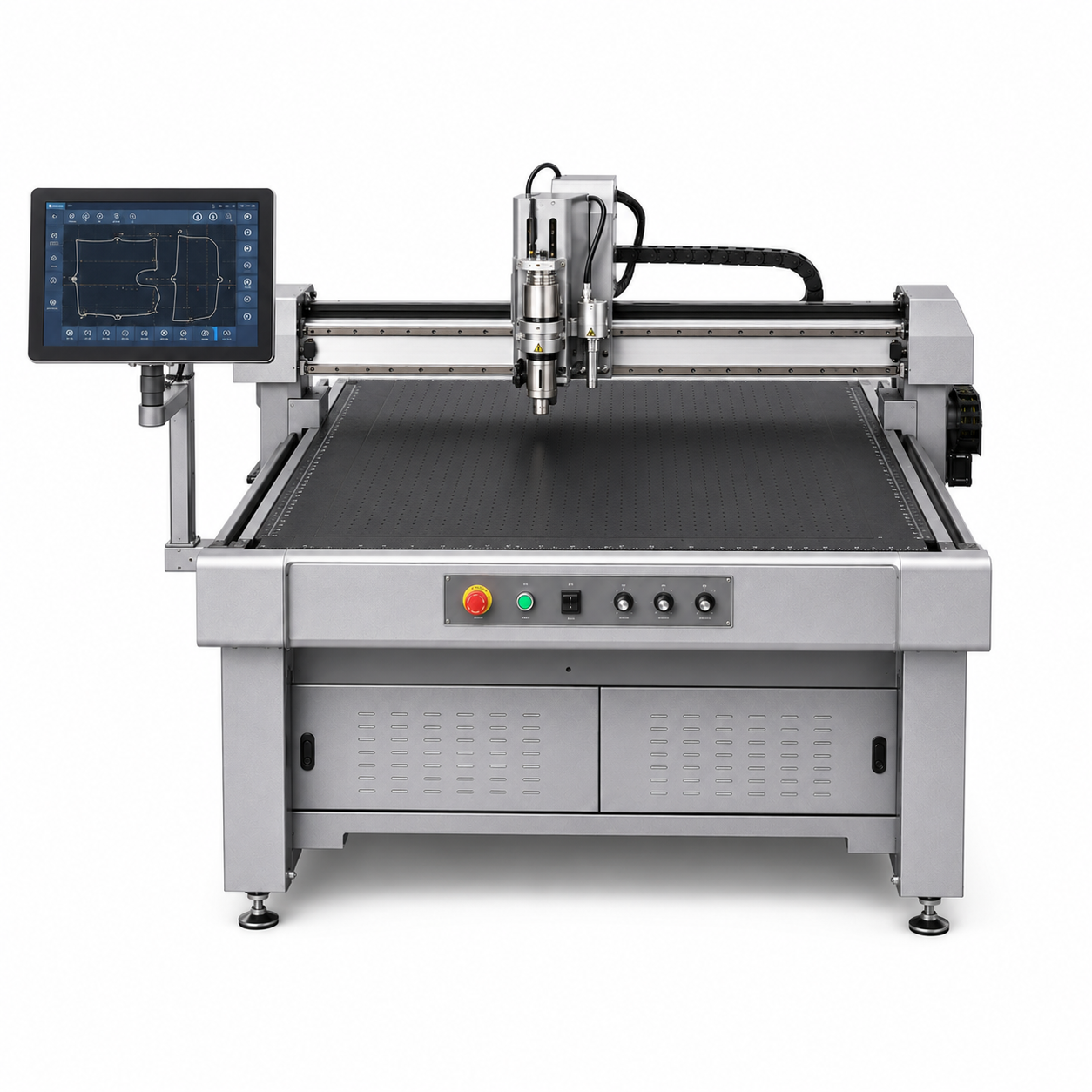
In practical application scenarios, this digital integrated shoe pattern plotting and cutting machine is widely applied to footwear design studios, finished shoe manufacturing factories, leather processing plants and luggage processing workshops. It produces high-precision shoe pattern drawings on pattern paper, tracing film and kraft paper to support new shoe pattern research and development as well as layout work for mass production. It is particularly suitable for plotting sneaker upper patterns, formal leather shoe textures, decorative lines for children’s shoes, sole contour drawings and luggage templates. The cutting speed and vacuum adsorption force of the machine are freely adjustable to fit paper and film raw materials of varying thicknesses. It outputs shoe patterns with precise dimensions to fully satisfy the sample making, development and production demands of all types of shoemaking enterprises.
The equipment adopts standardized operating procedures. Before startup, inspect the machine power supply, vacuum pipeline and plotting pen tip condition. Adjust feeding speed, vacuum suction force and pen tip pressure based on the thickness of processing materials. Conduct trial testing with small material pieces prior to formal mass plotting and cutting. During operation, lay full rolls or single sheets of paper and film flat on the worktable, then activate the vacuum adsorption function until materials are fully fixed. Upon completion of all daily processing tasks, cut off the main power supply of the machine and clear residual paper scraps on the worktable as well as ink stains left by pen tips.
For equipment installation, place the plotting cutter on flat and solid ground, and reserve ample space around the machine for heat dissipation and subsequent maintenance. Connect a 220V AC power supply equipped with a complete ground wire. Assemble plotting pens, vacuum pipelines and pressure strips in strict accordance with the supporting operation manual. After assembly, perform a 5 to 10 minute no-load trial run, debug all plotting and cutting programs, and complete full-machine parameter calibration with sample pattern paper.
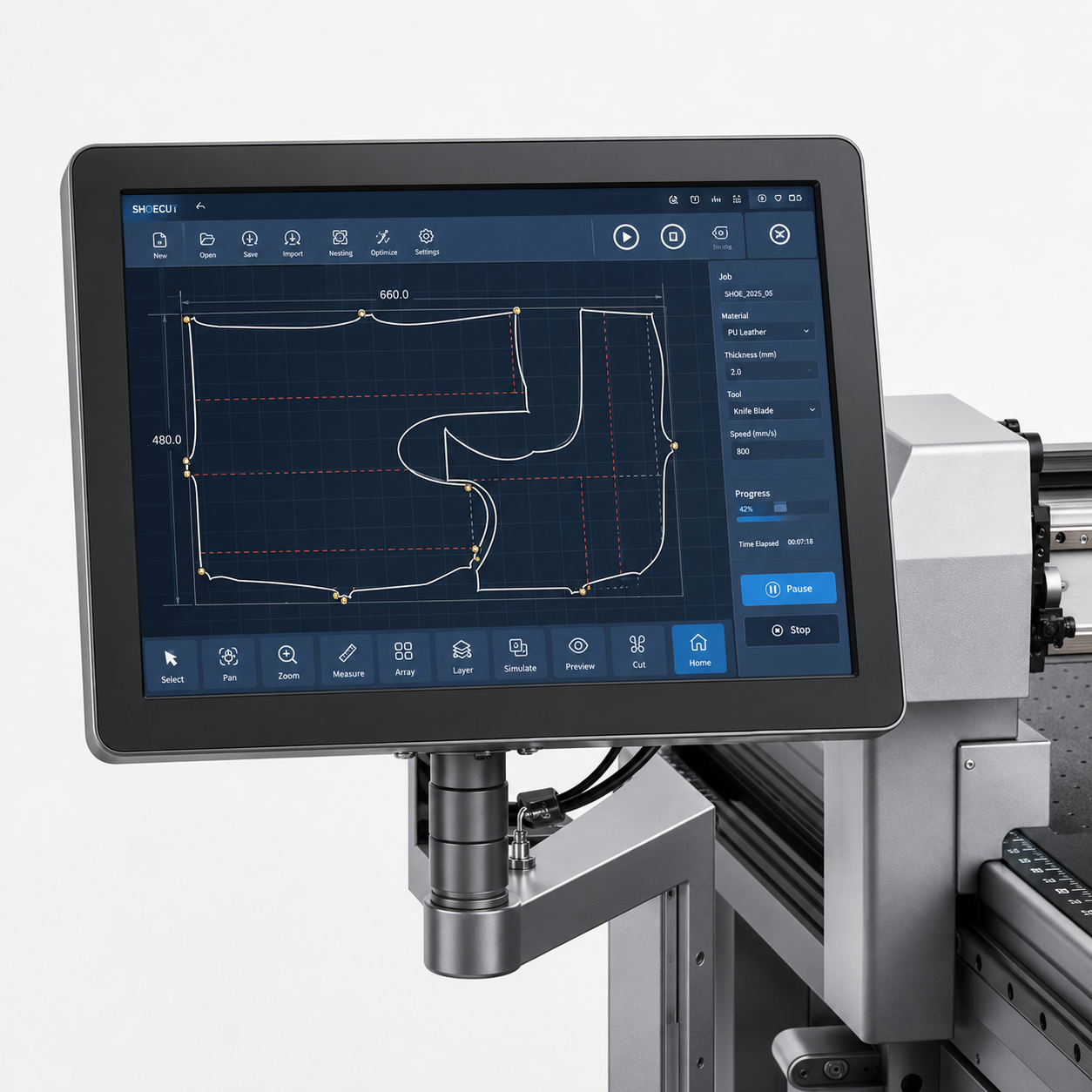
The equipment is equipped with comprehensive regular maintenance and overhaul specifications. Daily maintenance mainly includes wiping dust and paper scraps off the worktable surface, checking the vacuum adsorption fixing effect and the operating condition of plotting pen tips. Weekly maintenance involves inspecting the wear degree of drive belts, tightening all loose connectors on the machine frame, and testing the normal operation of the touch screen fault alarm function. Monthly maintenance covers deep cleaning of vacuum adsorption holes on the worktable, replenishing lubricating grease for linear guide rails, and timely replacement of severely worn pen tips.
Equipment maintenance shall comply with unified specifications; troubleshoot fault points one by one according to fault prompts displayed on the screen. Always cut off the main power supply before disassembling any components for maintenance, and replace aging pen tips on a regular basis to ensure clear and smooth plotting lines. For common customer inquiries, the mainstream names of this equipment include computerized shoe pattern grading cutter, digital shoe pattern design plotting cutter and high-precision shoe pattern layout cutting machine. It is a processing equipment specially designed and manufactured for pattern rooms of shoe factories.
Two mature machine models are available: GD0906 with a processing area of 900×600 millimeters, and GD1209 with a processing area of 1200×900 millimeters. The small-format model is suitable for small sample development, while the large-format model meets mass-production shoe pattern cutting demands. Processable raw materials include kraft paper, PVC film, EVA sheet and PMMA film. In addition, it supports all general industry shoe pattern design file formats such as DXF, PLT, HP-GL and GP-GL. The machine achieves a cutting precision of ±0.05 millimeters with a positioning step of 0.025 millimeters, and can process tiny round holes with a diameter of merely 1.6 millimeters to handle elaborate fine shoe patterns with complex textures.
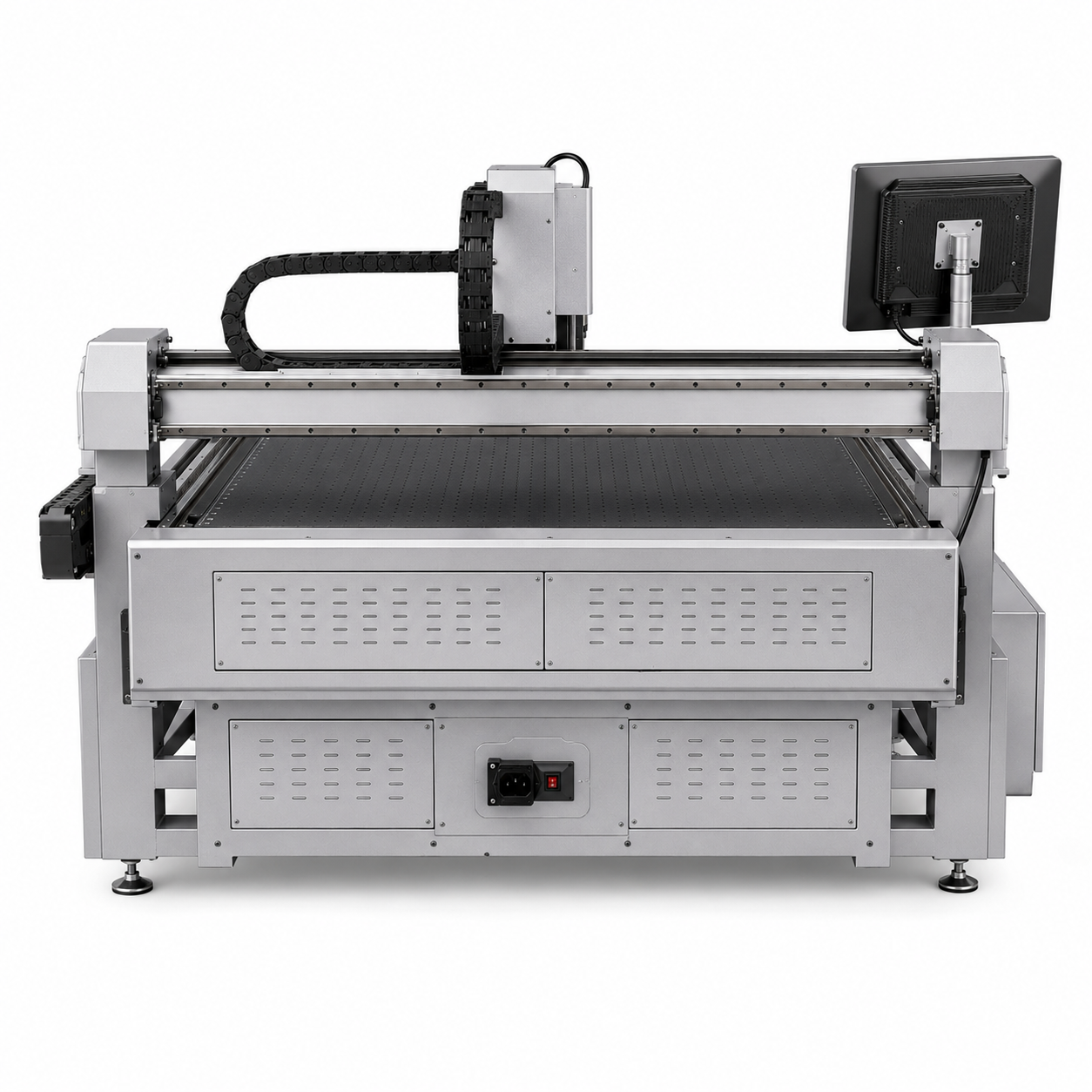
The whole machine adopts an integrated dual-head structure integrating pen plotting and knife cutting, which combines plotting and cutting functions into one unit without mid-process tool replacement during shoe pattern processing. Equipped with an intelligent automatic nesting layout system, it effectively saves paper consumables and reduces paper waste for shoe pattern grading by 12% to 18%. The built-in high-power vacuum adsorption worktable secures paper patterns to prevent raw material displacement during high-speed plotting and cutting, ensuring intact and undistorted drawings.
Fitted with a touch screen and a one-click automatic grading function, the machine can generate full-size shoe patterns within ten seconds. It has a low operation threshold, and ordinary operators can operate it independently after simple training. Daily equipment maintenance is divided into three periodic cycles: clear paper scraps on the worktable daily, check the status of synchronous drive belts and linear slide rails weekly, and deeply clean vacuum pipelines monthly. Replace blades promptly once they are worn to stably maintain cutting precision. Before daily startup, inspect the power supply, vacuum pump and cutting & plotting head in sequence, adjust processing speed and vacuum suction force according to paper thickness, and conduct sample trial cutting before mass production to confirm correct parameters prior to formal manufacturing.