
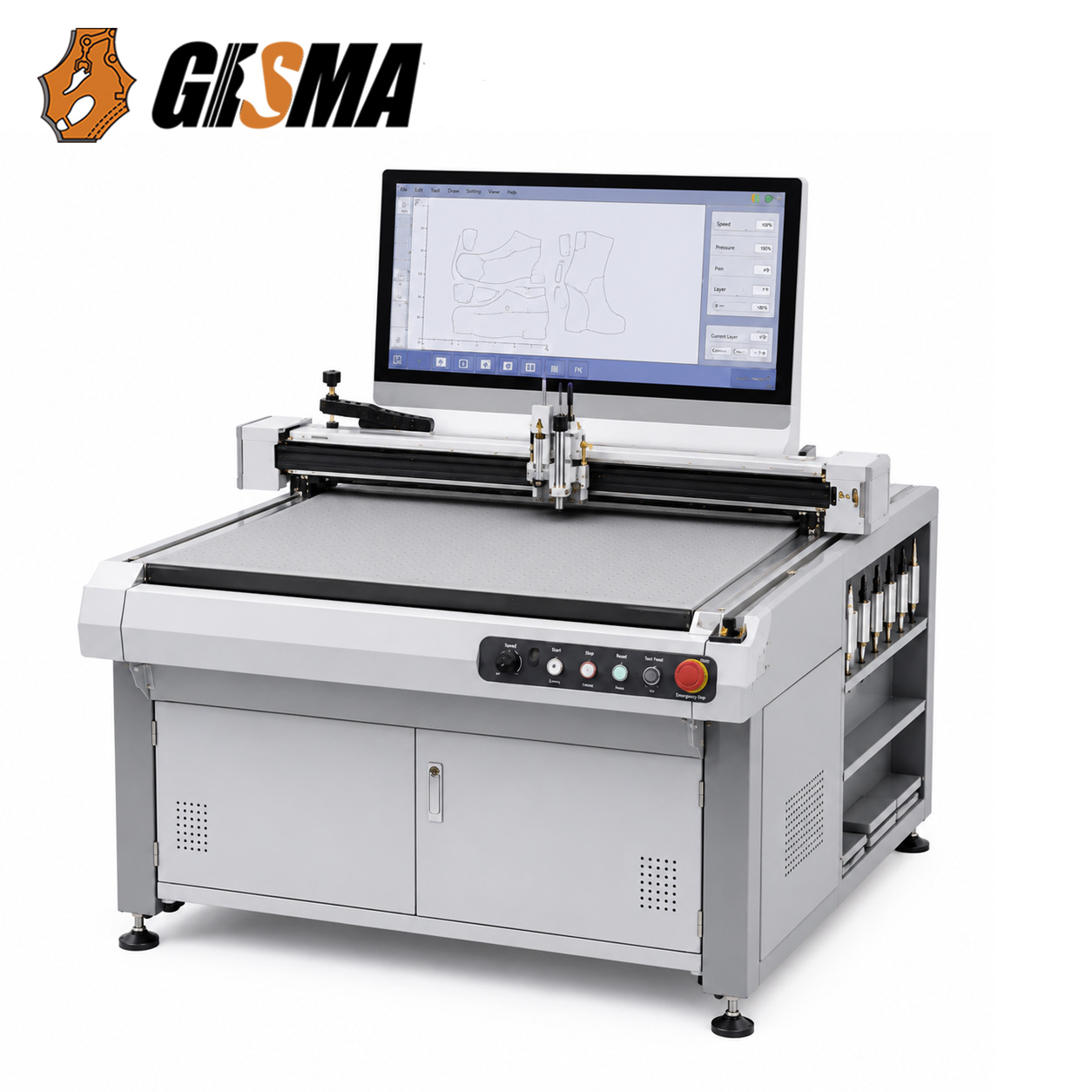
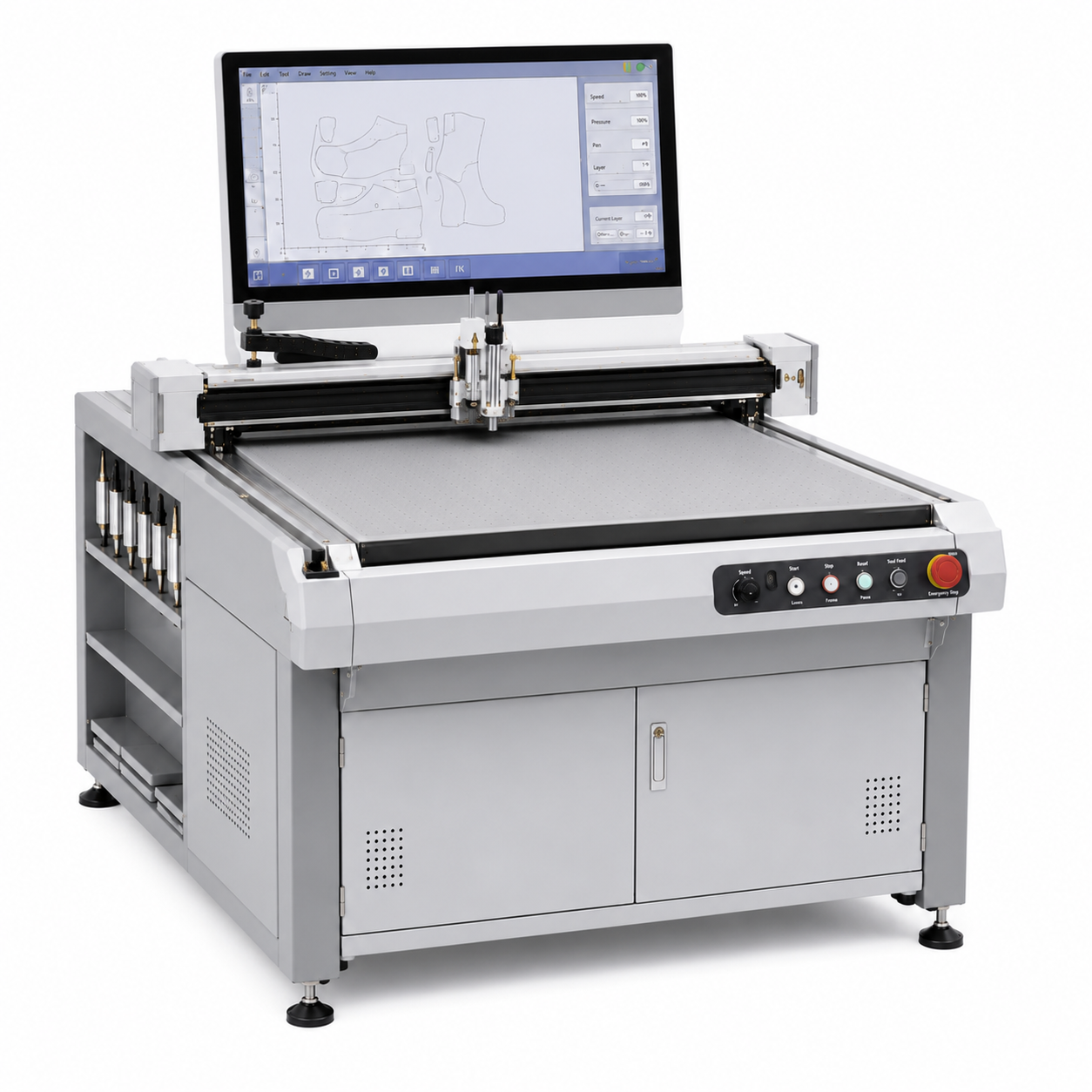
Computerized Footwear Pattern Drawing Plotter With Vacuum Adsorption For Shoe Pattern Making
Booth| Model Number | DP1200 / DP1500 |
| Brand | GISMA Guangzhou |
| Dimension(L*W*H) | 1260×980×720mm/1560×1180×760mm |
| Net Weight | 180 KG / 230 KG |
| Voltage | AC220V 50Hz / AC220V 50Hz |
| Power | 1.5 KW / 1.8 KW |
Computerized Shoe Pattern Drawing Plotter
MModel:DP1200 / DP1500
| Specification | DP1200 | DP1500 |
|---|---|---|
| Effective Drawing Area | 1200×900 mm | 1500×1100 mm |
| Transmission System | Silent high-speed linear guide rail, stable sliding | Silent high-speed linear guide rail, stable sliding |
| Drawing Pen Head | High-precision alloy pen holder, multi-type pen compatible | High-precision alloy pen holder, multi-type pen compatible |
| Drawing Precision | ±0.03 mm smooth continuous lines | ±0.03 mm smooth continuous lines |
| Drawing Speed | Adjustable 100–800 mm/s | Adjustable 100–800 mm/s |
| Max Drawing Material Thickness | 3 mm | 3 mm |
| Thinnest Drawing Line | 0.08 mm ultra-fine pattern lines | 0.08 mm ultra-fine pattern lines |
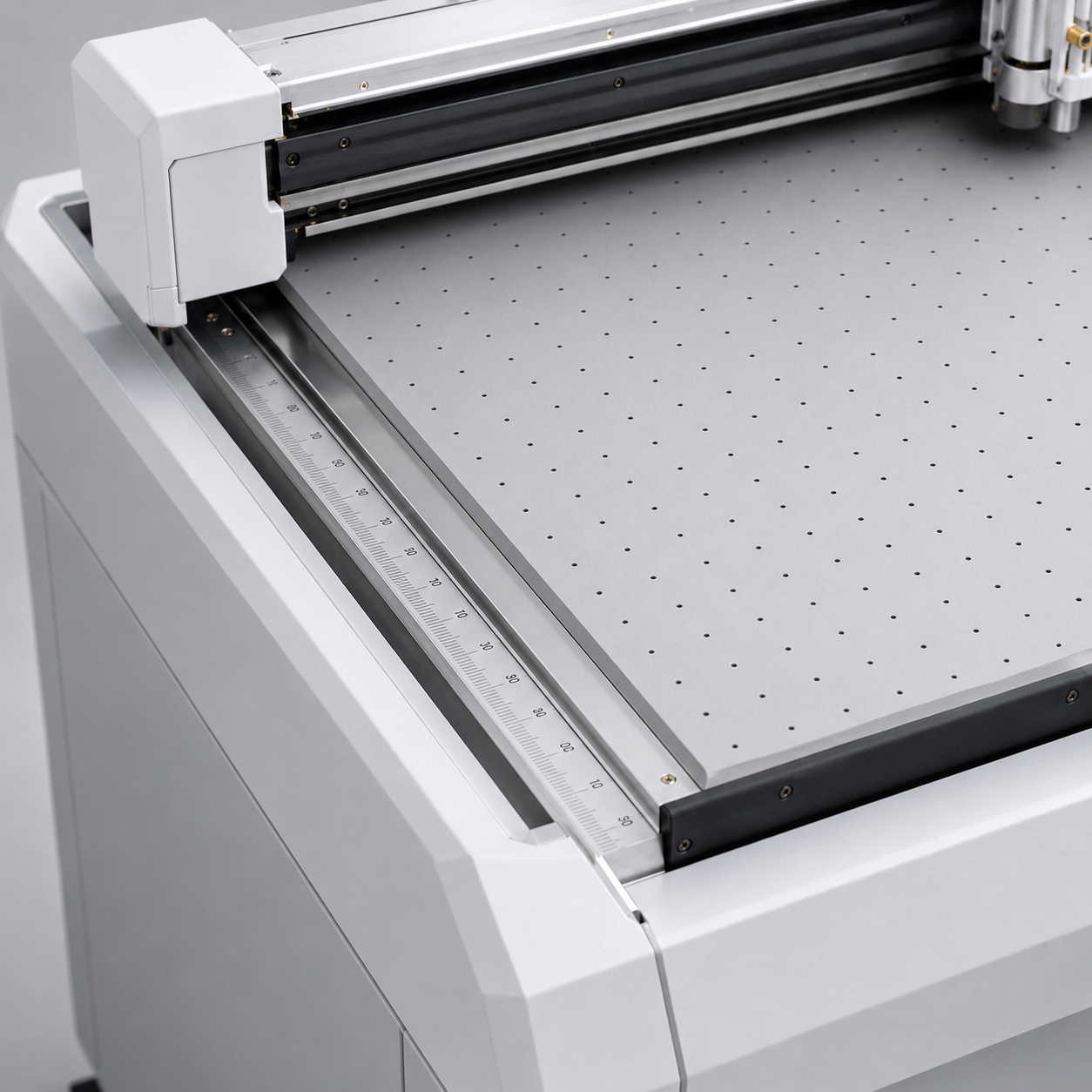
| Material Fix Way | Vacuum adsorption table + pressure pressing strip | Vacuum adsorption table + pressure pressing strip |
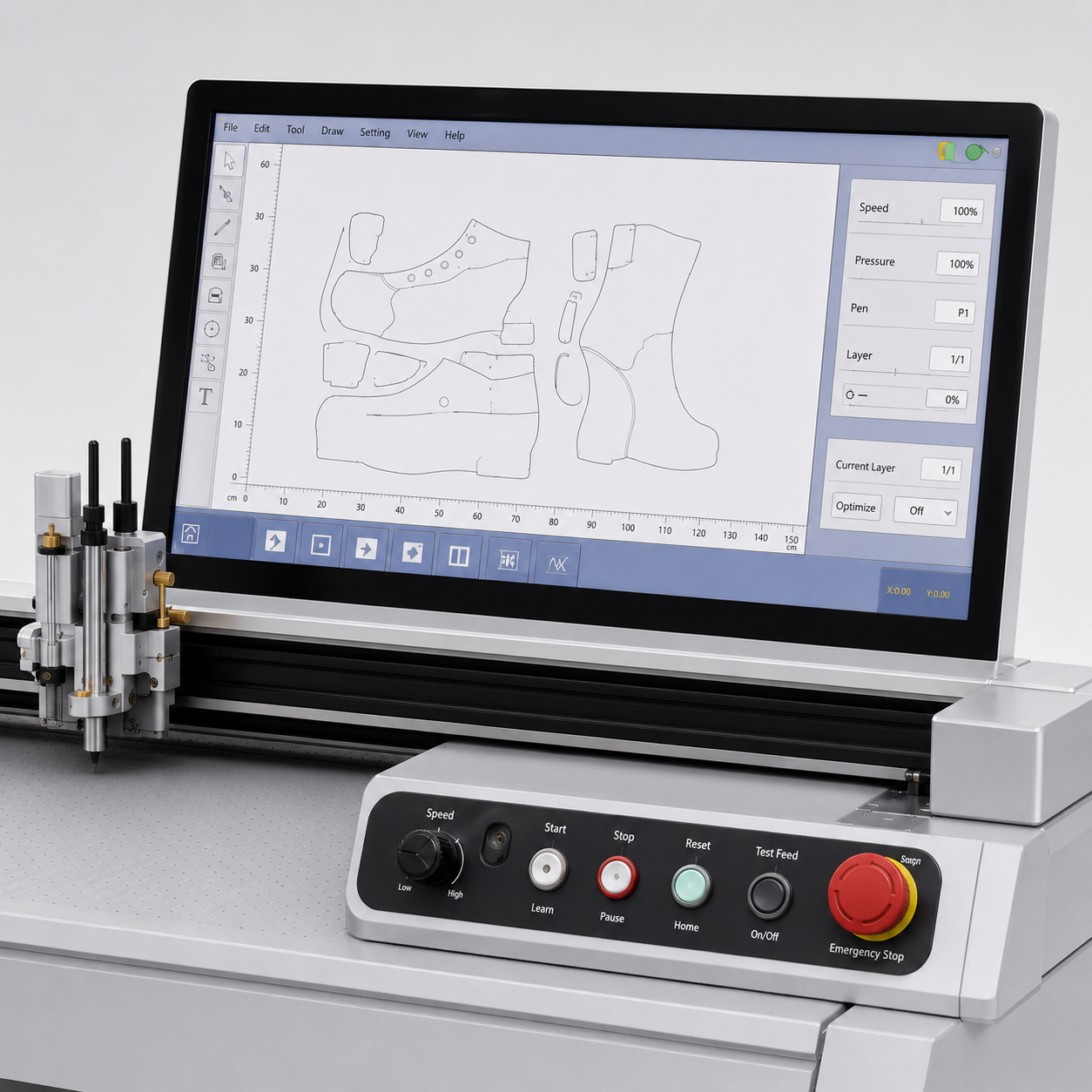
| Control Mode | Independent speed & thickness parameter adjustment | Independent speed & thickness parameter adjustment |
| Working Power | 1.5 KW | 1.8 KW |
| Working Voltage | AC220V 50Hz | AC220V 50Hz |
| Support Drawing Materials | Pattern paper, kraft paper, PVC film, tracing film | Pattern paper, kraft paper, PVC film, tracing film |
| Operation Screen | Touch screen | Touch screen |
| Machine Size (L×W×H) | 1260×980×720 mm | 1560×1180×760 mm |
| Wooden Box Packing Size (L×W×H) | 1330×1050×790 mm | 1630×1250×830 mm |
| Net Weight | 180 KG | 230 KG |
| Gross Weight | 208 KG | 265 KG |
Computerized Footwear Pattern Drawing Plotter With Vacuum Adsorption
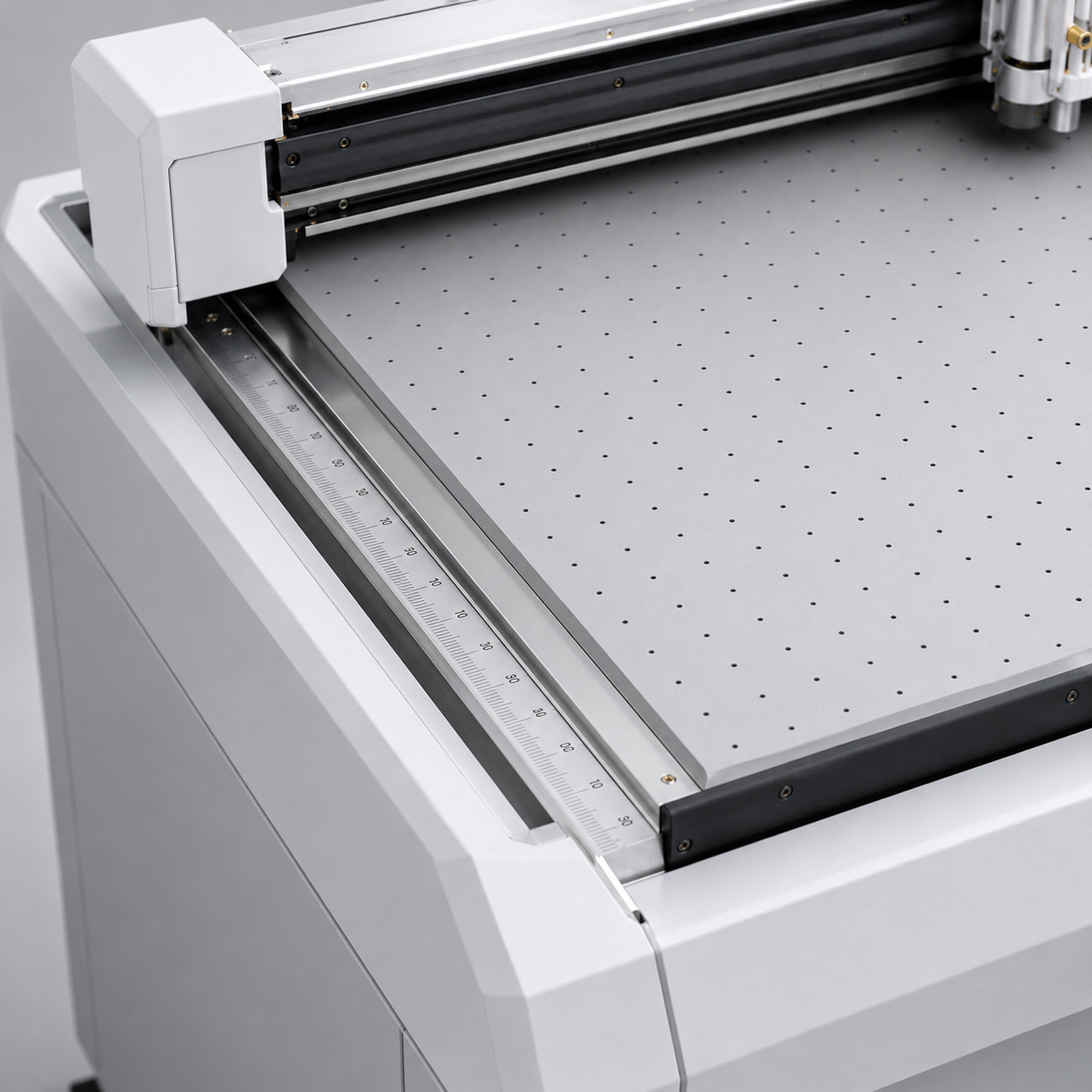
This machine boasts multiple core performance advantages. Equipped with silent precision linear guide rails, it operates smoothly and steadily to effectively extend the overall service life of the equipment. Multiple adjustable plotting modes are available to process thin sample paper and thick template materials alike. The worktable adopts a full vacuum adsorption design that firmly secures raw materials, completely eliminating material shifting and pattern deformation during processing.
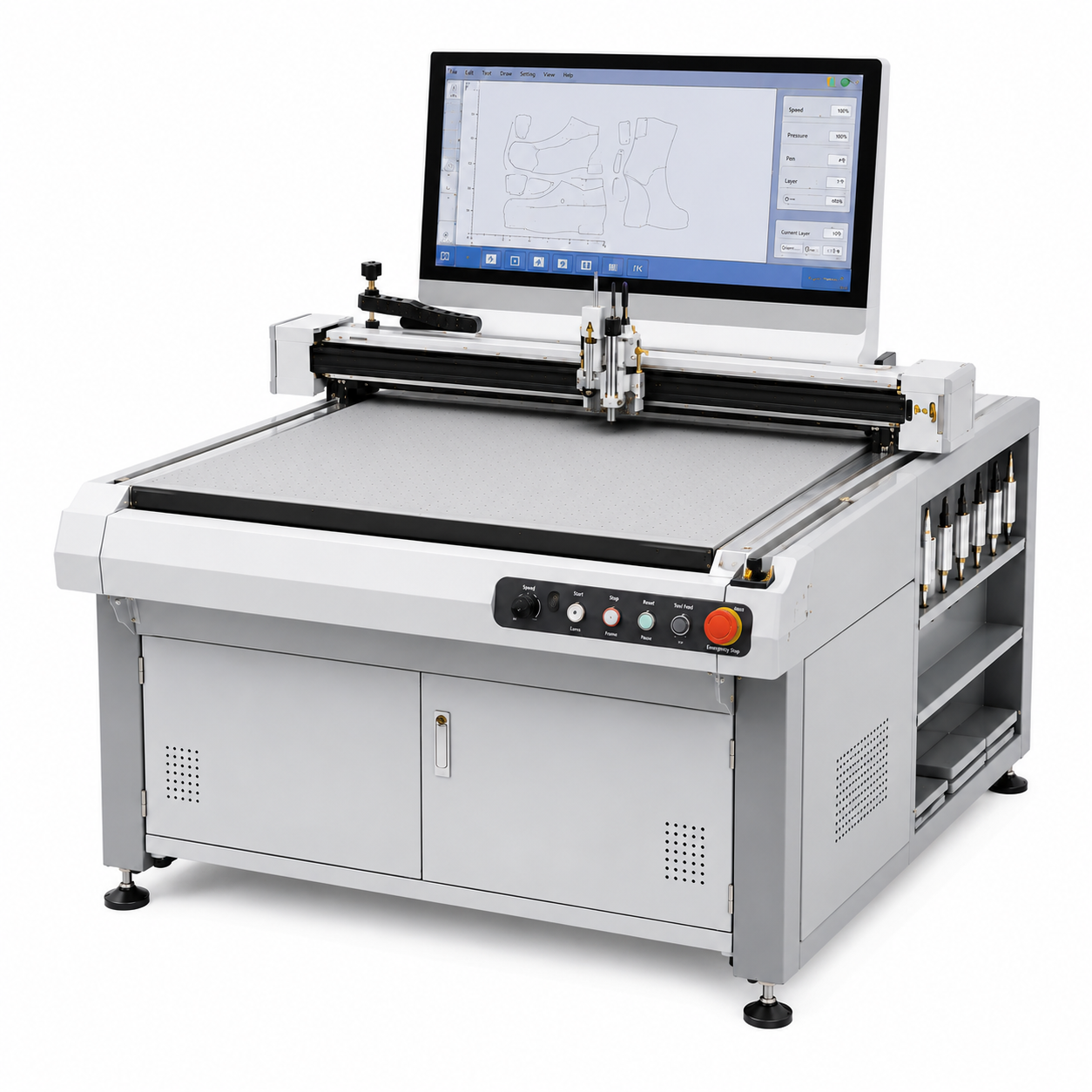
The plotting speed supports stepless adjustment from 100 to 800 millimeters per second, satisfying drawing requirements for shoe pattern drawings of all styles. It is fitted with one-click automatic pattern grading and intelligent marker making plotting functions, so operators do not need to repeatedly adjust processing parameters. A bilateral balanced pressure structure ensures smooth and uniform plotting lines across the full working width.
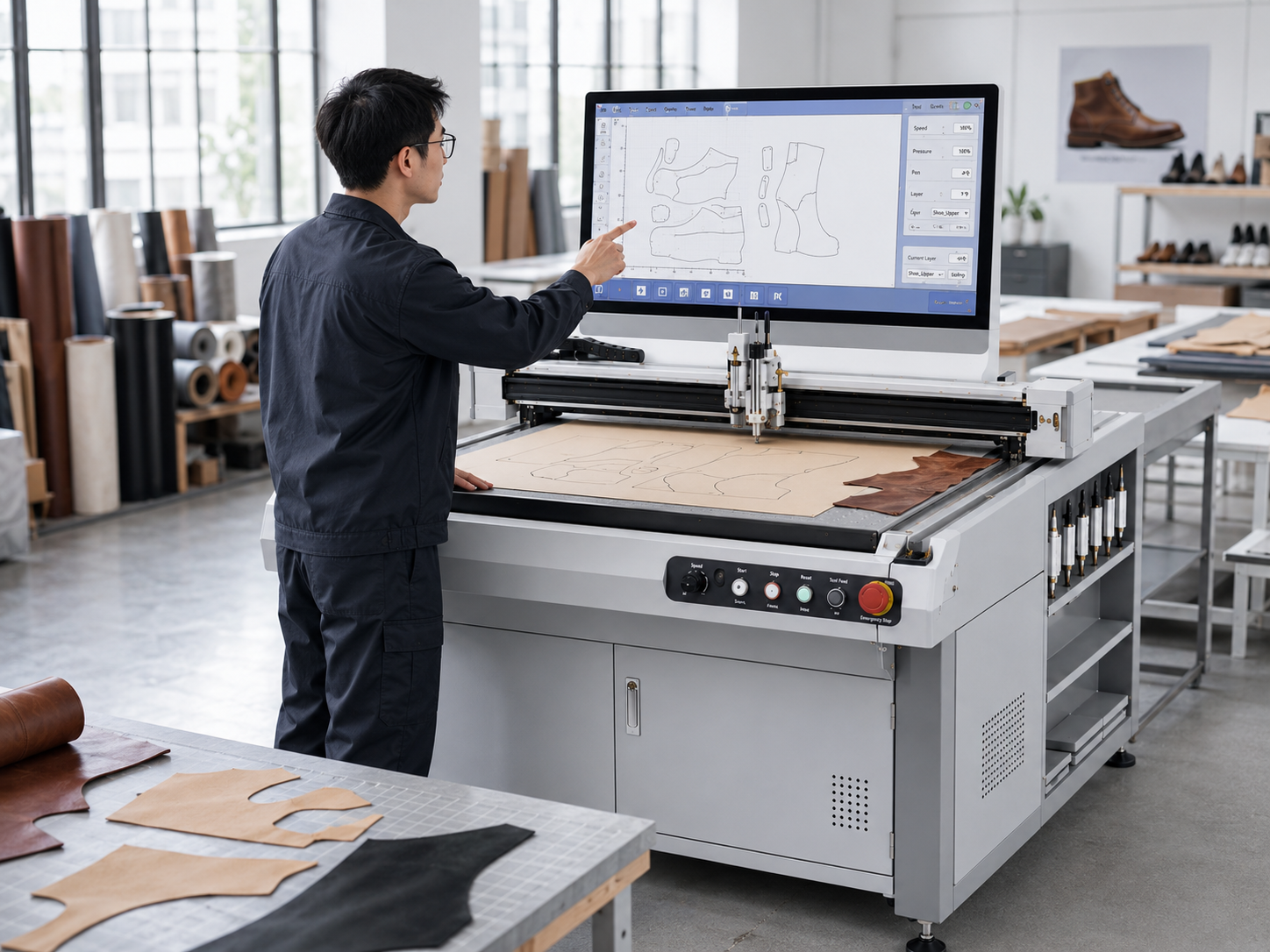
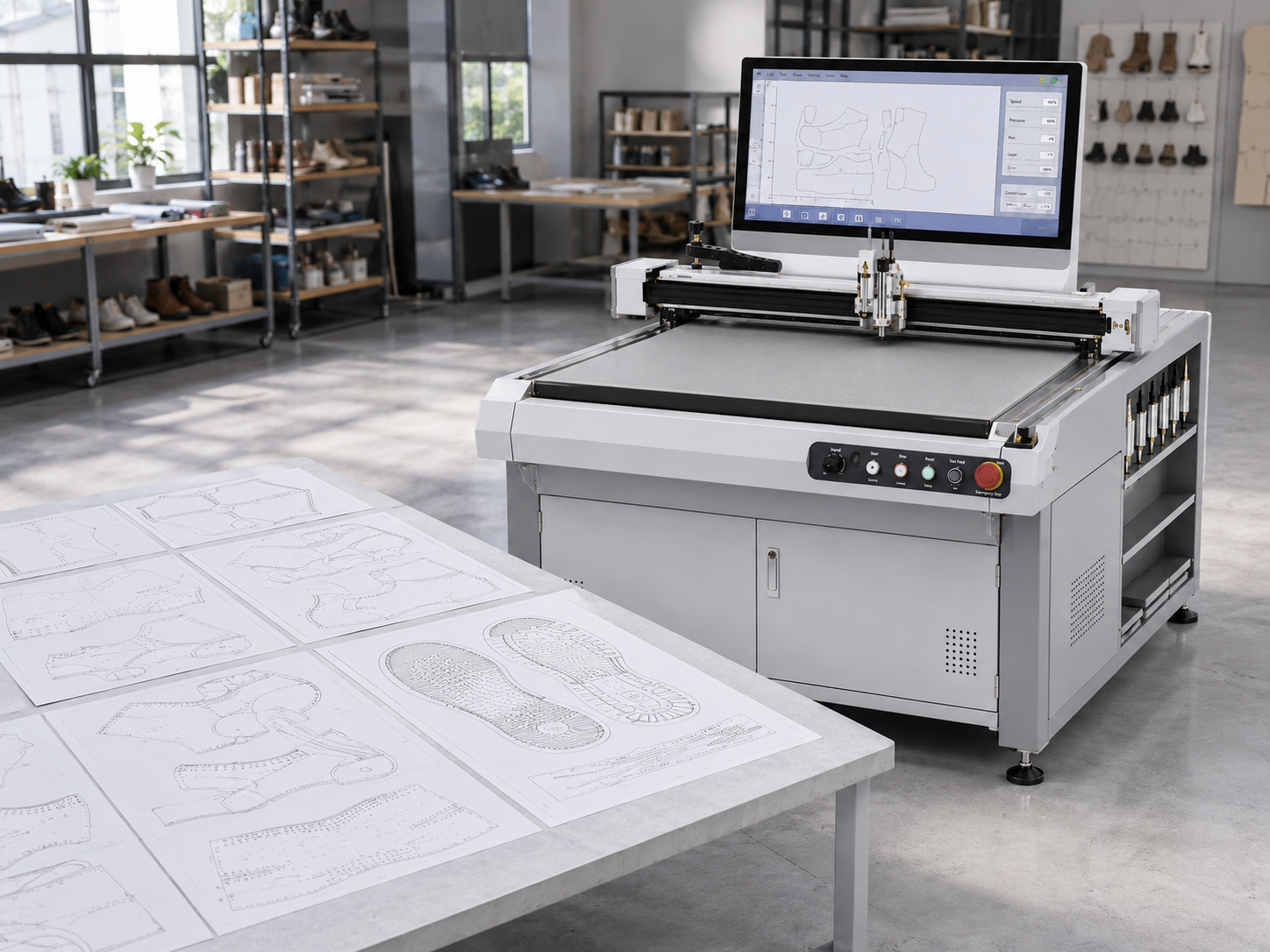
The machine is equipped with a touch display screen, allowing footwear designers to intuitively and conveniently modify all processing parameters. The equipment supports ultra-fine line plotting, easily reproducing intricate sneaker textures, sole contours and various upper drawings. It is fully compatible with commonly used consumables on the market such as shoe pattern paper and plastic film. The pen holder and vacuum adsorption platform are detachable for simple daily cleaning and maintenance.
Matched with wear-resistant synchronous drive belts with low attrition, it drastically cuts later maintenance and replacement costs. It also features intelligent alarm functions for paper deviation and broken pens causing incomplete plotting, which promptly avoid defective paper patterns and reduce waste of paper consumables.
This computerized shoe pattern plotter & cutter enjoys a wide range of applications, widely deployed in footwear design studios, large-scale shoe manufacturing factories, leather processing workshops and luggage processing factories. It outputs high-precision shoe pattern drawings on sample paper, tracing film, kraft paper and other materials, supporting R&D sampling of new shoe styles and marker making for mass production. It is suitable for plotting sneaker upper patterns, leather shoe templates, children’s shoe decorative lines, sole contours and various luggage processing templates.
The plotting speed and vacuum adsorption suction can be freely adjusted to fit plotting raw materials of varying thicknesses. The finished shoe patterns feature high precision, fully meeting product design, sampling and production standards of all major shoemaking enterprises. The equipment features standardized and clear operating procedures.
Before startup, operators shall fully inspect the machine power supply, vacuum pipelines and plotting pen status. Adjust plotting speed, vacuum adsorption force and pen pressure according to the thickness of processed materials. Prior to formal mass plotting, conduct trial plotting with small pieces of raw materials. Lay paper or film flat on the worktable surface and activate vacuum adsorption until materials are completely fixed. After finishing all daily plotting tasks, cut off the main machine power supply and clean residual paper scraps and ink residues on the worktable.
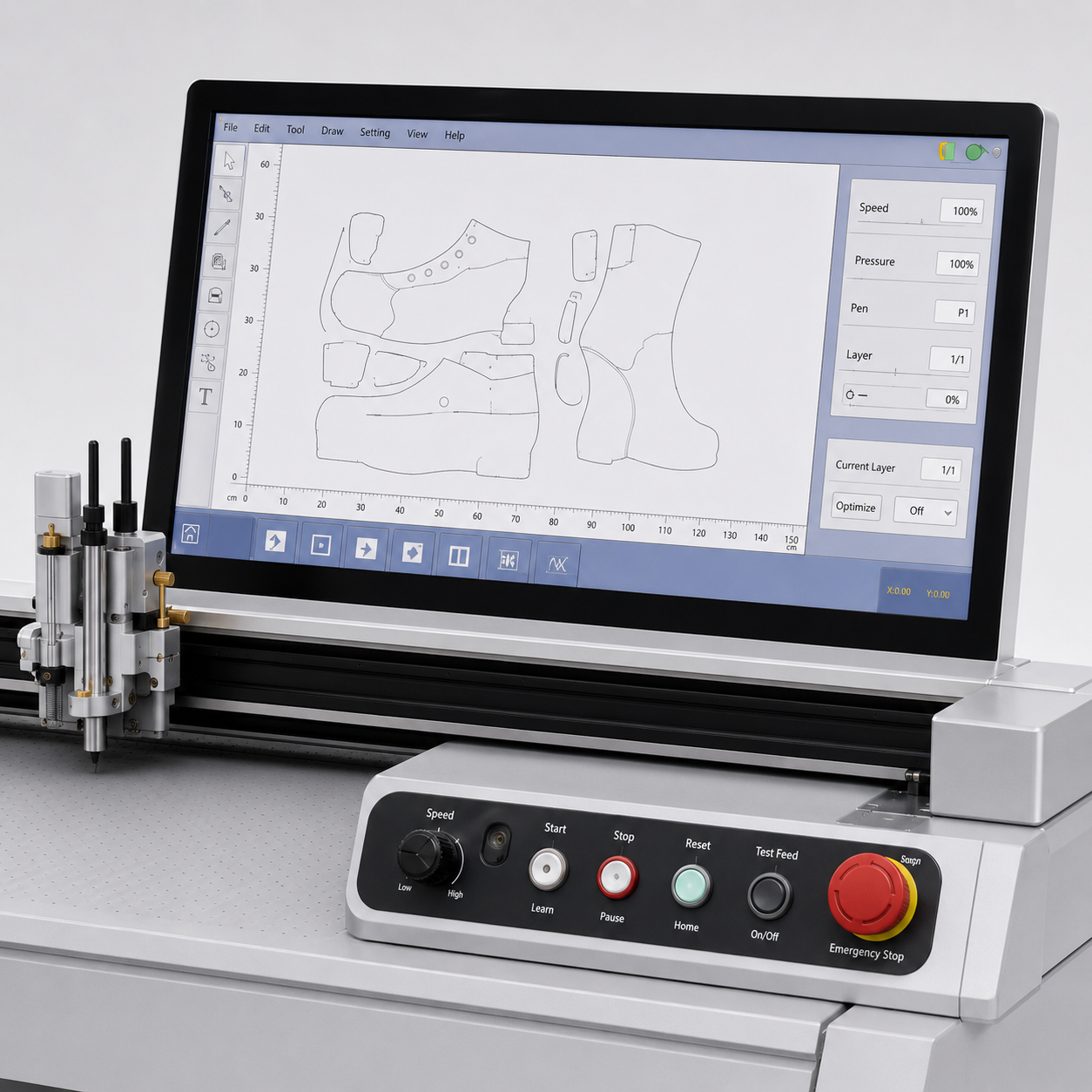
For equipment installation, place the plotter & cutter on flat and solid ground, and reserve ample space around the machine for heat dissipation and subsequent maintenance. Connect a 220V AC power supply with complete and reliable ground wire. Assemble plotting pens, vacuum pipelines and pressure strips in strict accordance with the supporting operation manual. After full assembly, conduct a 5 to 10-minute no-load trial run, and finish debugging of all drawing processing parameters using standard sample paper.
The equipment is equipped with complete periodic maintenance and standardized overhaul regulations. Daily maintenance mainly involves wiping dust and residual paper scraps off the worktable surface, and checking vacuum sealing effect and plotting pen operating condition. Weekly maintenance requires checking the wear degree of synchronous drive belts, tightening all loose connecting joints on the machine frame, and synchronously testing whether the touch screen fault alarm function is sensitive and normal.
Monthly maintenance covers deep cleaning of vacuum adsorption holes on the worktable, inspecting the lubrication state of linear guide rails, and timely replacing severely worn pen tips. Equipment maintenance shall comply with unified specifications; troubleshoot all fault points item by item according to pop-up prompts on the screen. The main power supply must be cut off before disassembling any components for maintenance, and aging pen tips shall be replaced regularly to guarantee clear and smooth plotting lines.
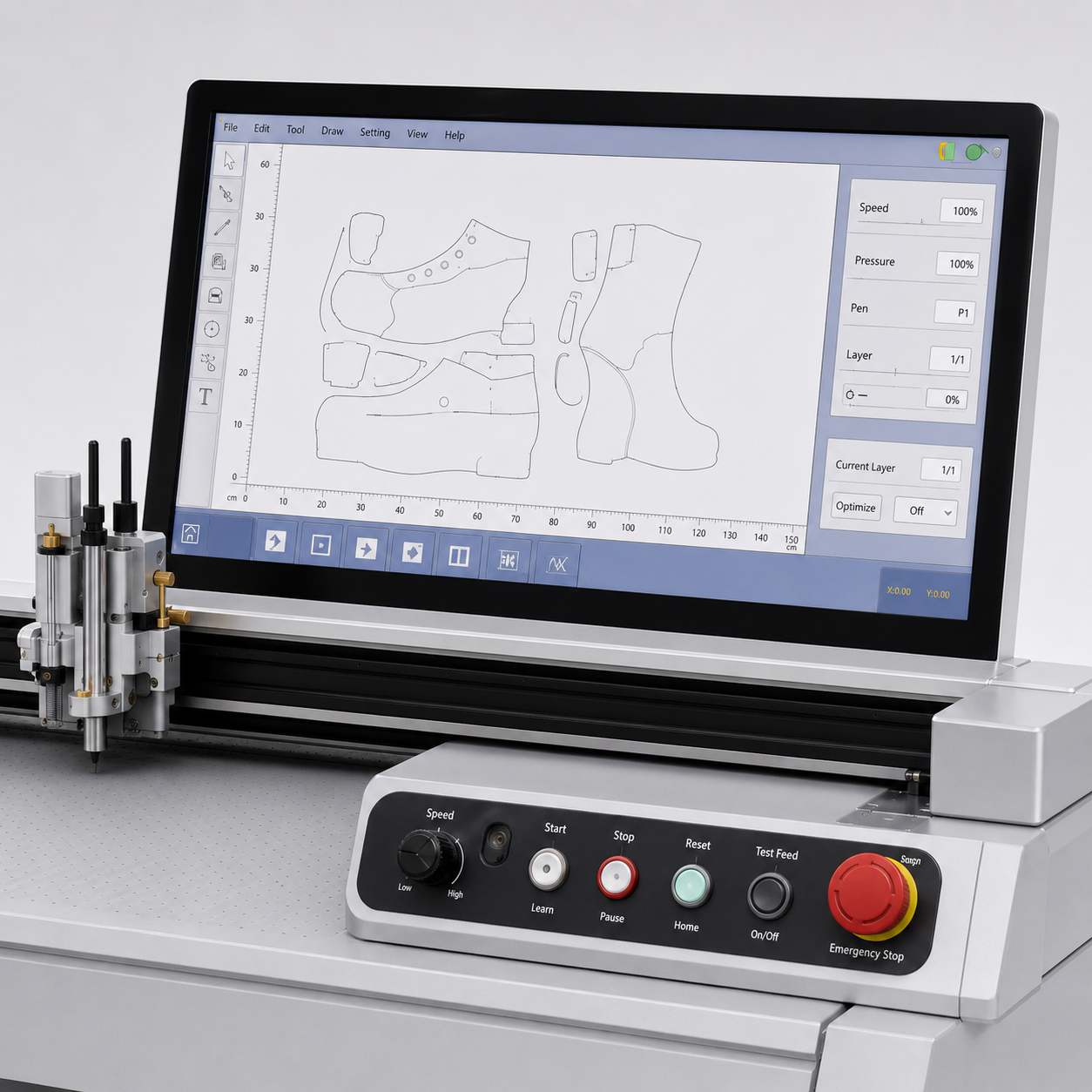
For frequently consulted daily customer questions, the powerful vacuum adsorption worktable of this machine can firmly flatten full sheets of paper patterns, and raw materials will not shift during high-speed plotting and cutting, ensuring neat lines and standard dimensions of shoe patterns.
The whole machine integrates multiple functions including shoe pattern grading, intelligent marker making, marking plotting and cutting blanking, enabling one-step production of full-size shoe templates. The vacuum adsorption shoe pattern plotter & cutter can process paper patterns for all shoe styles such as sneakers, formal leather shoes, children’s shoes and safety work boots, and is suitable for sampling and development of all new shoe styles.
The equipment supports mainstream industry shoe design files such as DXF, PLT and HP-GL, with no extra format conversion required after importing drawings. A built-in intelligent automatic marker making layout system reduces paper consumable waste by 12% to 18%, effectively cutting consumable expenses for shoemaking factories. The plotting and cutting precision of this vacuum adsorption plotter & cutter reaches ±0.05 millimeters, enabling fine processing of various delicate decorative textures for footwear.
Daily basic maintenance of the equipment includes cleaning paper scraps on the worktable and checking the adsorption effect of the vacuum pump. Blades shall be replaced regularly once worn to maintain processing precision.
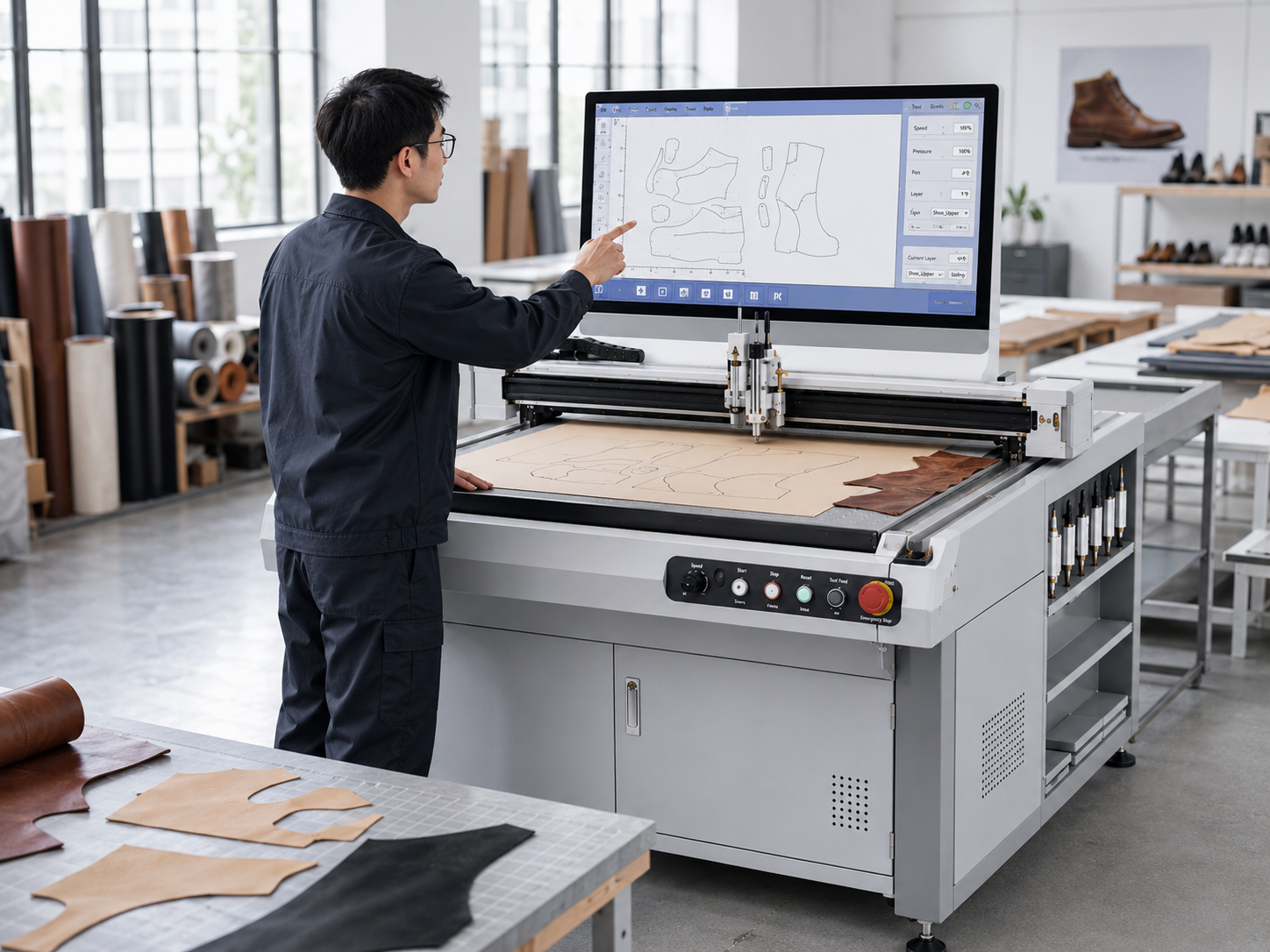
Paper scraps generated by cutting and leftover offcut paper materials can be centrally collected and recycled for reuse, reducing workshop waste output and improving the overall utilization rate of raw materials. Worn blades, aging connecting parts and scrapped mechanical components replaced during equipment use must be delivered to professional recycling institutions for classified treatment instead of random disposal, fully complying with factory environmental protection production specifications.