
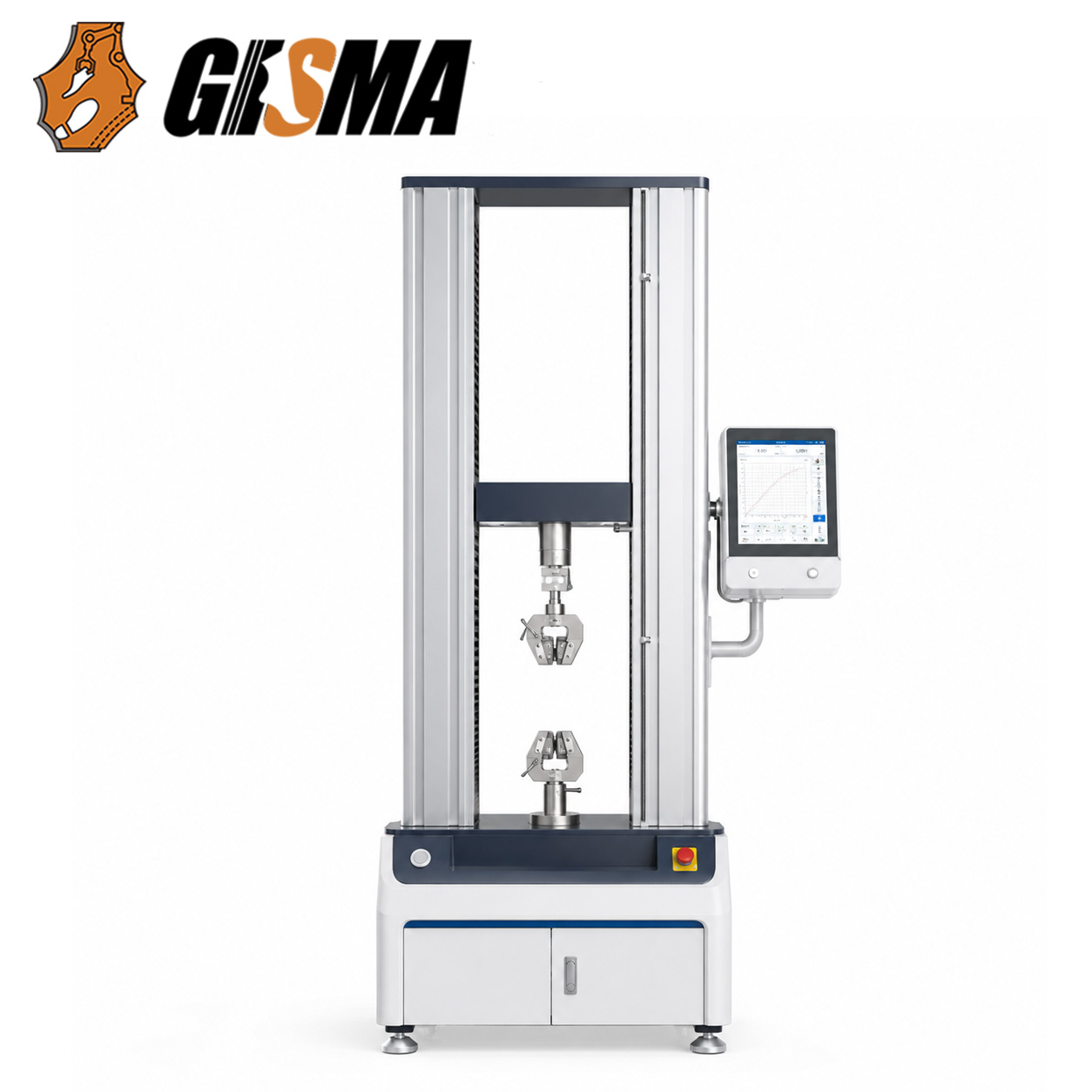
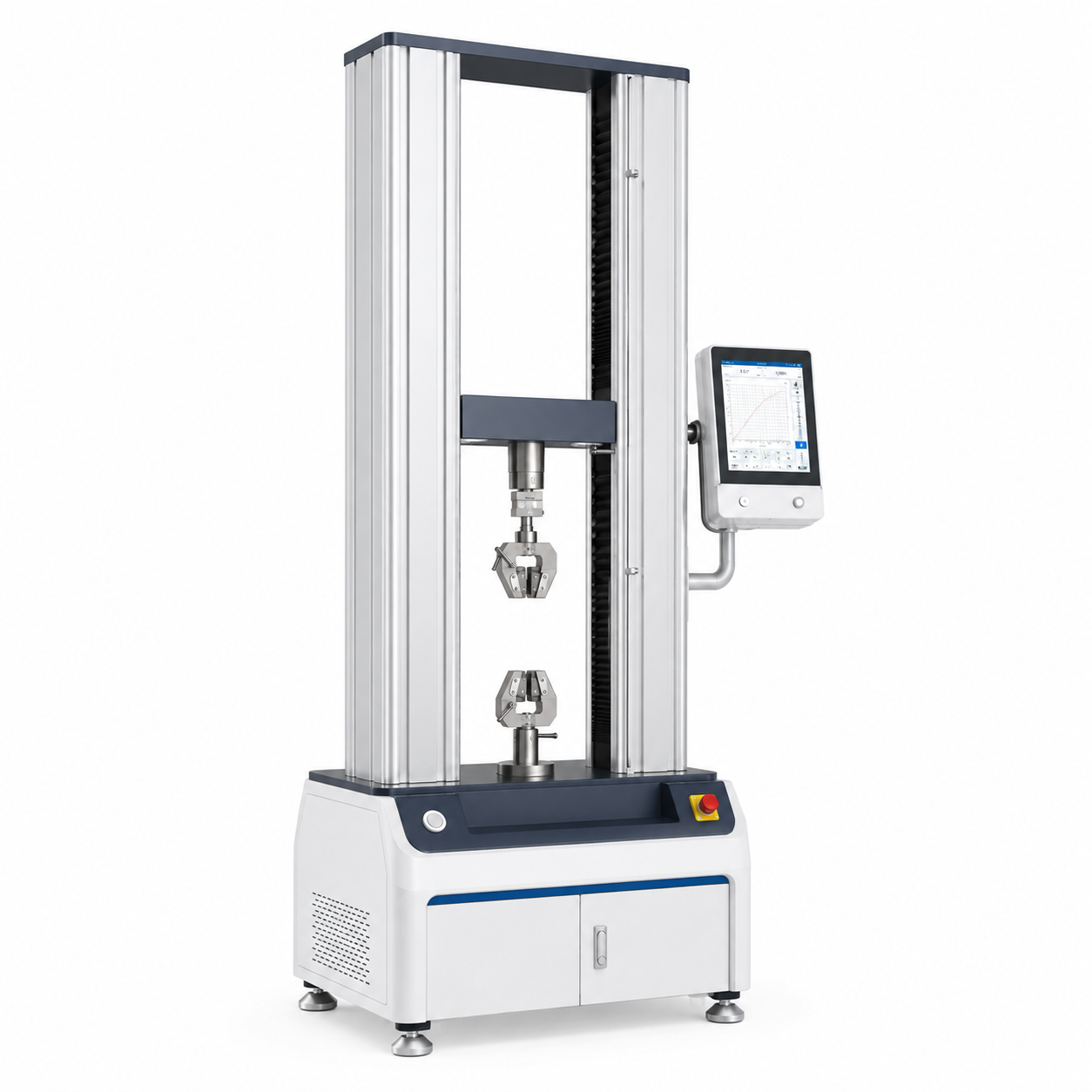
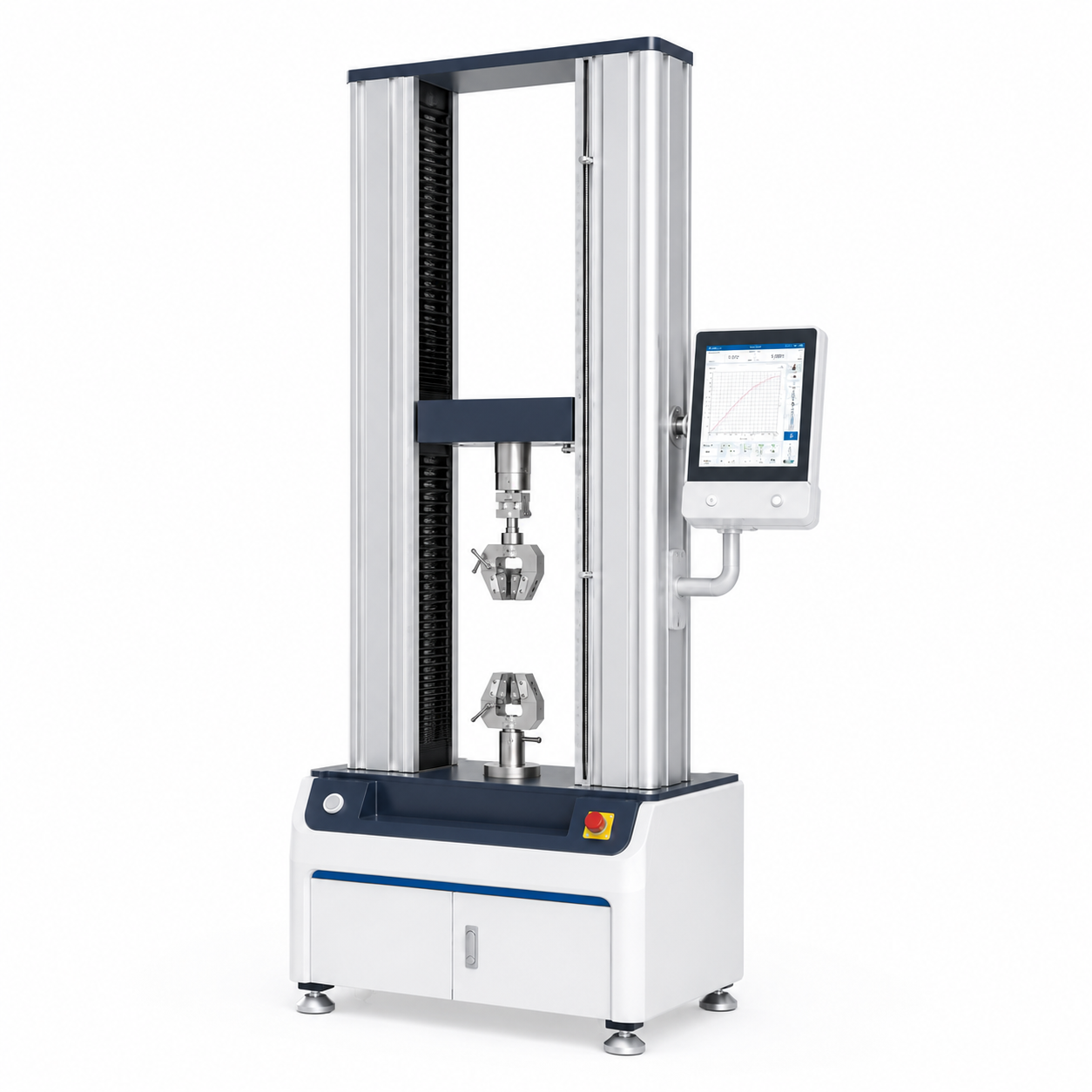
High Precision Digital Universal Tensile Testing Machine Automatic Tensile Strength Tester for Shoe Material Leather Rubber Peel Tear Physical Test Footwear Quality Control Lab
Booth| Model Number | UTM-5KN / UTM-10KN |
| Brand | GISMA Guangzhou |
| Dimension(L*W*H) | 900×700×1300mm / 1100×800×1400mm |
| Net Weight | 180 KG / 260 KG |
| Voltage | AC220V 50Hz / AC220V 50Hz |
| Power | 0.75 KW / 1.1 KW |
Digital Universal Tensile Testing Machine
Model: UTM-5KN / UTM-10KN
| Specification | UTM-5KN | UTM-10KN |
|---|---|---|
| Max Test Force | 5 KN | 10 KN |
| Force Accuracy | ±0.5% of full scale | ±0.5% of full scale |
| Test Speed Range | 1 mm/min ~ 500 mm/min adjustable | 1 mm/min ~ 500 mm/min adjustable |
| Max Test Stroke | 600 mm | 600 mm |
| Test Items | Tensile, peel, tear, shear, compression | Tensile, peel, tear, shear, compression |
| Clamping Mode | Pneumatic / manual dual fixture option | Pneumatic / manual dual fixture option |
| Control System | Digital closed-loop control system | Digital closed-loop control system |
| Working Power | 0.4 KW | 0.5 KW |
| Working Voltage | AC220V 50Hz | AC220V 50Hz |
| Operation Display | Digital display screen + key operation | Digital display screen + key operation |
| Applicable Standards | Footwear, leather, textile industry standards | Footwear, leather, textile industry standards |
| Machine Size (L×W×H) | 550×420×1250mm | 550×420×1350mm |
| Wooden Box Size (L×W×H) | 650×520×1400mm | 650×520×1500mm |
| Net Weight | 85 KG | 110 KG |
| Gross Weight | 110 KG | 140 KG |
Digital Universal Tensile Testing Machine (Full English Professional Translation, Footwear Industry Standard Terminology)
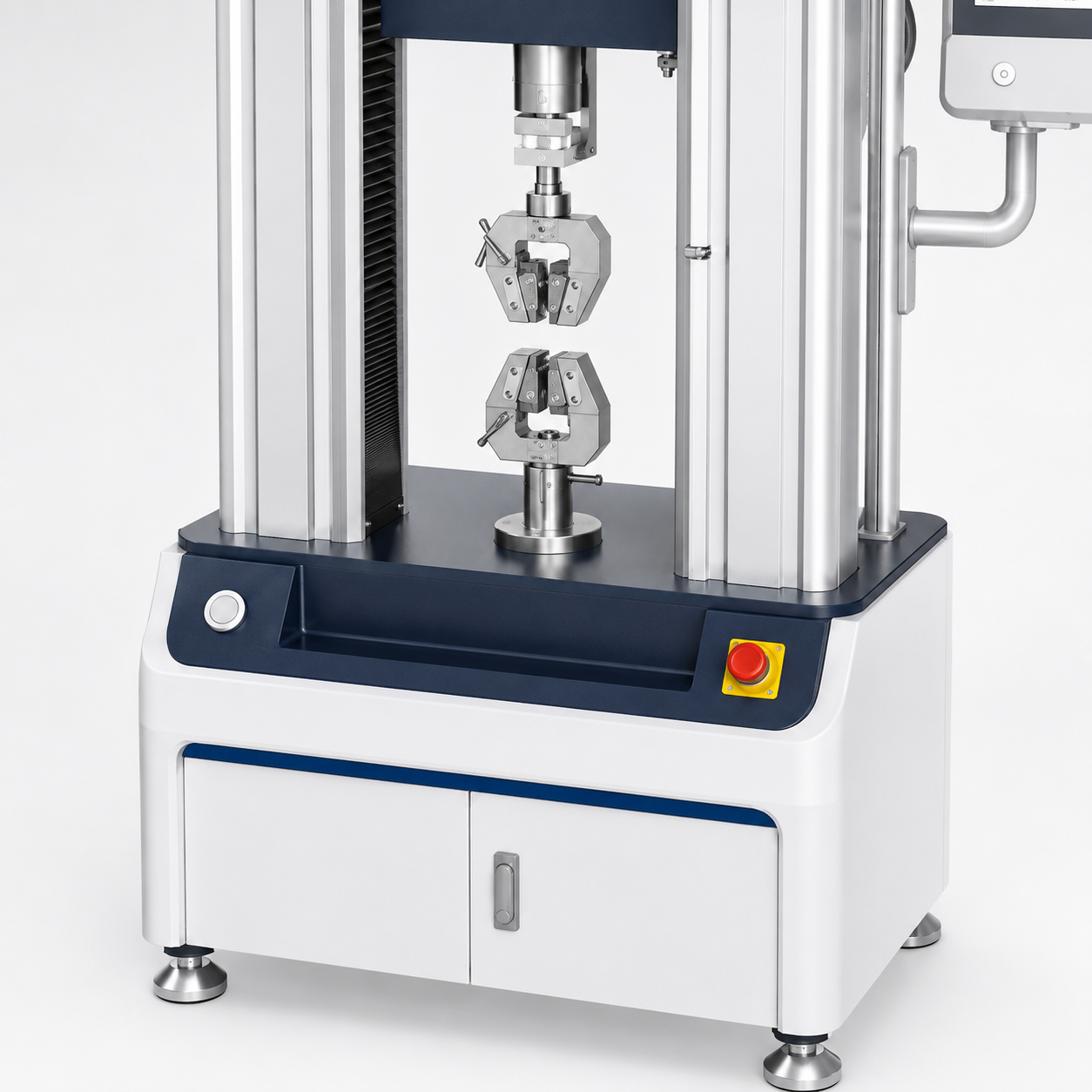
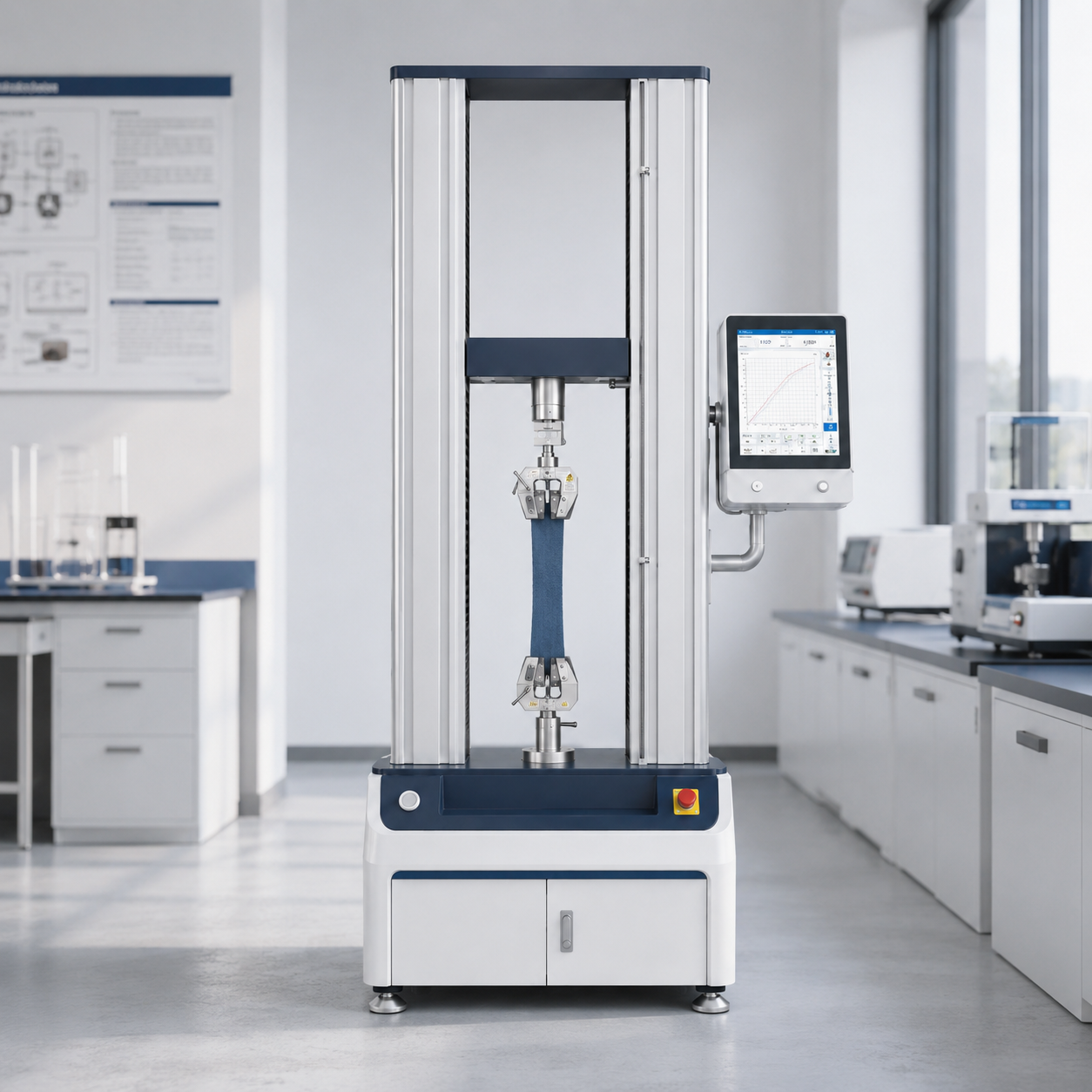
This digital universal tensile testing machine is equipped with a high-precision load cell to deliver stable and accurate force output. Paired with a fully digital closed-loop control system, it supports stepless adjustment of test speed. The machine performs multiple mechanical tests including tension, peeling, tearing, shearing and compression, compatible with leather, rubber, EVA foam, fabric, various bonded shoe materials and other raw & auxiliary footwear materials for inspection.
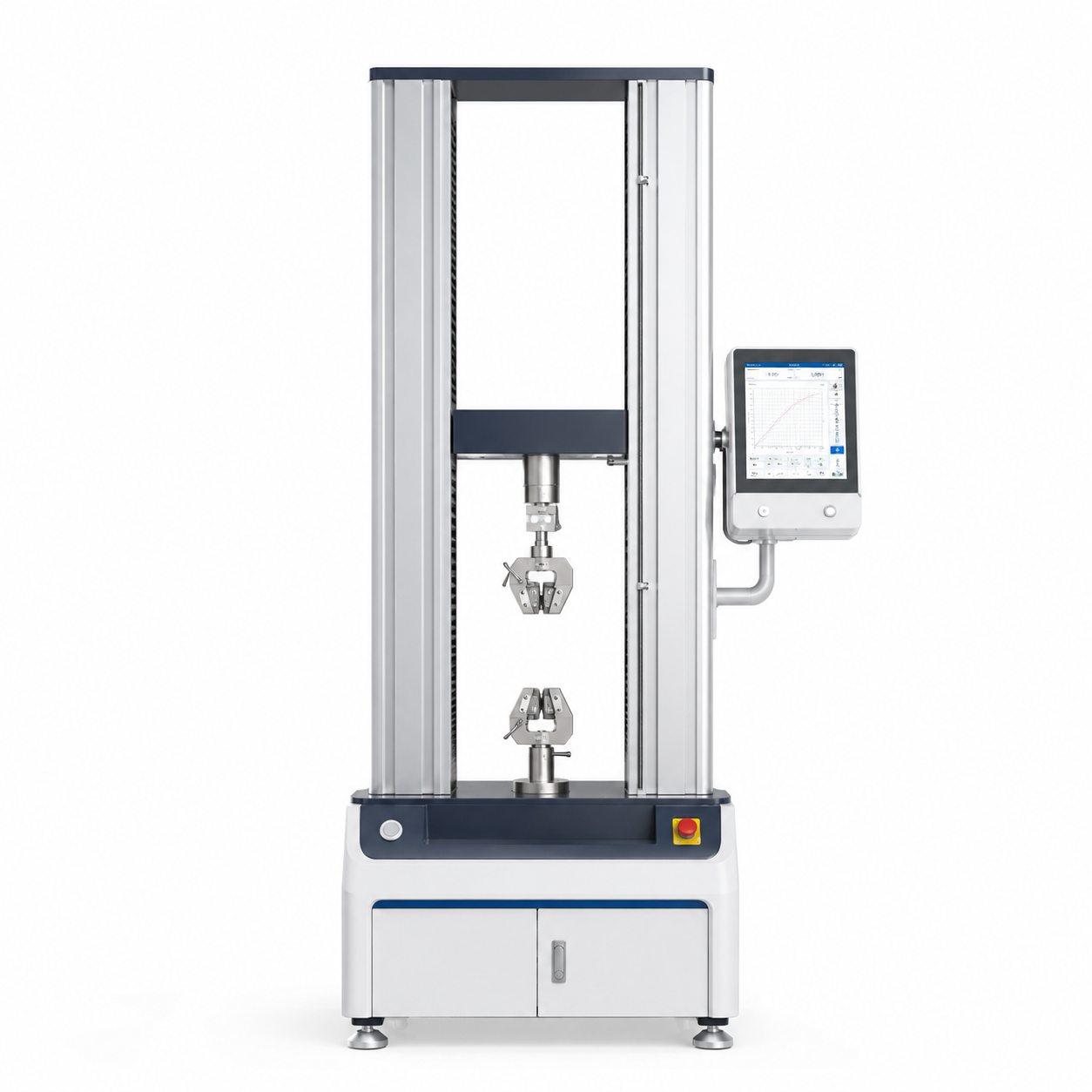
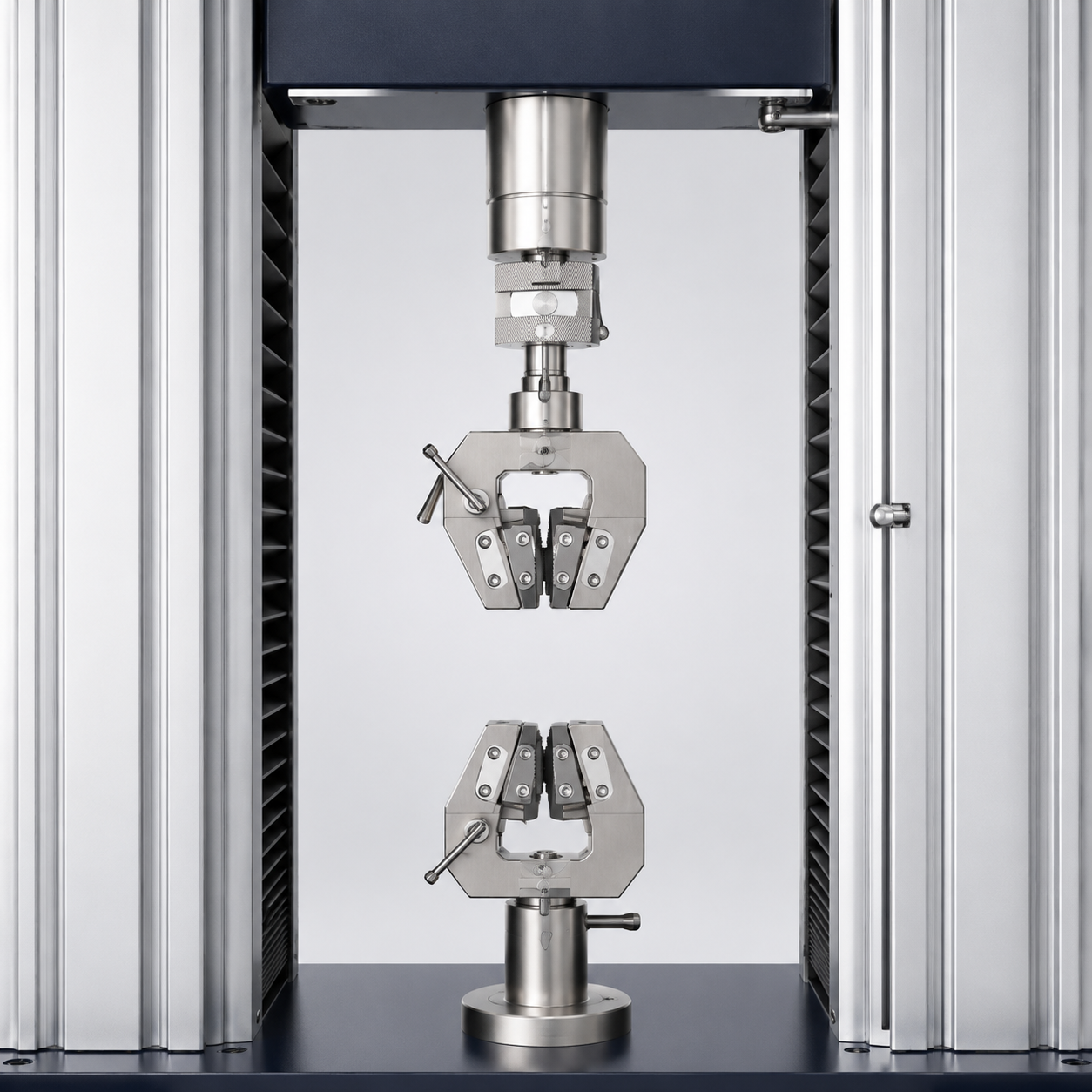
The unit automatically stops once the specimen fractures, eliminating the need for continuous manual monitoring. The display screen synchronously shows real-time force and displacement data. Grips adopt a quick-replace design for convenient and efficient switching between different test items. The whole machine features a heavy-duty rigid frame structure, producing negligible vibration during high-strength mechanical testing.
Dual safety protection mechanisms of overload and over-travel are built in to guarantee safe laboratory operation. The operation terminal is fitted with a simple key panel requiring no complex programming; operators can get proficient after basic training. The machine comes with a built-in calibration function for regular verification of force accuracy. Its modular construction facilitates routine inspection, repair and component maintenance.
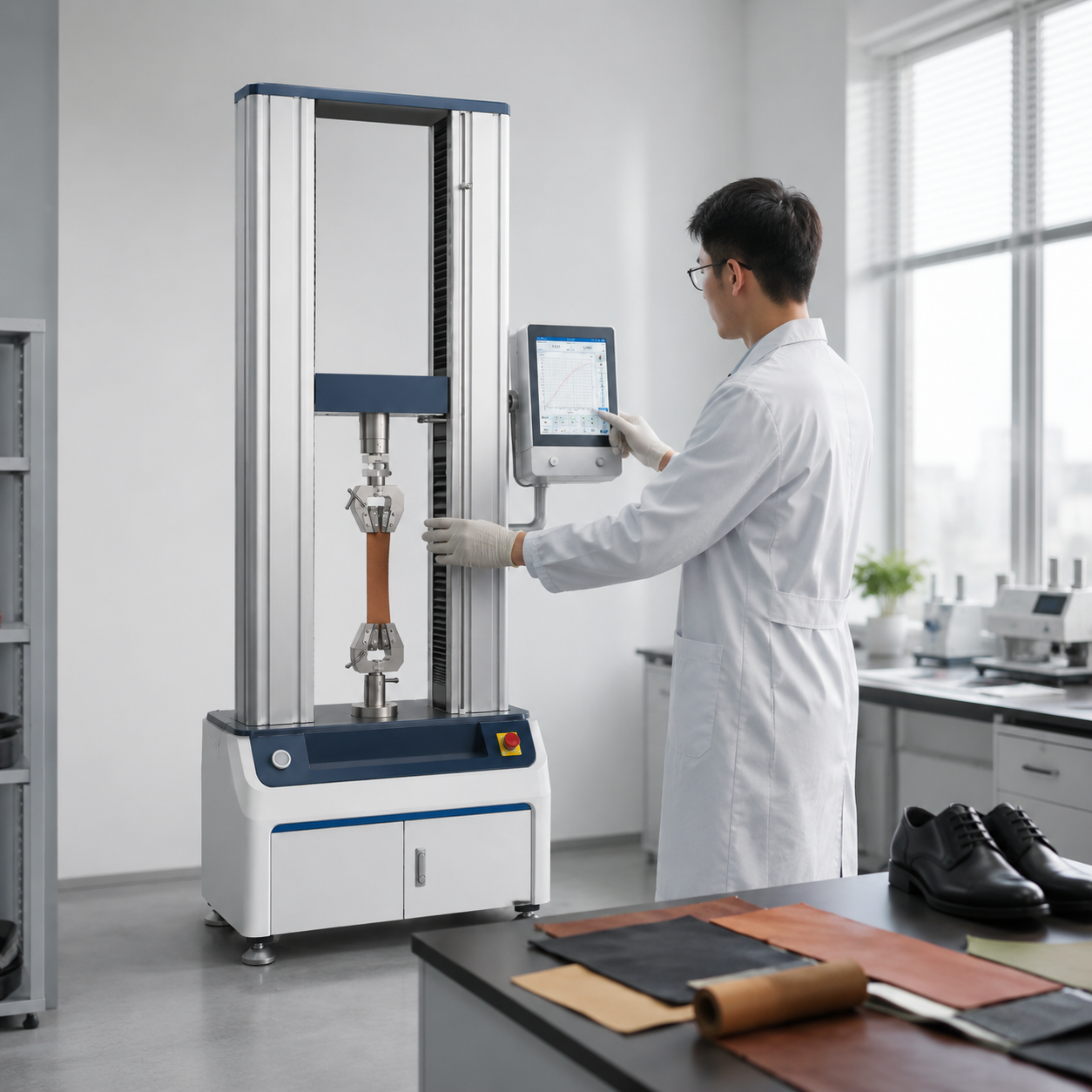
This universal tensile tester is widely applied in footwear quality control laboratories, leather processing plants, rubber production workshops, textile fabric manufacturers and shoe material R&D centers. It conducts physical property tests on leather, rubber, EVA foam, textile fabrics, shoe adhesives and various composite materials, to verify tensile strength, peel strength, tear resistance, shear characteristics and compression resistance of shoe materials.
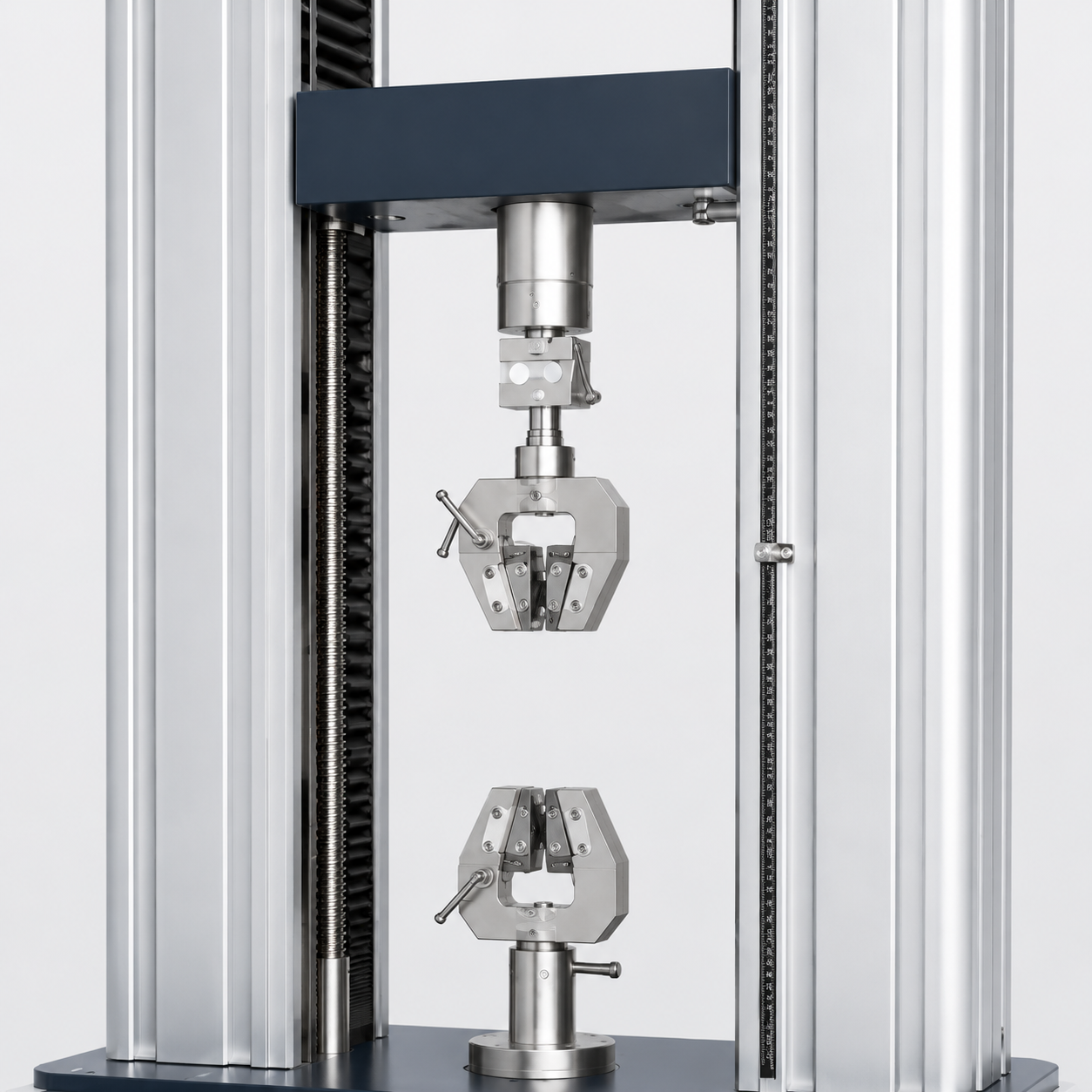
Test parameters can be flexibly adjusted to match material properties, outputting precise and highly repeatable test data, meeting standardized inspection requirements for raw material incoming inspection, new product development and mass production quality control in the footwear industry.
Standardized installation and operation procedures are clearly specified. Before startup, fully inspect power supply circuits, grip assembly status and load cell working conditions. Select matching grips according to test materials, set corresponding test program parameters, stably clamp specimens and apply pre-tension before initiating formal tests. The machine automatically executes test procedures and halts automatically upon specimen breakage. Timely record and save test data, clean up specimen residues, and power off the whole machine after testing.
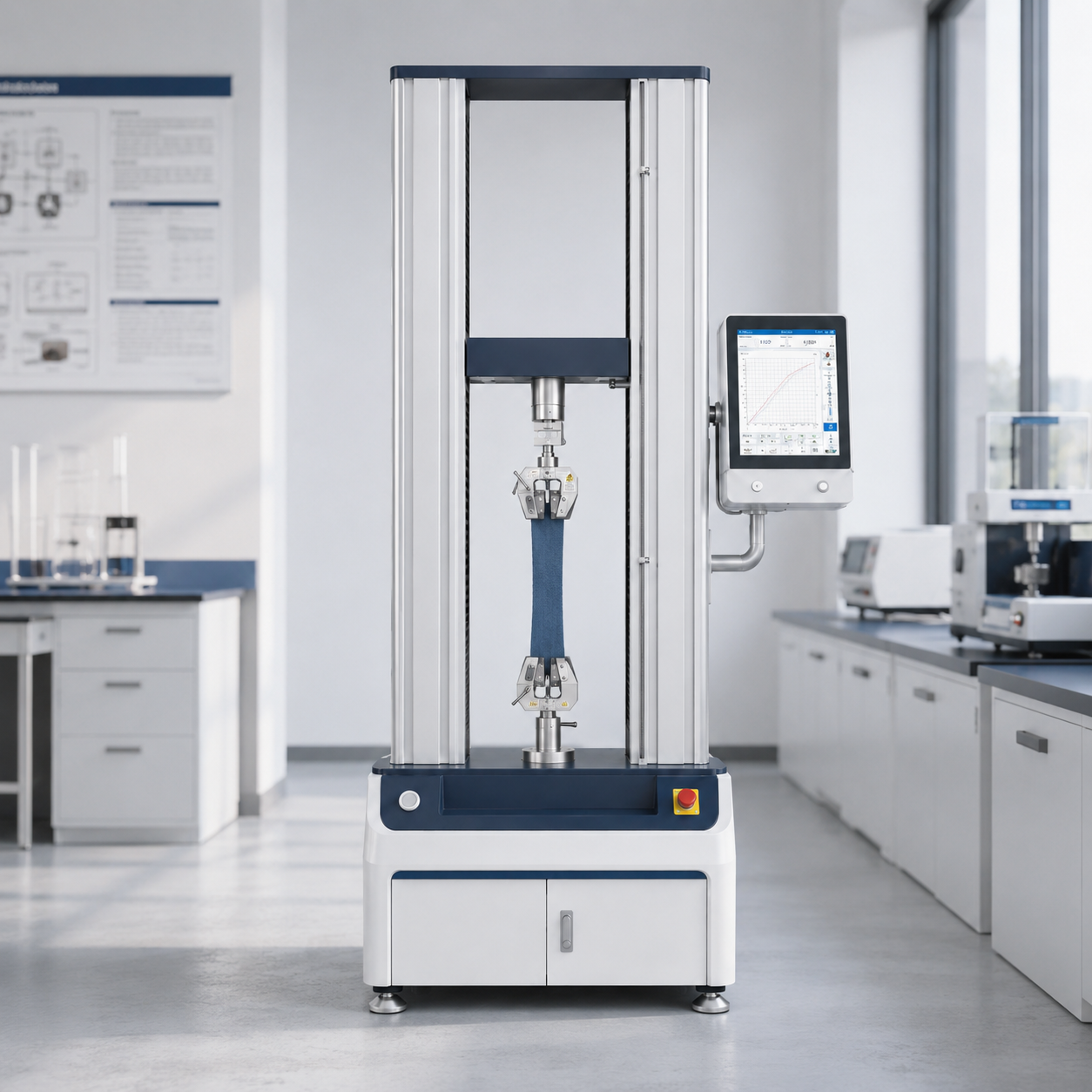
For equipment installation, place the unit on flat and solid ground with sufficient operating space reserved around. Connect AC220V power supply with reliable grounding. Install test grips and limit protection components per the instruction manual, then complete no-load trial run, force calibration and specimen debugging. A complete hierarchical maintenance system ensures long-term stable equipment operation. Daily maintenance includes cleaning dust and specimen debris off the machine surface, checking grip clamping condition and normal screen display.
Weekly maintenance covers inspection of grip wear, tightening all connecting parts, and verification of limit protection function effectiveness. Monthly maintenance involves lubricating transmission components, sorting wiring circuits and removing internal chassis dust. Troubleshoot faults based on error prompts; cut off power supply before disassembly. Regularly calibrate the load cell to consistently guarantee accurate and reliable test data.
The machine features low operating power consumption and long service life of core components. Upon reaching the scrappage lifespan, metal frames, load cells and electrical components can be sorted and recycled in compliance with environmental regulations. Test fixtures are durable for long-term repeated use. Tested material specimens shall be classified and disposed uniformly, helping quality inspection laboratories achieve low-carbon and green management.
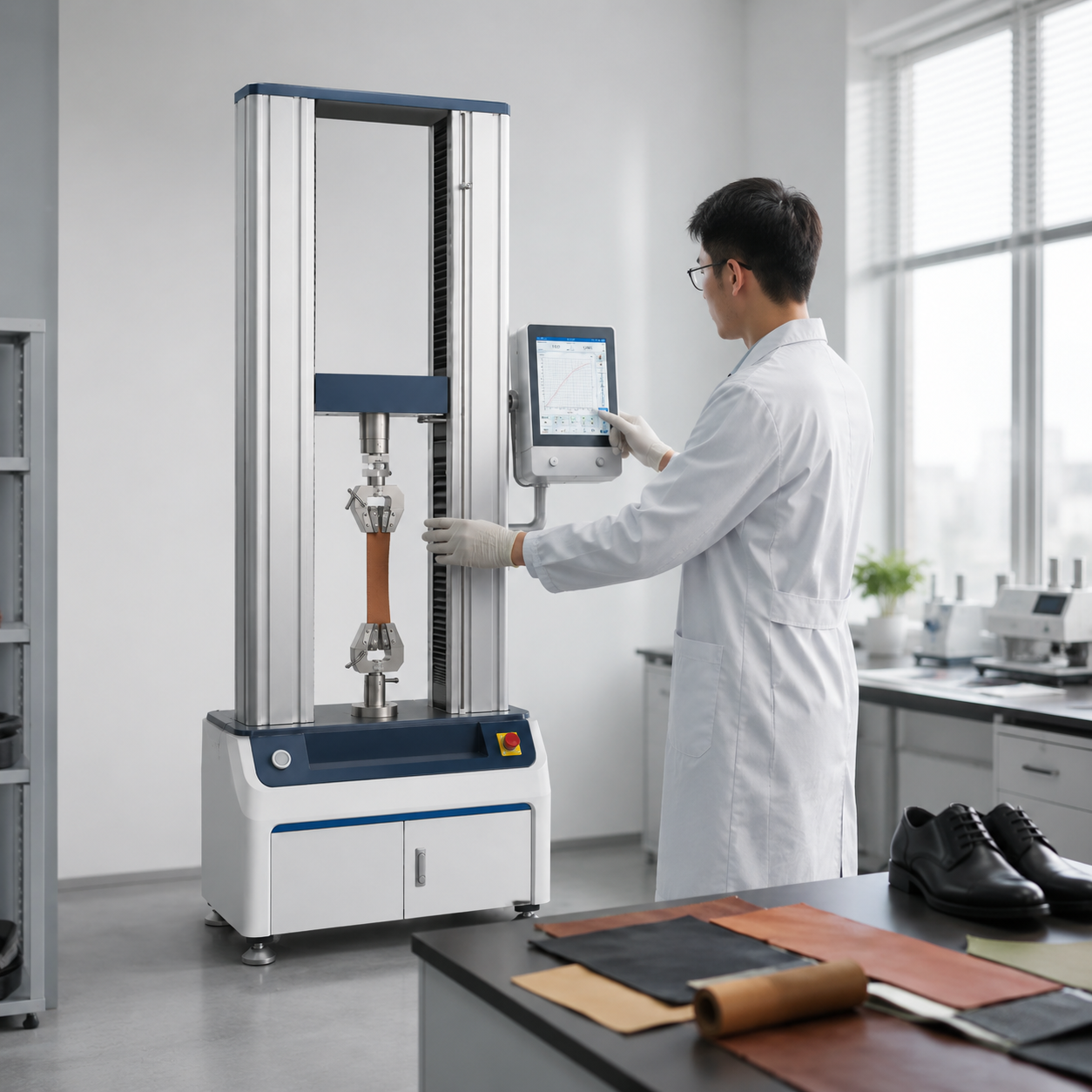
The machine achieves force measurement accuracy up to ±0.5%, with test speed steplessly adjustable from 1mm/min to 500mm/min, supporting corresponding test conditions for both soft textiles and rigid rubber materials. Built-in general test modes greatly lower the threshold for mechanical property inspection of shoe materials, making it an indispensable precision testing instrument for footwear enterprise laboratories to verify raw material performance and control finished product quality.