
Global Footwear Supply Chain Undergoes In-depth Reconstruction Amid International Changes
From 2024 to 2026, the global political and economic landscape continues to adjust: geopolitical conflicts, trade barriers, regional trade agreements (RCEP, USMCA), and the trend of supply chain localization/nearshoring have profoundly reshaped the global layout of the footwear industry and shoe manufacturing equipment. Manufacturing hubs in Asia, such as Vietnam, India, Indonesia, Bangladesh, Cambodia, and Myanmar, are accelerating production expansion; demand for Chinese shoe machinery and materials in Russia, the Commonwealth of Independent States (CIS), and Eastern Europe remains rigid; the Americas (Brazil, Mexico, Colombia) have emerged as new growth poles for global footwear consumption.
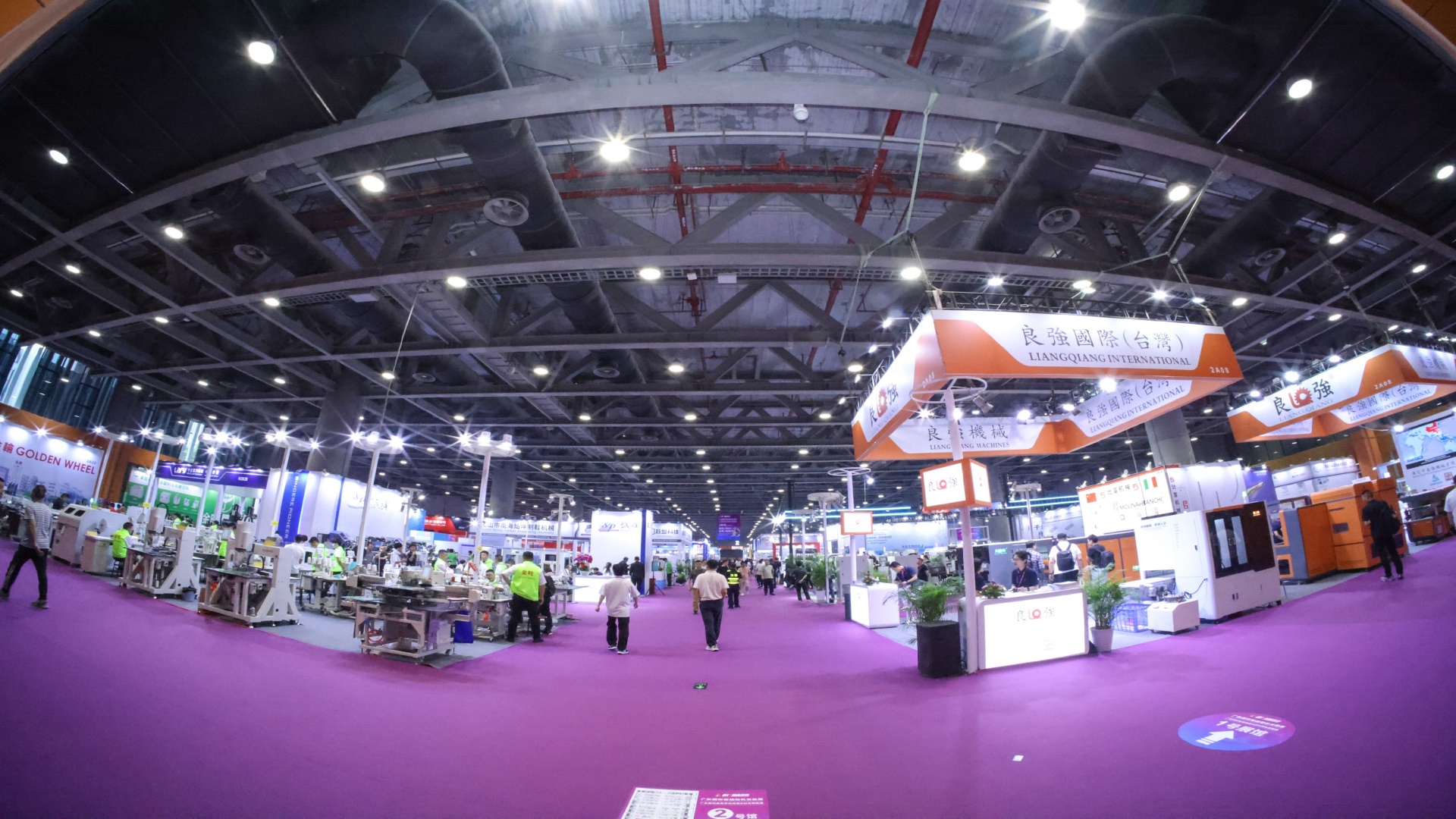
Against this backdrop, digital communication can no longer meet the core needs of high-end procurement, technical docking, and supply chain integration. As the organizer of GISMA GUANGZHOU 2026 Guangdong International Intelligent Shoe Machinery & Equipment Expo & Shoe Materials Leather Supply Chain Expo, based on industry big data and global trade link analysis, we draw a clear conclusion: Offline exhibitions remain the only core channel for Chinese shoe machinery and material enterprises to open up global markets, establish supply chain trust, and seize the right to speak on technical standards.
I. Core Trend: Global Footwear Production Capacity and Brands Accelerate Sinking, Offline Exhibitions Become "Strategic Interface"
1. Global Major Shoe-Producing Countries/Regions Clusters (Fully Covered by GISMA)
The world's top 100 shoe-producing countries/regions have formed clear echelons, all of which are within the precise coverage of GISMA GUANGZHOU 2026:
- Asia’s Core Production Belt (70% of Global Production Capacity): Vietnam, India, Indonesia, Bangladesh, Cambodia, Myanmar, Philippines, Pakistan, Malaysia, Thailand, Turkey, Iran, Sri Lanka, Nepal. These regions gather a large number of global footwear OEMs and contract manufacturers, including major suppliers for brands such as Nike, Adidas, Puma, and Skechers.
- CIS/Russian-Speaking Markets: Russia, Ukraine, Belarus, Kazakhstan, Uzbekistan, Kyrgyzstan, Tajikistan, Turkmenistan. With the adjustment of regional trade patterns, these markets have become key emerging markets for Chinese shoe machinery and materials.
- Americas: Dual-Drive of Consumption and Manufacturing: Brazil, Mexico, Argentina, Colombia, Peru, Chile, Uruguay, Paraguay, Bolivia, Ecuador, Venezuela, Canada, the United States. Major brands such as New Balance, Timberland, and Crocs have established production bases and procurement centers here.
- Europe/Middle East/Africa: Brand and Supply Chain Hubs: Germany, Italy, Spain, France, the United Kingdom, Poland, Saudi Arabia, Egypt, Nigeria, Ethiopia, South Africa, South Korea, Japan, Australia, New Zealand. These regions are home to global high-end footwear brands (such as Gucci, Prada, Salvatore Ferragamo) and professional footwear associations.
These regions gather the world’s top 35 footwear brand manufacturers, OEMs, traders, and industry associations — their demand for intelligent shoe machinery, high-quality shoe materials, leather solutions, and automated production lines can only be accurately matched through offline exhibitions.
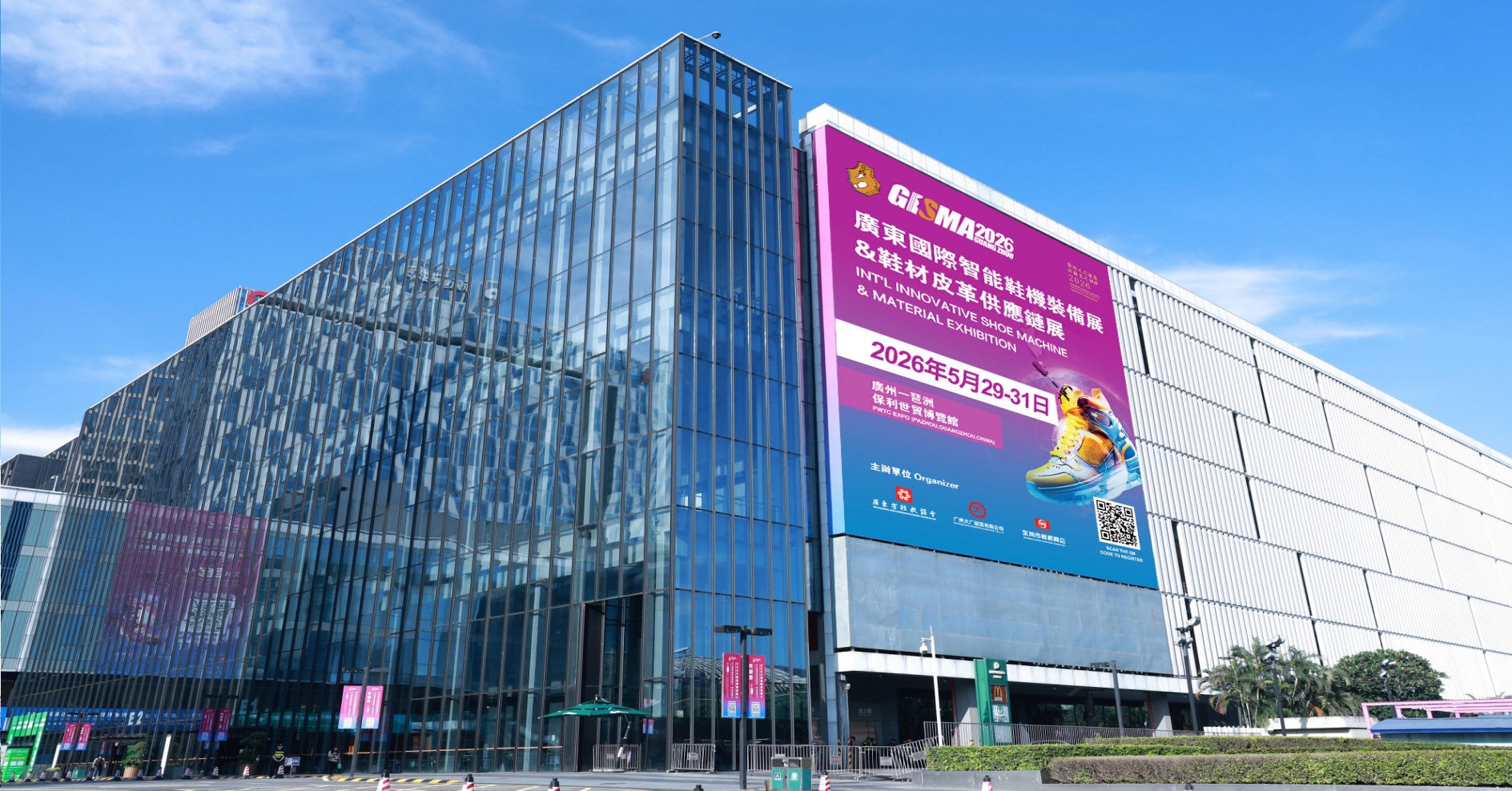
2. Three Irreplaceable Core Values of Offline Exhibitions
- Technology Visualization and Standard Discourse Power: The performance, precision, and stability of shoe machinery, the folding resistance of sole materials, and the environmental protection level of leather must be verified on-site. GISMA GUANGZHOU 2026 focuses on displaying core equipment such as automated cutting machines, PU/EVA injection machines, intelligent molding machines, and 3D shoe last design systems, serving as the only on-site platform for global buyers to establish "Chinese equipment standards."
- In-depth Binding of Supply Chain Trust Chains: The footwear supply chain is highly dependent on long-term cooperation, after-sales response, and customized solutions. Offline exhibitions allow shoe machinery manufacturers, shoe material suppliers, and overseas purchasers to establish trust face-to-face, completing the four-step process of "factory inspection, price negotiation, sample making, and contract signing" in one go, greatly reducing cross-border transaction costs.
- Accurate Connection with Global Policy Dividends: RCEP tariff reductions, cross-border e-commerce supply chain upgrades, and import qualification requirements of various countries can only be obtained through official interpretation and resource matching on the exhibition site.
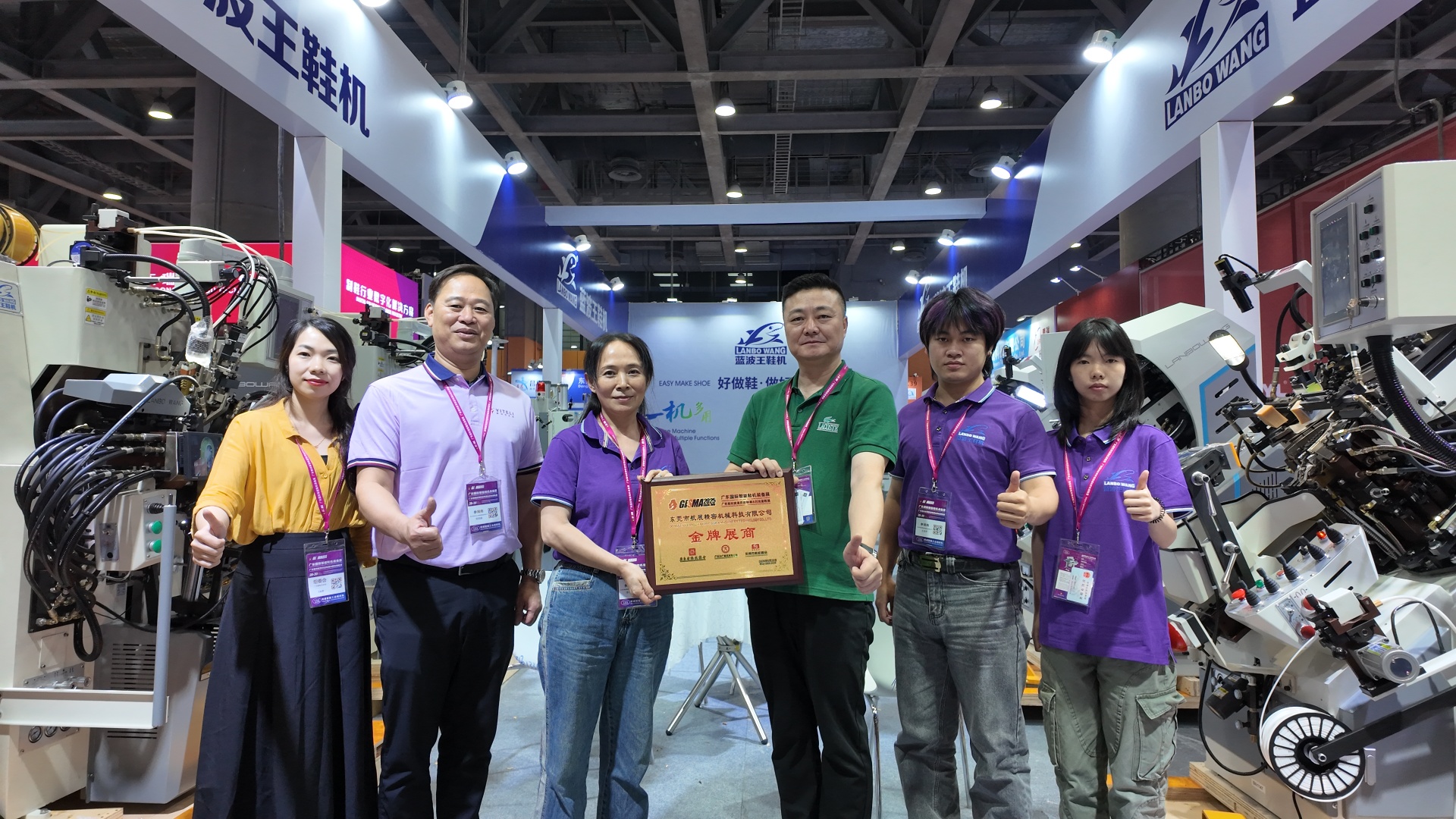
II. Industry Pain Points: Online Communication Fails, Offline Exhibitions Become "Breakthrough Entrance"
1. Three "Online Insoluble" Pain Points in International Procurement
- Deviation Between Technical Parameters and Actual Effects: Google and LinkedIn can only display pictures/videos, but cannot show the stability, energy consumption, and finished product yield of shoe machinery, leading to repeated trial and error by customers.
- High Supply Chain Compliance Risks: Different countries have significant differences in requirements for shoe material adhesives, heavy metals, and environmental standards, which cannot be verified for compliance online.
- Difficulty in Implementing After-Sales and Service Commitments: Overseas customers are in urgent need of localized after-sales service, spare parts supply, and technical training. Offline exhibitions are the key scenario for service providers to establish a service closed loop with customers.
2. GISMA GUANGZHOU 2026’s Solution: Full-Link Intelligence + International Services
With "intelligent manufacturing + systematic supply chain + international services" as the core, the exhibition creates:
- Intelligent Shoe Machinery Zone: Gathers global shoe machinery manufacturers and intelligent shoe manufacturing equipment enterprises, displaying automated production lines, CNC cutting machines, PU/EVA injection machines, vulcanizing shoe machines, labor protection shoe-specific equipment, supplemented by shoe machine parts, consumables, and maintenance services.
- High-End Shoe Materials and Leather Zone: Brings together full-category suppliers of vamp materials, sole materials, shoe lasts, shoe buckles, shoelaces, and shoe material accessories, focusing on displaying environmentally friendly leather, recycled materials, functional vamps (waterproof/antibacterial/breathable), and high-performance soles (TPR/PU/EVA).
- Global Business Matching Center: Sets up country-specific matching zones for key markets such as Vietnam, Bangladesh, India, Indonesia, Russia, and the Americas, accurately connecting local footwear associations, brand OEMs, importers, and distributors.
III. Policy Dividends: Exclusive Support for Overseas Visitors, Reducing the Threshold for Coming to China
To further help global merchants seize the opportunities of China’s supply chain, GISMA GUANGZHOU 2026 launches an exclusive support policy for overseas visitors, supporting global footwear colleagues with practical actions:
1. Accommodation Support: During the exhibition period, enjoy 2 nights of free twin-bed room accommodation, or choose to receive a cash allowance of USD 100 per person.
2. Dining Benefits: Each registered overseas visitor will receive 2 free business lunch vouchers.
3. Refreshment Benefits: Each registered overseas visitor will receive 2 free coffee vouchers.
4. Airfare Support (Group Exclusive): Organize a visiting group of 10 or more people, and the group leader is eligible for reimbursement of round-trip economy class airfare to Guangzhou, up to a maximum of USD 1,450.
Important Note: One month before the exhibition opening, the inviter must submit the following information of all invited guests to the organizer for registration:
- Copy of the passport information page
- Full company name
- Contact email address
- Phone number
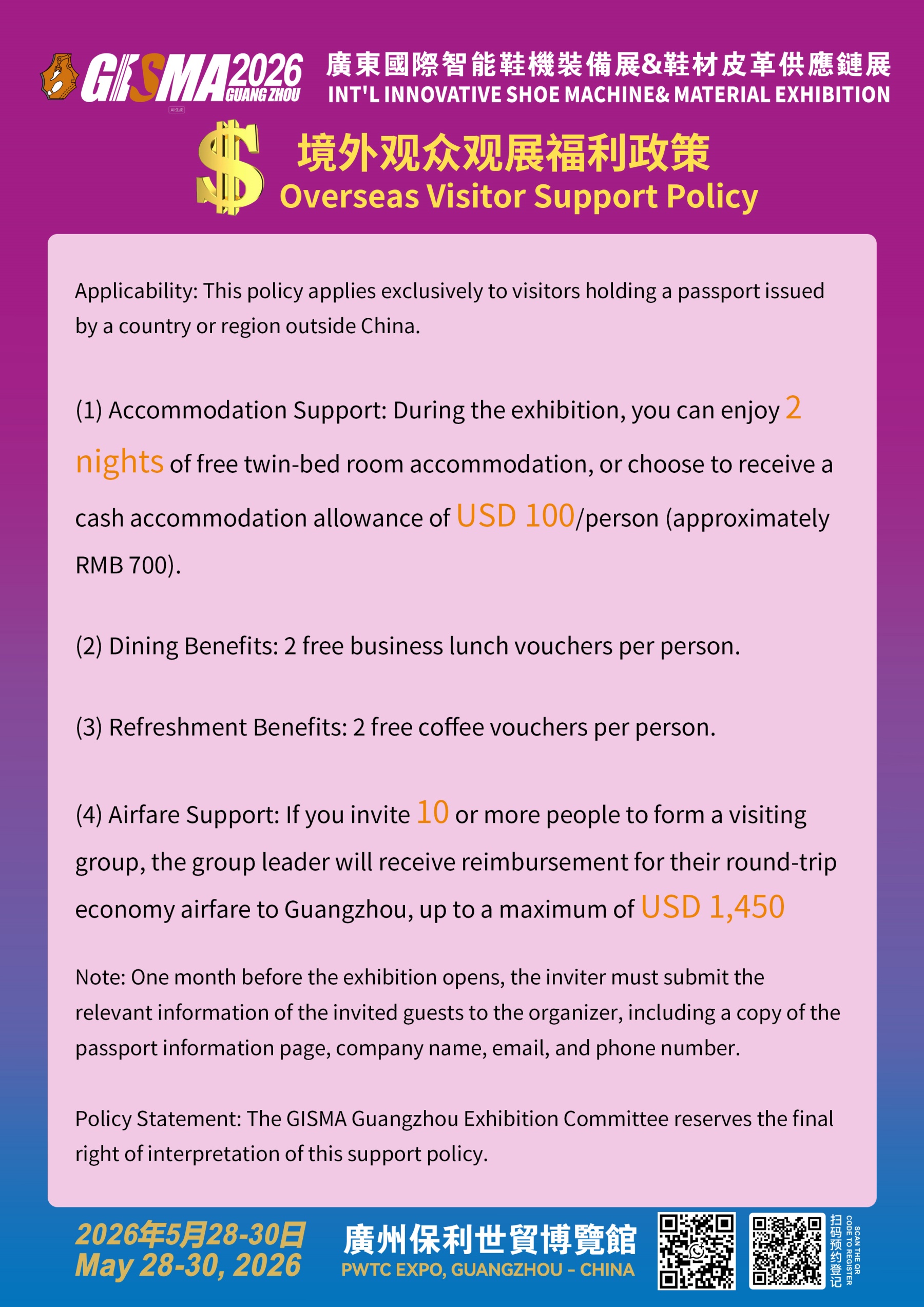
Policy Statement: The GISMA Guangzhou Exhibition Committee reserves the final right of interpretation of this support policy.
IV. Future Trends: Intelligence, Systematization, Internationalization, Chinese Shoe Machinery Exhibitions Lead Global Footwear Upgrade
Three Trends of Global Footwear Exhibitions
- Intelligentization: AI, big data, and digital twin technologies are integrated into shoe machinery and exhibition services, with personalized customization and flexible production becoming the mainstream.
- Systematization: From single equipment display to the output of "equipment + materials + processes + services" full-link solutions, reducing the comprehensive procurement cost of customers.
- Internationalization: Upgrading from regional exhibitions to global supply chain trade platforms, gathering global associations, brands, manufacturers, and service providers to form a closed loop of international trade.
2. Mission of GISMA GUANGZHOU 2026: Creating the "First Stop" of the Global Footwear Supply Chain
We are committed to building GISMA GUANGZHOU 2026 into the preferred platform for global shoe machinery and material procurement, helping Chinese shoe machinery manufacturers and shoe material suppliers go global, and assisting overseas footwear manufacturers and brands in reducing procurement costs, improving product quality, and expanding market channels.
V. Action Invitation: Gather in Guangzhou on May 28-30, 2026, to Embrace the New Future of Global Footwear
We sincerely invite all global shoe-producing countries, shoe machinery and material industry associations, brand manufacturers, OEMs, purchasers, and distributors to attend GISMA GUANGZHOU 2026. Witness the in-depth integration of intelligent shoe machinery, high-end shoe materials, and the global supply chain, jointly seize the opportunities of global footwear industry upgrading, and create a sustainable, efficient, and intelligent global footwear supply chain ecosystem.
Exhibition Information
Exhibition Date: May 28-30, 2026
Venue: Poly World Trade Center Expo, Guangzhou, China
Official Consultation: www.giismex.com | Email:zoe@gsma2017.com | Official WeChat:8613729945028