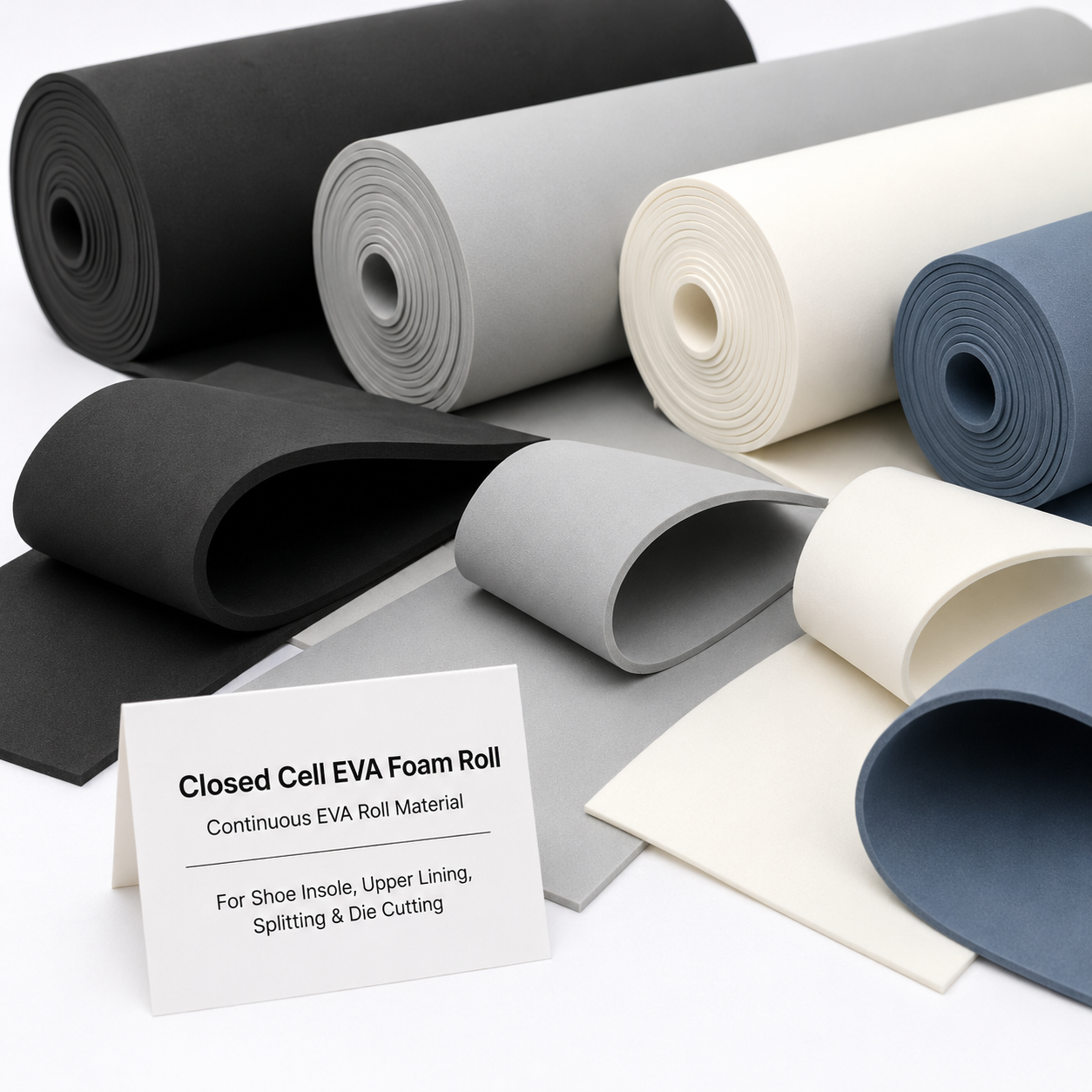
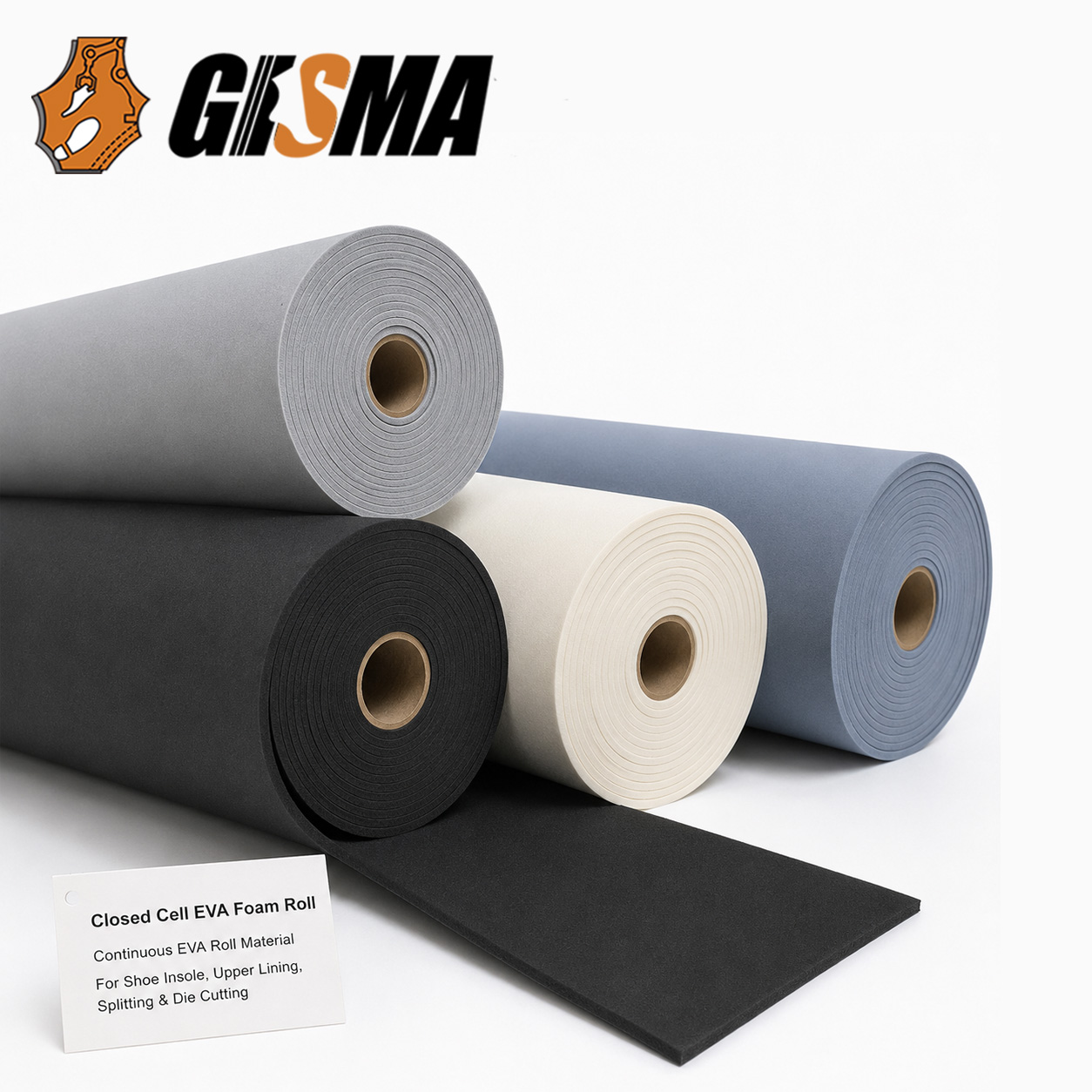
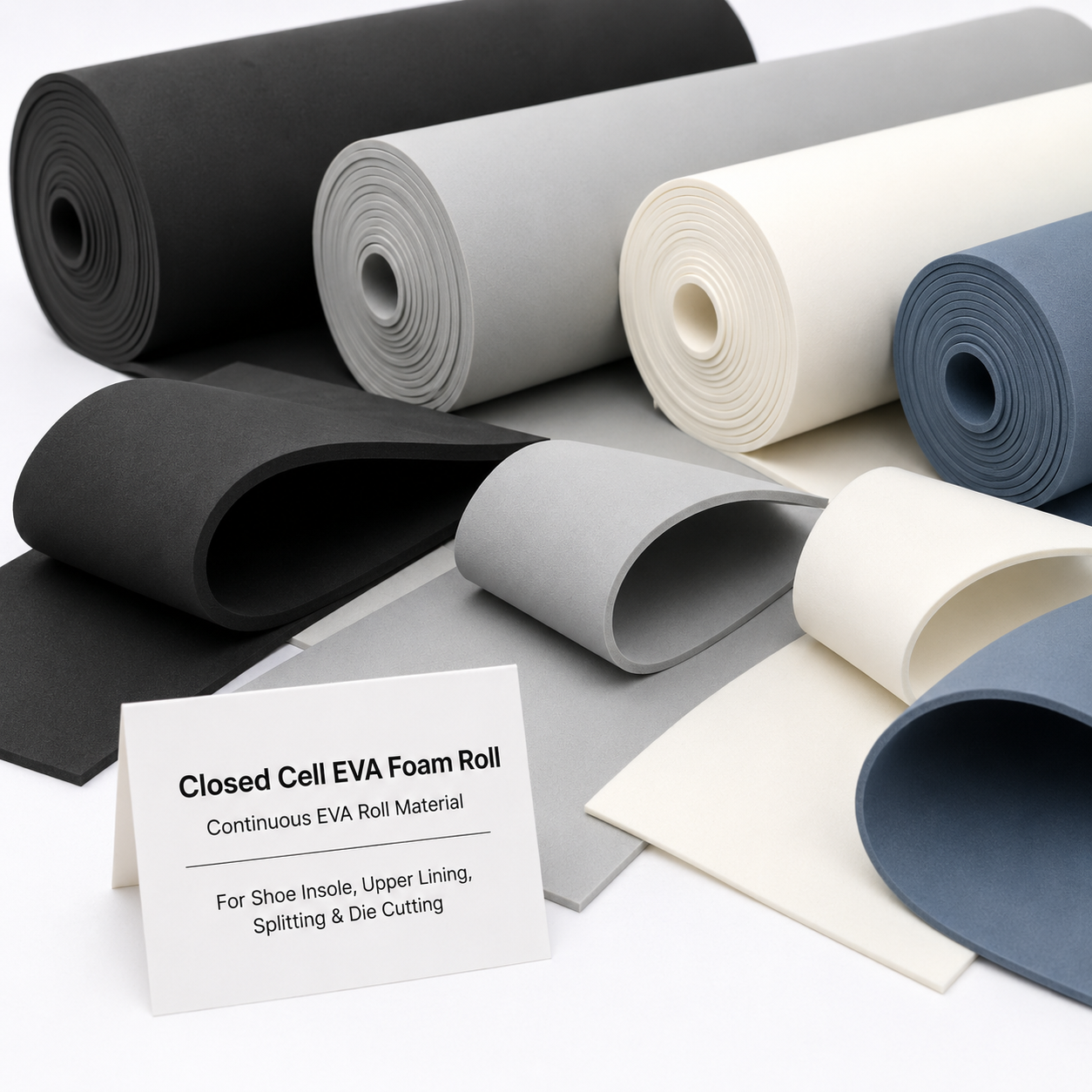
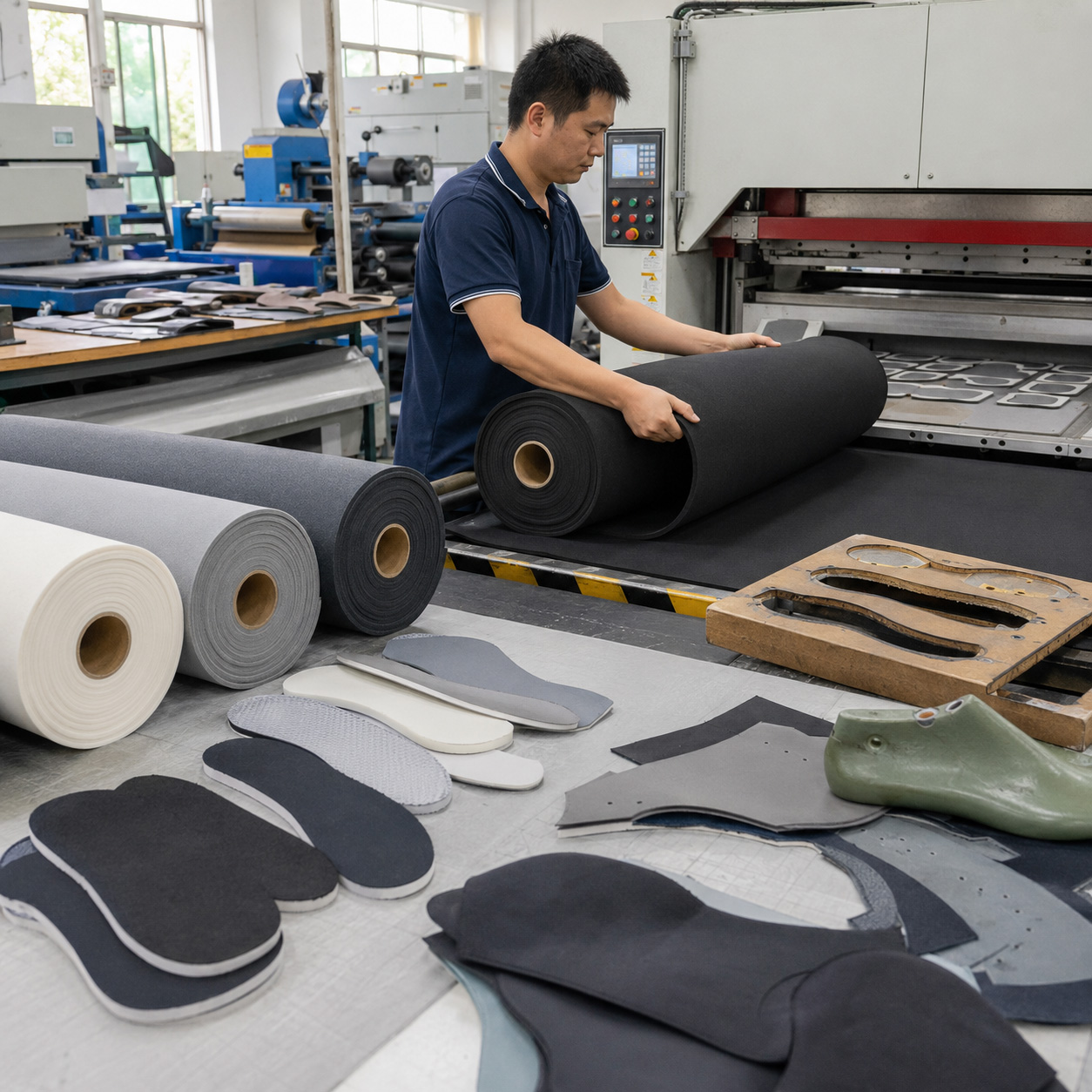
Closed Cell EVA Foam Roll, Continuous EVA Roll Material For Shoe Insole, Upper Lining, Footwear Splitting & Die Cutting
Booth| Model Number | EVA-CR0.5~10 |
| Brand | GISMA Guangzhou |
| Net Weight | 14.5 kg |
Closed Cell EVA Foam Roll, Continuous EVA Roll Material For Shoe Insole, Upper Lining, Footwear Splitting & Die Cutting
Model:EVA-CR0.5~10
| Specification | Parameter Details |
|---|---|
| Raw Material | Closed cell environment-friendly EVA foam continuous roll |
| Standard Roll Width | 1000mm / 1200mm customizable |
| Thickness Range | 0.5mm~10mm full customizable |
| Standard Roll Length | 100m per roll |
| Density Options | 35kg/m³ ~ 70kg/m³ adjustable density |
| Conventional Colors | Off-white, black, light gray, dark blue gray (custom color available) |
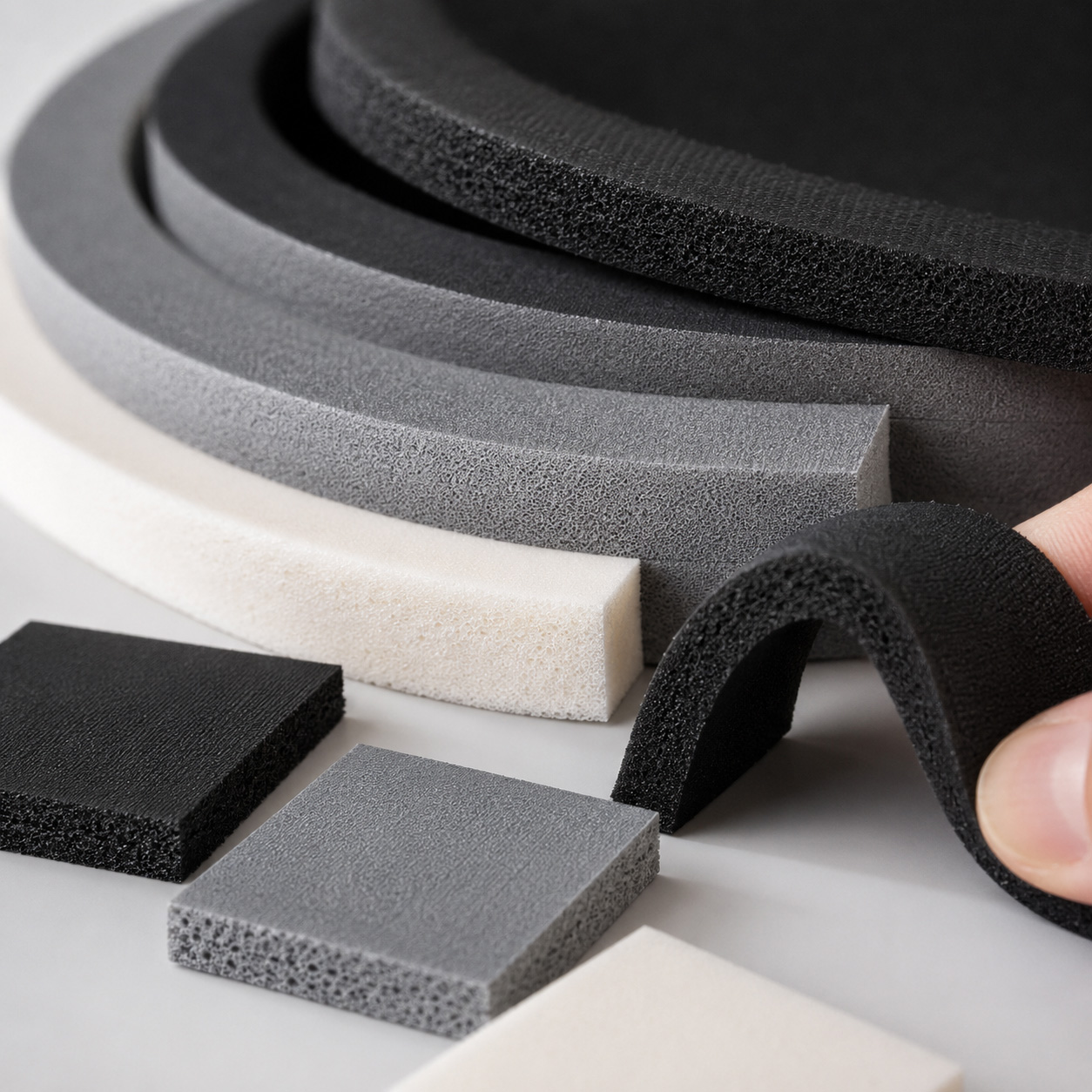
| Cell Structure | Dense uniform closed-cell, low water absorption |
| Processing Compatibility | Splitting machine cutting, hydraulic die cutting, hot melt lamination, back glue compound |
| Single Roll Net Weight (3mm,1000mm width) | 14.5 KG |
| Quantity Per Export Carton | 4 rolls |
| Carton Dimension (L×W×H) | 1440×400×330 mm |
| Carton Net Weight | 58 KG |
| Carton Gross Weight | 64.6 KG |
Closed Cell EVA Foam Roll
This continuous closed-cell EVA foam roll is formed with highly compact independent closed-cell foaming structure. Its internal cells are fine, sealed, evenly and densely arranged, delivering outstanding low water absorption, sweat resistance and moisture-proof performance. It resists water absorption, swelling, softening, bubbling and deformation under humid conditions, foot sweat immersion or washing processing. The material remains dry and stable during long-term service, thoroughly overcoming common drawbacks of ordinary open-cell foam such as moisture susceptibility, waterlogging, collapse and mildew growth. Manufactured via an integrated continuous calendering mass production process, the whole roll features seamless construction without joints, breaks or inconsistent thickness. The roll maintains uniform and stable tension, perfectly matching continuous cutting, splitting, hot pressing and lamination mass production on automated assembly lines, effectively boosting productivity and finished yield in shoemaking workshops.
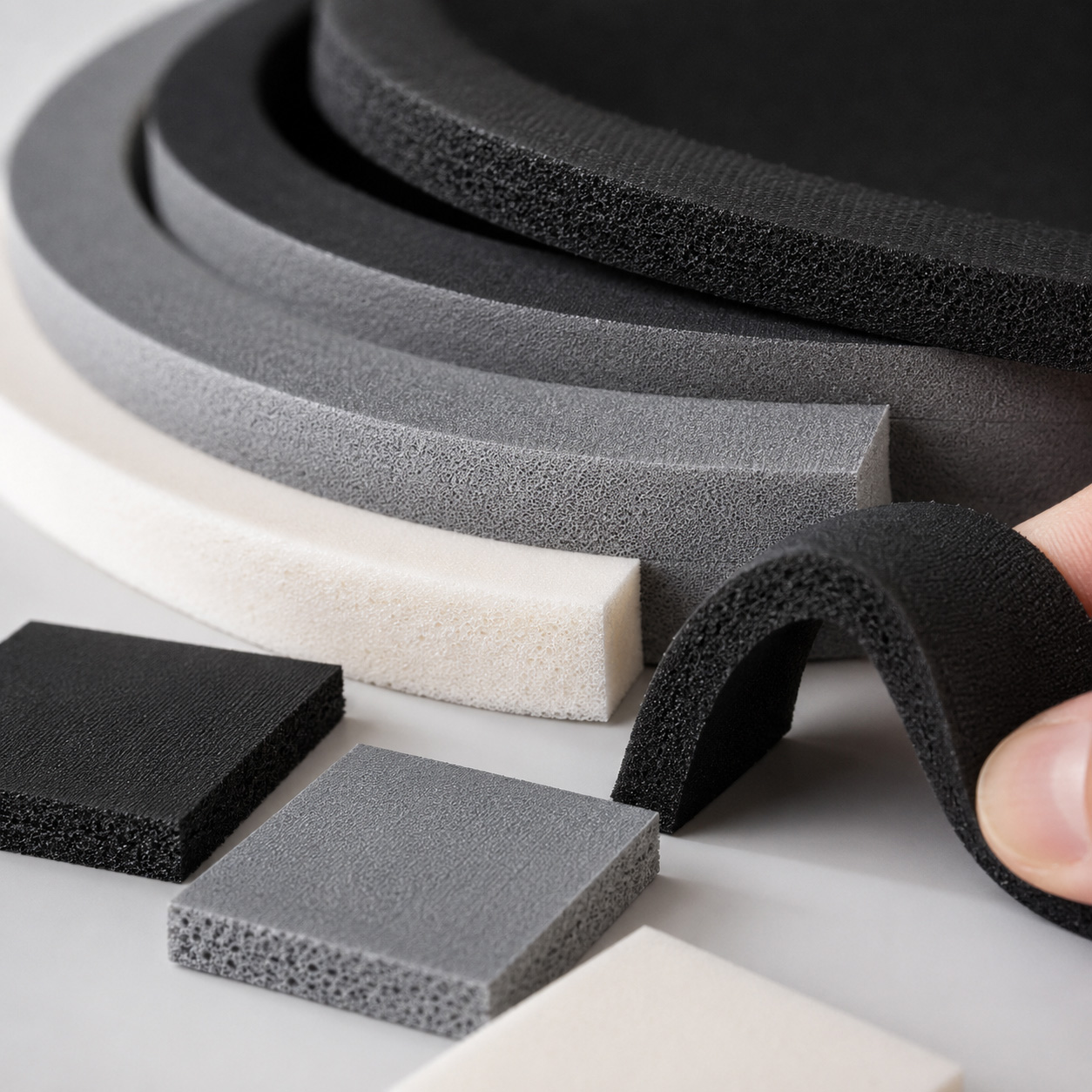
With scientifically balanced overall hardness and stable rebound & cushioning performance, it delivers both supportive rigidity and softness with uniform elasticity free of uneven bounce. No permanent collapse, slackening, indentation or deformation occurs after prolonged repeated compression, walking impact and continuous squeezing, granting exceptional durability. The foam boasts a compact, smooth body with fine homogeneous texture and high structural density, resisting powdering and debris shedding. During full processing including die cutting, splitting, high-speed blanking and forming, cut edges remain neat, smooth and burr-free with nearly no flying foam crumbs. This drastically reduces workshop dust pollution, material waste and manual cleaning costs. The material features excellent hot melt compatibility and substrate adaptability, enabling high-strength tight lamination with TPU hot melt adhesive film. Hot-pressed bonding achieves reliable adhesion without cracking, bubbling, delamination or debonding. It is fully compatible with lamination processing of all footwear materials including polyester lining, suede PU, various microfiber leathers, mesh fabrics and flyknit textiles, supporting the complete set of shoemaking processes including cold/hot glue lamination, hot melt shaping and lining bonding. Comprehensive customized options are available with multiple selectable thicknesses, densities and colors. Thin low-density grades suit soft inner linings for shoe quarters, toe boxes and heels; thick high-density variants meet high-strength shaping support requirements for insole substrates and load-bearing cushion structural components, covering all working conditions for footwear structural production.
This continuous closed-cell EVA foam roll serves as a core basic raw material dedicated to sports shoe factories, casual footwear manufacturers, safety footwear workshops, shoe material processing plants and shoe material wholesalers. Its application scenarios span the whole shoemaking workflow: it can be die-cut into finished insoles, collar cushion linings, toe protective padding and heel pressure relief sheets. Meanwhile, it works as base stock for thin-layer precision splitting on splitting machines and bulk blanking on hydraulic die cutters. Beyond footwear manufacturing, it is widely adopted for luggage lining cushioning, sports protective gear padding, craft backing materials and other diversified processing purposes with great versatility.For standardized processing operations: before use, lay the EVA foam roll flat on the cutting workbench and leave it for roughly 10 minutes to release winding compression tension. Once stress is fully released and the sheet stays flat and stable, proceed with layout marking, die positioning and precision die cutting. This effectively prevents dimensional deviation, warping and deformation of cut pieces caused by residual tension. For splitting procedures, flexibly adjust blade clearance and cutting pressure of the splitting machine according to actual foam thickness, ensuring smooth, even slicing with complete burr-free cut surfaces free from pull-induced rough edges. Prior to hot melt lamination and shaping, conduct sample lamination tests with matching TPU hot melt adhesive sheets to accurately optimize hot pressing temperature, pressure and holding time parameters, ensuring tight, flat bonding free of bubbling, delamination and debonding defects during mass production.
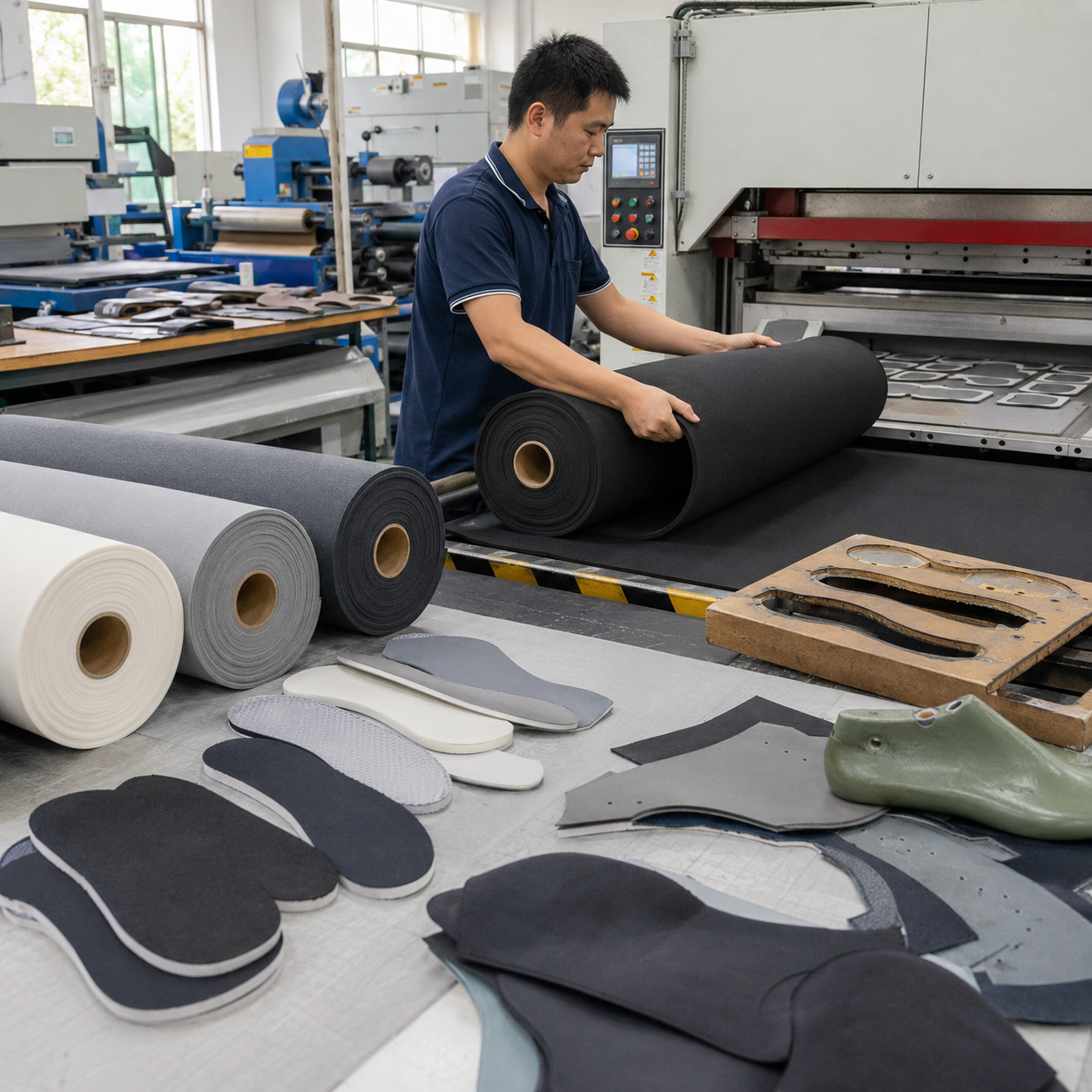
For warehouse storage: place EVA foam rolls horizontally on flat racks. Maintain a cool, dry and ventilated warehouse environment with storage temperature strictly controlled below 35°C. Keep the material away from heating equipment, direct sunlight, oil stains and corrosive solvents to prevent premature aging, hardening, yellowing, discoloration and performance degradation of foam. Never stack heavy steel plates or bulky cargo vertically on foam rolls, as compression will damage internal closed-cell structure and lead to permanent indentation, loss of resilience and reduced support capacity. Establish a graded maintenance system in workshops. Before daily cutting production, carefully inspect flatness, thickness uniformity and surface cleanliness of foam sheets, and promptly clear residual foam scraps and waste on workbenches to guarantee stable cutting precision in a tidy production environment. Conduct weekly sampling inspection across batches to verify consistency of foam density, slicing smoothness and sheet flatness. Gently wipe surface dust on rolls with dry soft cloth to maintain cleanliness without impairing subsequent hot melt lamination effect. Perform monthly classification inspection on long-term stock foam rolls in warehouses to fully check for yellowing, hardening and aging deterioration. Strictly follow the FIFO (First In, First Out) principle to prioritize stock nearing storage cycle and ensure stable qualified performance of every batch of foam put into production.
Avoid prolonged direct contact between foam sheets and high-temperature hot platens without isolation during processing. High heat may scorch and melt foam surface, destroy internal closed-cell structure and trigger deformation damage and performance failure.In terms of environmental protection and recycling: this product adopts low-odor, formaldehyde-free premium eco-friendly EVA raw materials without harmful volatile substances, fully complying with international low-VOC eco-safety standards for footwear, and stably supports domestic sales and export footwear orders. EVA foam trimmings generated during workshop cutting can be centrally collected, sorted and recycled for re-granulation and reproduction to realize cyclic reuse of industrial waste, assisting shoemaking factories to build a low-carbon, energy-saving and green production mode.