
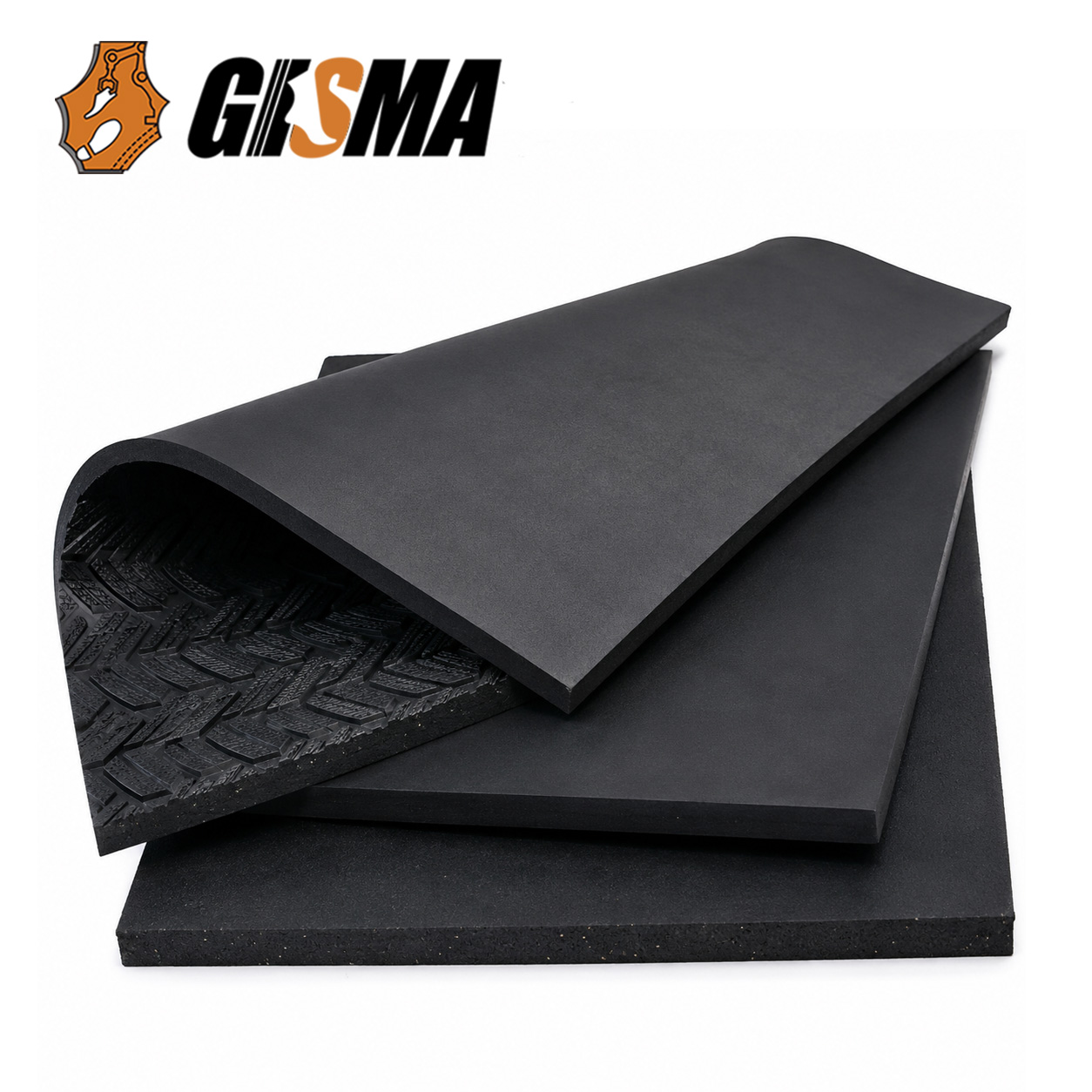
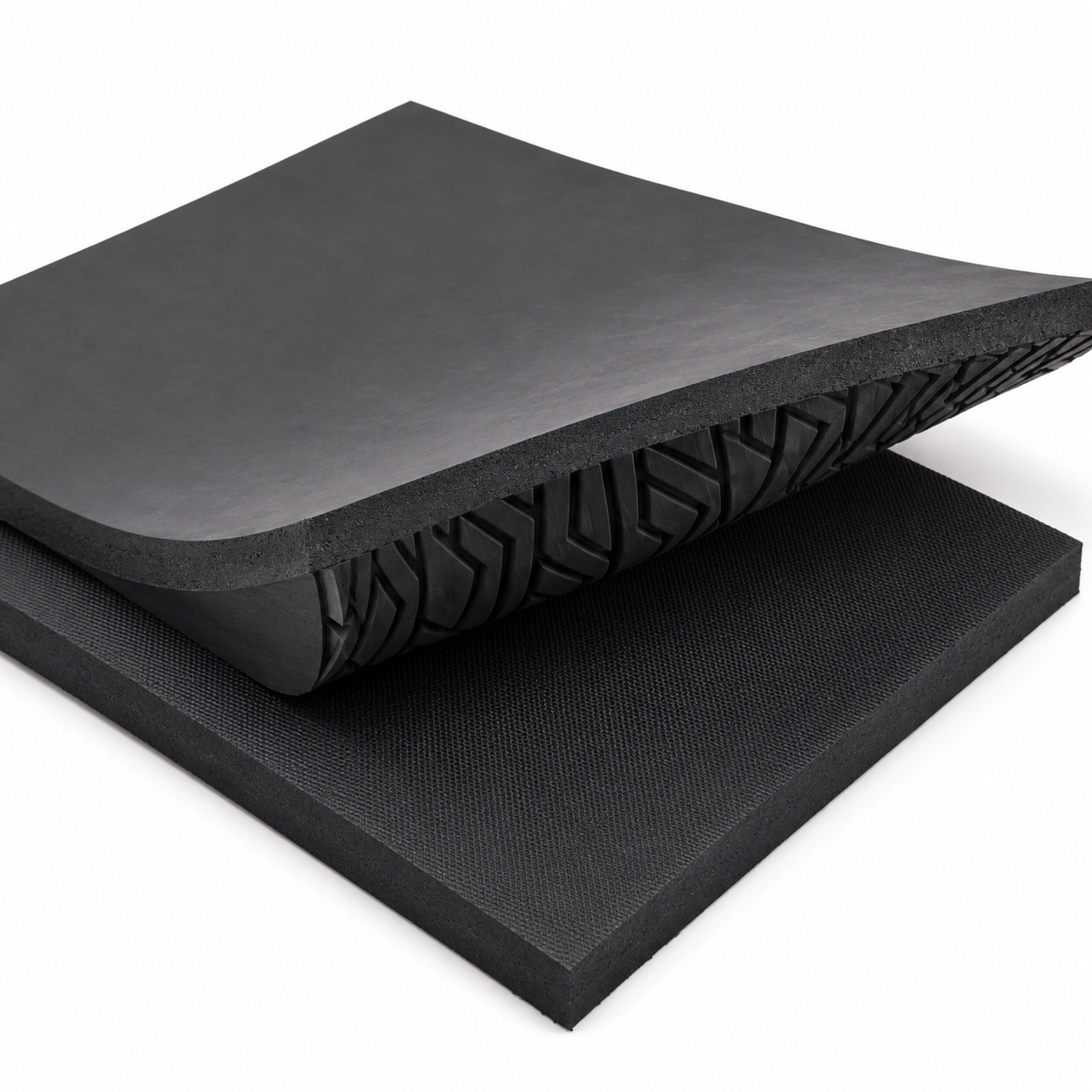
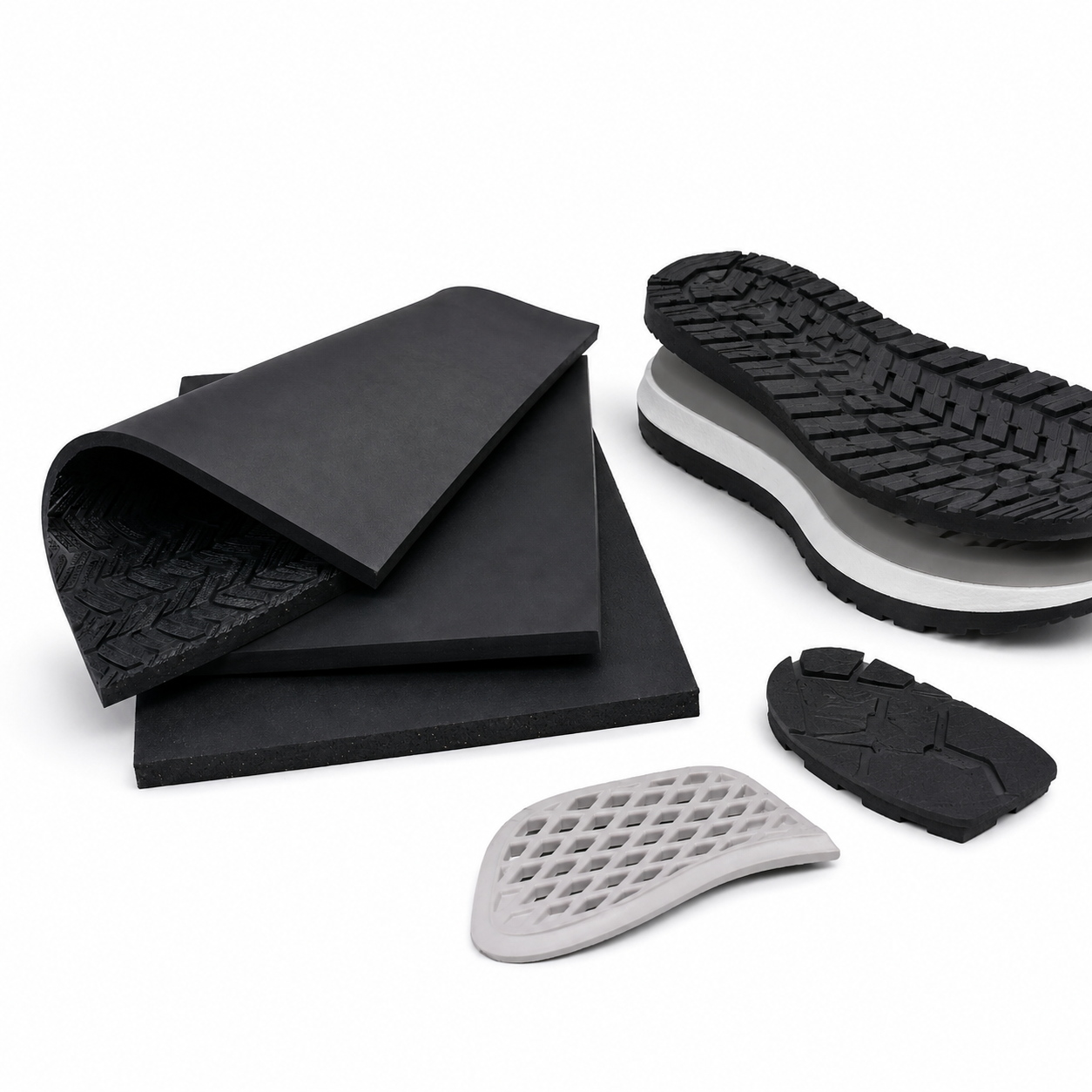
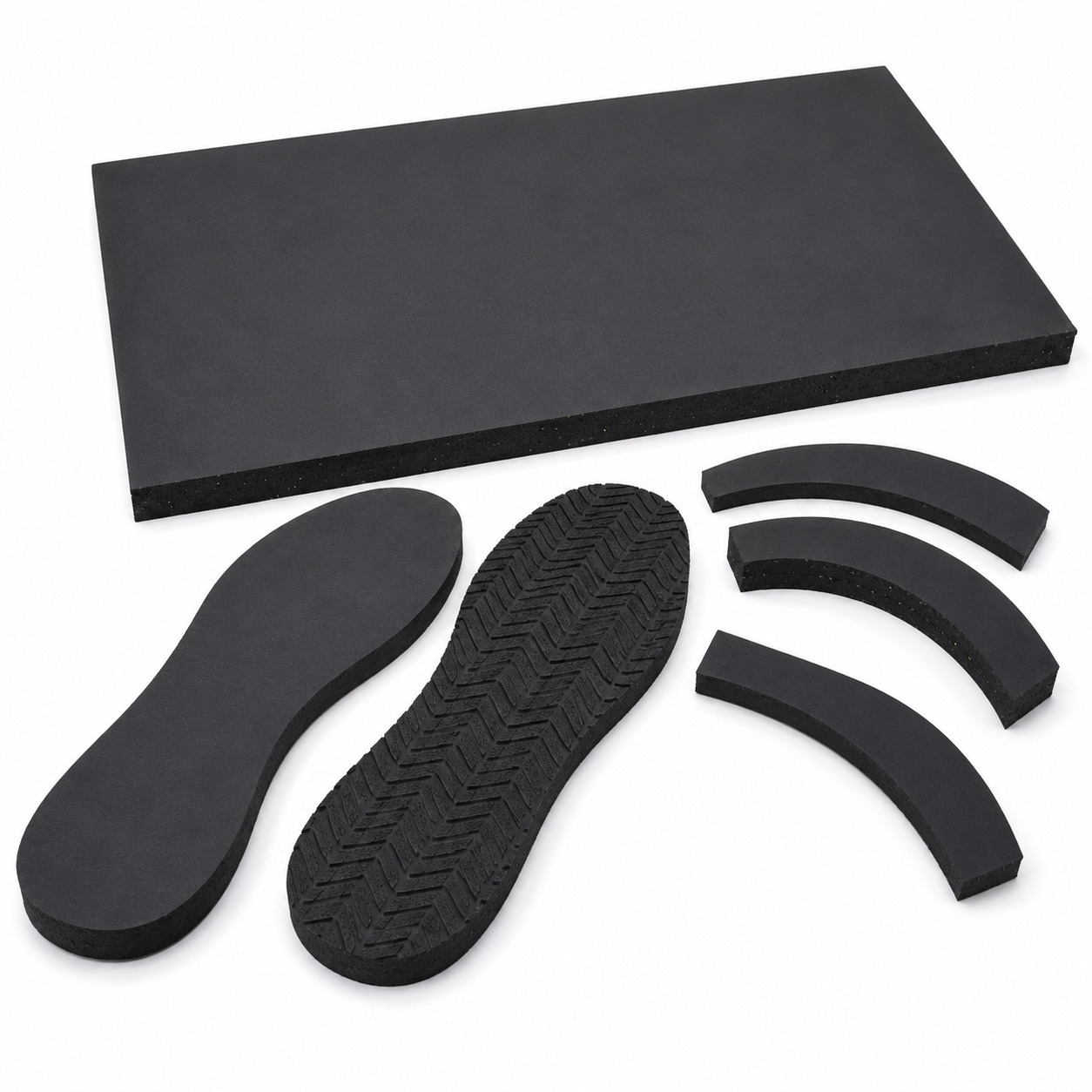
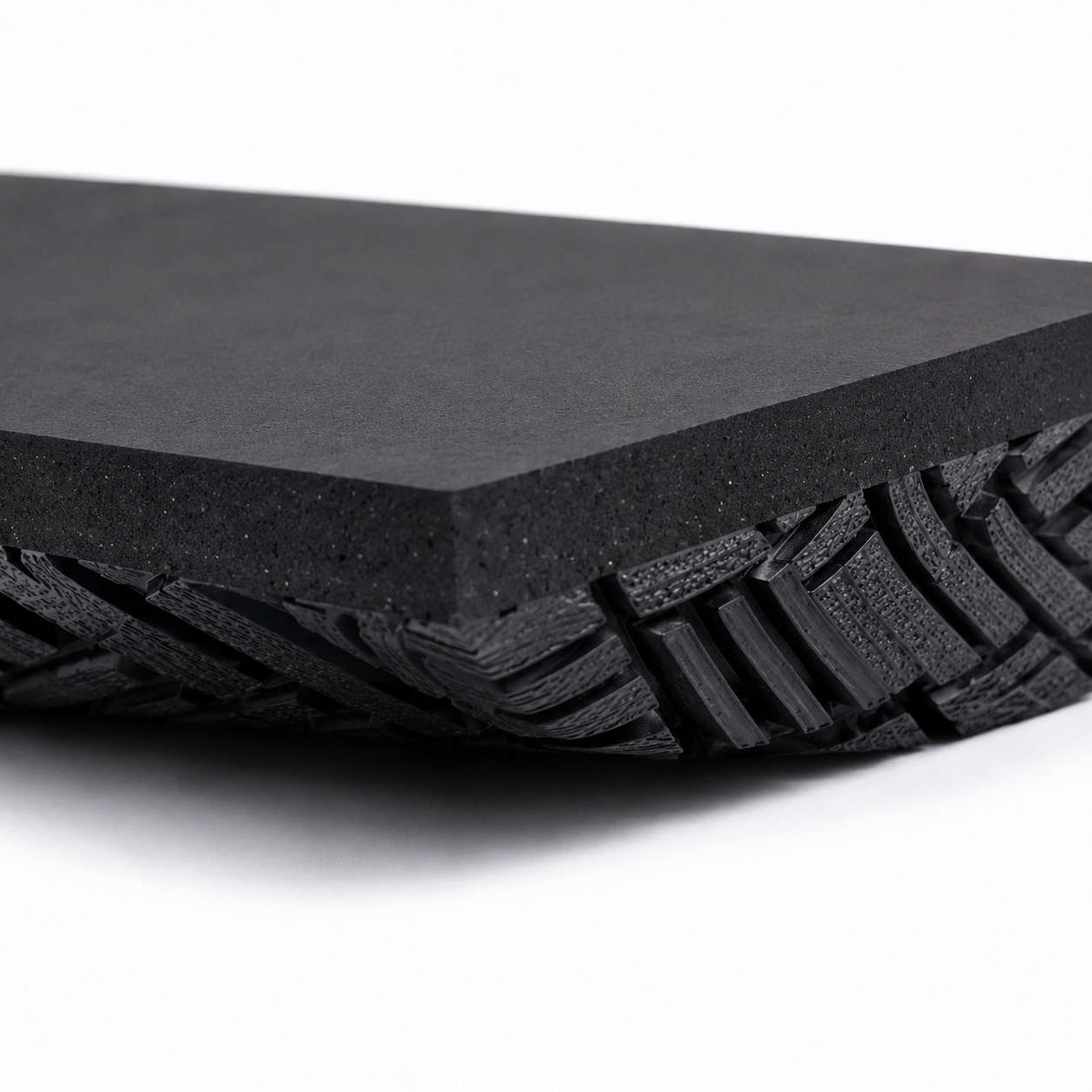
Rubber Sole Sheet For Shoe Making, Wear-resistant Anti-slip Rubber Blank Sheet Raw Material For Safety & Sneaker Outsole Vulcanization
Booth| Model Number | RSS-03 / RSS-05 |
| Brand | GISMA Guangzhou |
| Net Weight | 30.0 KG / 37.5 KG |
Rubber Sole Sheet For Shoe Making, Wear-resistant Anti-slip Rubber Blank Sheet Raw Material For Safety & Sneaker Outsole Vulcanization
| Specification | RSS‑03 Standard Wear‑Resistant Grade | RSS‑05 Heavy‑Duty Anti‑Slip Grade |
|---|---|---|
| Material Composition | Natural rubber + synthetic rubber compound | Natural rubber + synthetic rubber compound |
| Standard Sheet Size | 1000 × 500 mm | 1000 × 500 mm |
| Sheet Thickness | 3 mm | 5 mm |
| Shore Hardness | 60±3 Shore A | 65±3 Shore A |
| DIN Abrasion Loss | ≤ 120 mm³ | ≤ 90 mm³ |
| Dry Static Anti‑Slip Coefficient | ≥ 0.6 | ≥ 0.7 |
| Tear Strength | ≥ 25 kN/m | ≥ 30 kN/m |
| Flex Resistance | ≥ 1,000,000 cycles, no crack | ≥ 1,500,000 cycles, no crack |
| Compatible Processes | Compression vulcanization, die cutting, cold cementing | Compression vulcanization, die cutting, cold cementing |
| Standard Color | Black (customizable) | Black (customizable) |
| Surface Finish | Smooth surface (patterned optional) | Smooth surface (patterned optional) |
| Packaging | PE film wrapped + export carton | PE film wrapped + export carton |
| Quantity Per Carton | 20 pcs | 15 pcs |
| Net Weight Per Carton | 30.0 kg | 37.5 kg |
| Gross Weight Per Carton | 32.0 kg | 40.0 kg |
| Carton Dimension(L×W×H) | 1020 × 520 × 70 mm | 1020 × 520 × 85 mm |
Rubber Sole Sheet For Shoe Making
This rubber base sheet for shoemaking is formulated with premium natural‑synthetic rubber compound. It features outstanding wear resistance and low DIN abrasion volume loss, lowering friction wear during long‑time walking and extending service life of finished soles. Excellent anti‑slip coefficient on dry and wet surfaces delivers firm grip, complying with anti‑slip safety standards for safety shoes and outdoor work footwear. High tear strength and superior flex‑fatigue‑resistance resist cracking and sole breaking under long‑term cyclic bending and greatly improve finished‑product durability.
Uniform and dense internal structure is free of air bubbles, impurities and hard particles. Stable dimension after compression vulcanization guarantees consistent appearance, thickness and specification for mass‑produced soles and reduces reject loss. Fully compatible with mainstream shoemaking processes including die‑cutting, hot compression vulcanization and cold cementing. No modification to existing sole‑processing production lines is required for high general‑purpose performance. It features good ageing‑resistance and chemical resistance, maintaining stable physical properties under variable high‑low‑temperature, dry‑wet outdoor conditions without premature hardening, brittleness or loss of anti‑slip performance.
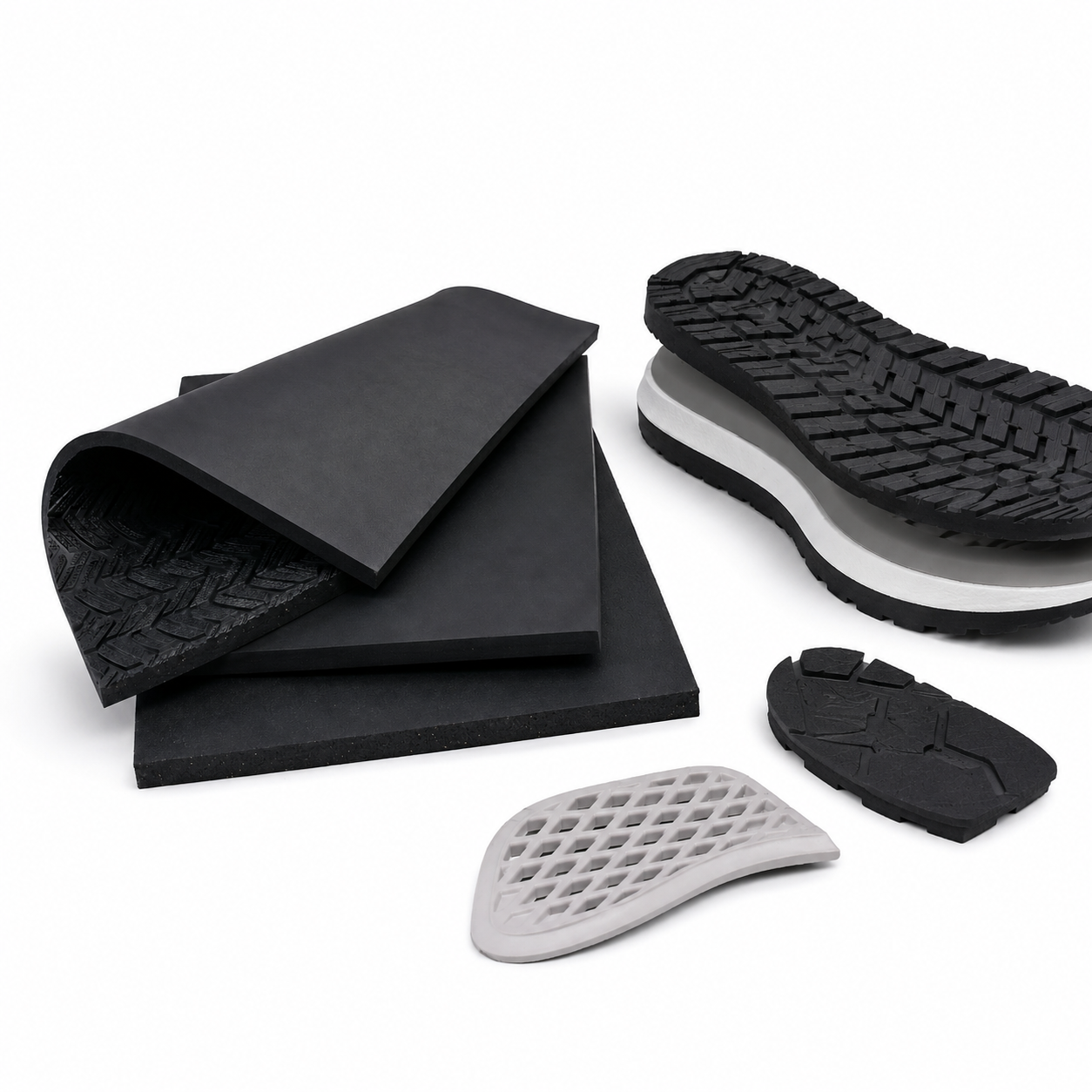
Matte black is standard, while custom color matching and embossed patterns are available for diversified footwear styling. Two surface options: smooth surface for secondary compression moulding and pre‑patterned surface for direct outer‑sole application to simplify processing procedures. Adopting low‑odor eco‑friendly formula with no pungent smell, it meets global footwear environmental standards and fits export‑oriented orders. Strict thickness‑tolerance control ensures consistent thickness within each batch, reducing post‑moulding grinding and trimming workload to save labor and consumable costs.
Widely supplied to integrated shoe factories, safety‑shoe manufacturers, sneaker sole processors, shoe‑repair shops and footwear R&D laboratories. Mainly used for vulcanized rubber outsole, heel sheet and anti‑slip wear‑resistant safety sole; also serves as anti‑slip reinforcing layer for outdoor shoes, casual shoes and work boots. Compatible with both vulcanization and cold‑cementing production workflows. Two thickness grades are available: thin grade for lightweight casual shoes; heavy‑duty thick grade for load‑bearing safety work boots. Balanced performance in wear‑resistance, anti‑slip and flex‑resistance satisfies core shoemaking requirements for durability, walking safety and mass‑production consistency.
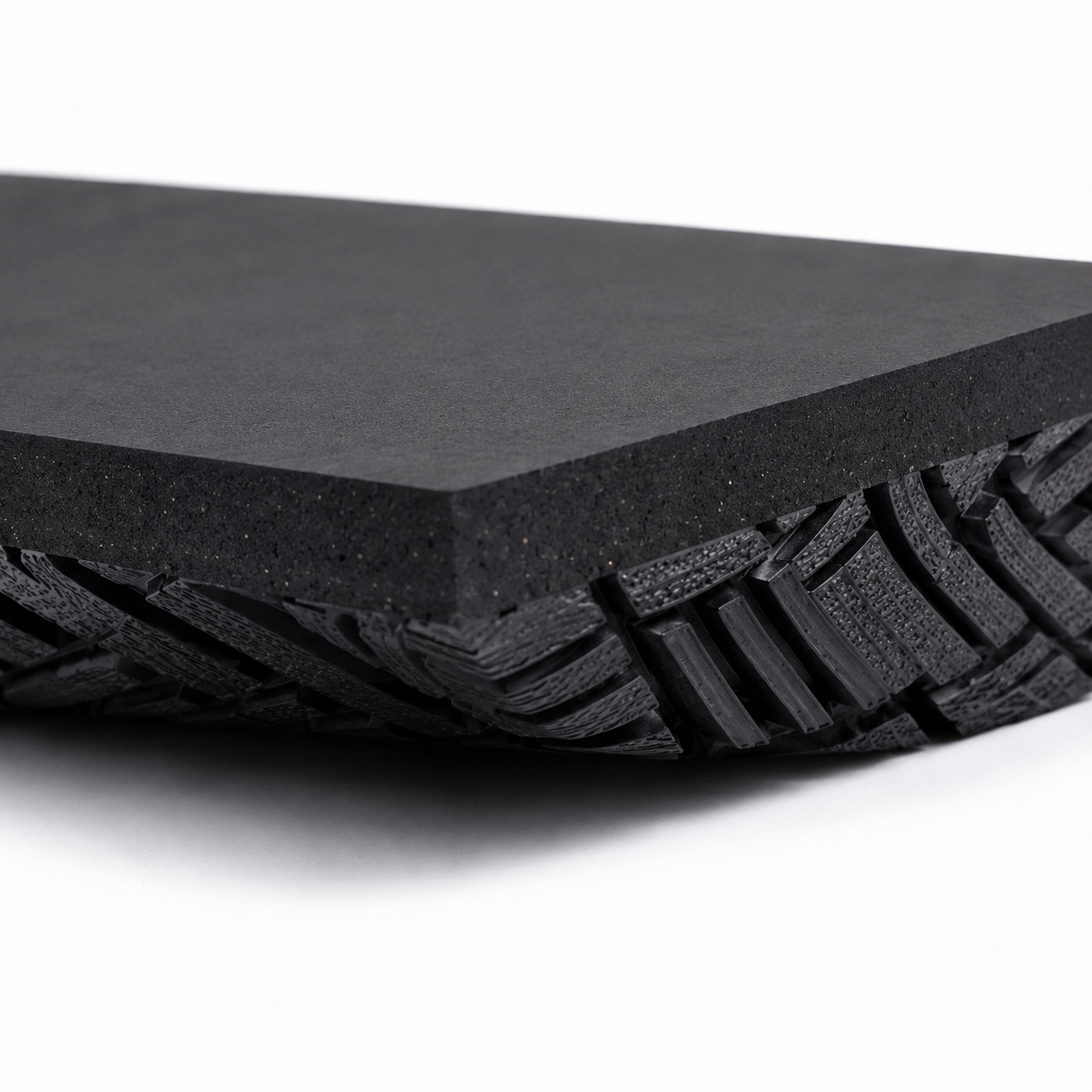
Standard processing workflow: inspect sheets for bubbles, impurities and uneven thickness before production and confirm correct specification. Cut sheets according to mould dimension with proper vulcanization shrinkage allowance. Accurately set temperature, pressure and holding time for full vulcanization. For cold cementing, roughen bonding surface and apply dedicated adhesive under even pressure to prevent delamination. Clean rubber trimming scraps can be collected for re‑mixing and reprocessing to improve raw‑material utilization rate.
Store in cool, dry and ventilated warehouse away from high temperature, open fire, oil contamination and direct sunlight to retard rubber ageing. Conduct monthly inspection for deformation and surface tackiness; implement FIFO stock rotation. Avoid sharp‑tool scratching during processing and adjust vulcanization parameters properly to prevent under‑vulcanization or over‑vulcanization defects. Clean rubber scraps are recyclable and outer cartons are reusable. It realizes waste and consumption reduction from raw‑material utilization and scrap recycling and supports sole‑manufacturers to build a green, low‑carbon and circular production system.