
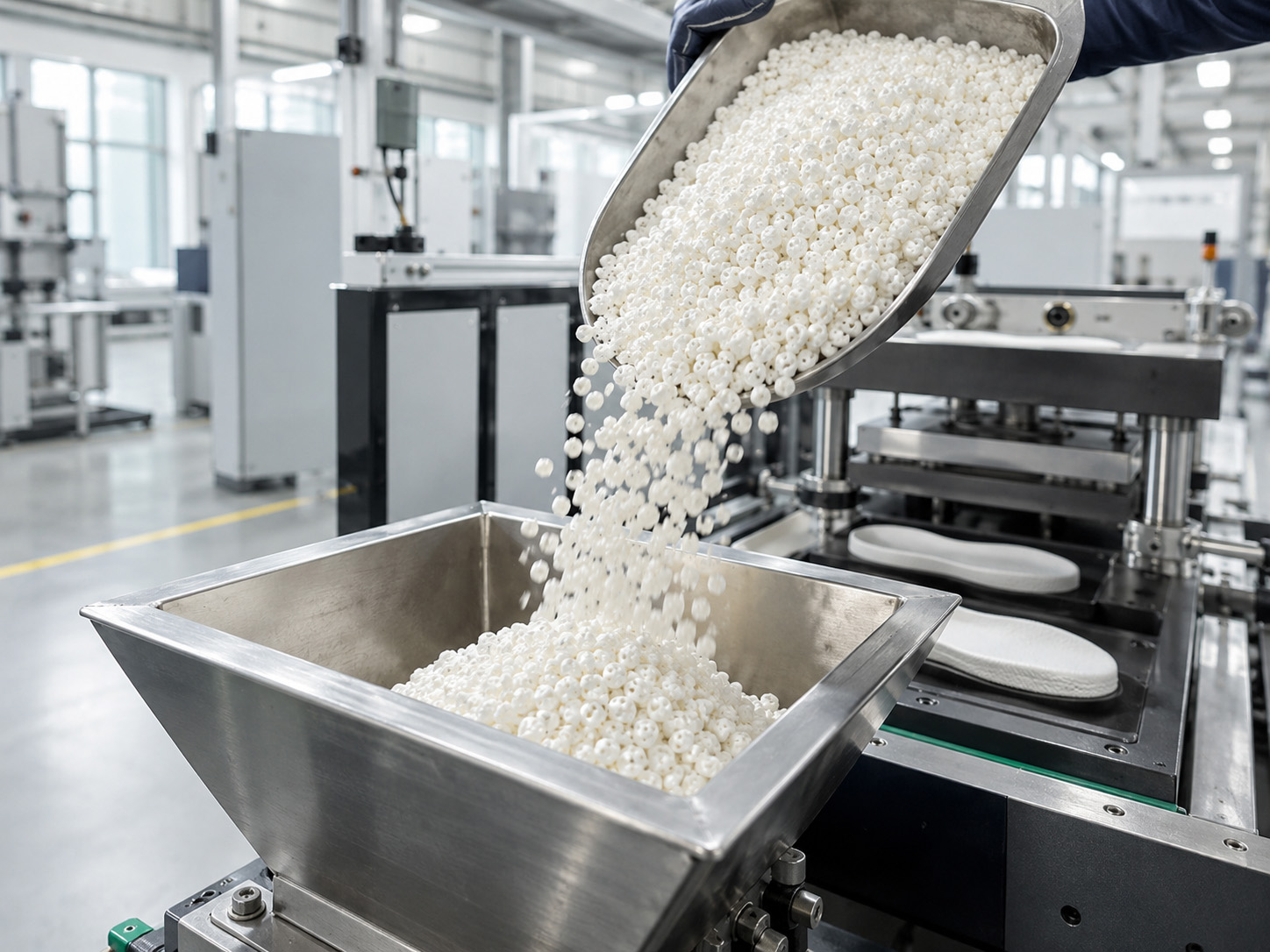
Supercritical Foaming E-TPU Pellets, Expanded Thermoplastic Polyurethane Popcorn Granules For Running Shoe Midsole
Booth| Model Number | ETPU-05 / ETPU-08 |
| Brand | GISMA Guangzhou |
| Net Weight | 25 kg /bag |
Supercritical Foaming E-TPU Pellets, Expanded Thermoplastic Polyurethane Popcorn Granules For Running Shoe Midsole
| Specification | ETPU‑05 Low‑Density Grade | ETPU‑08 High‑Rebound Grade |
|---|---|---|
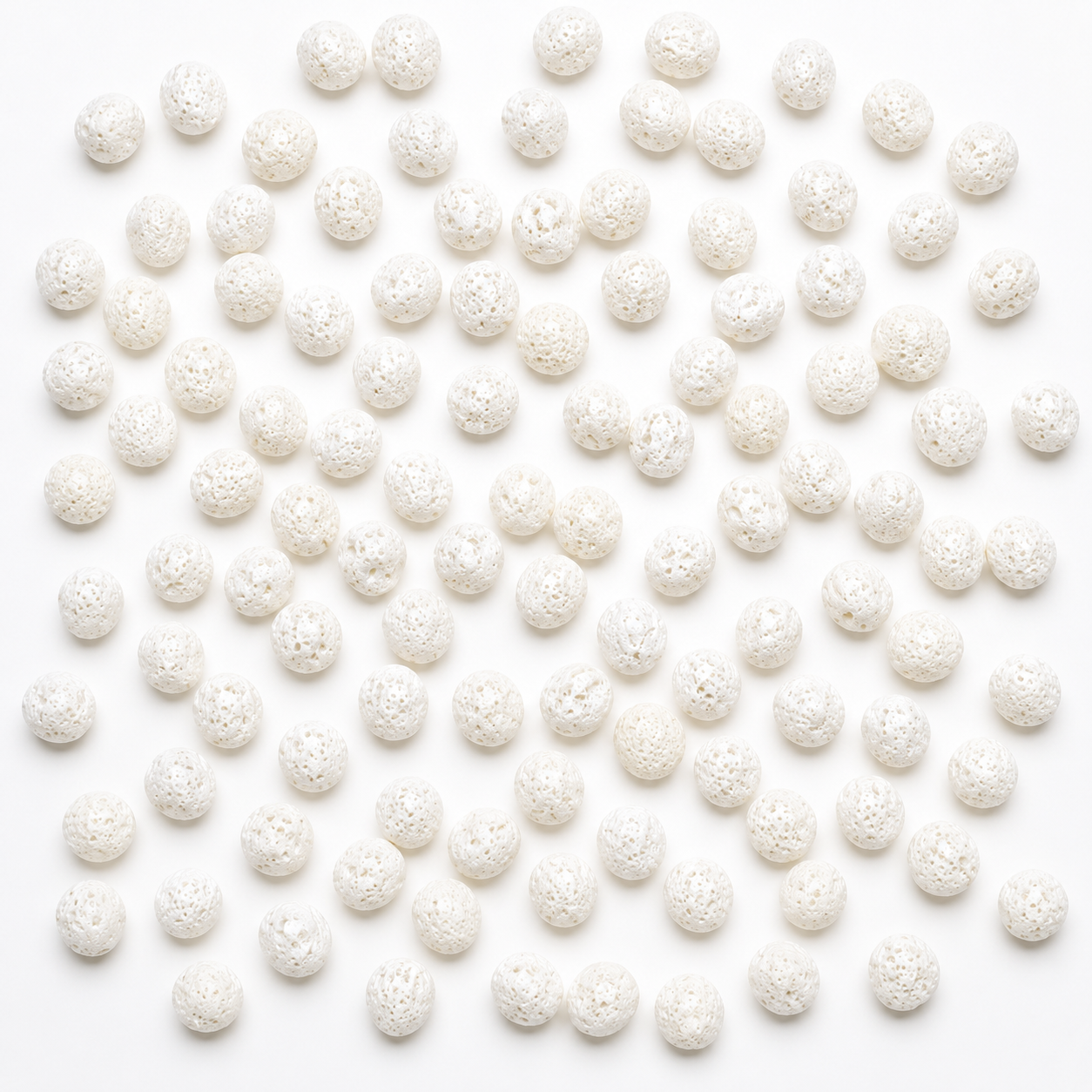
| Single‑particle Size | 4‑6 mm | 7‑9 mm |
| Particle Density | 0.05 g/cm³ | 0.08 g/cm³ |
| Raw Material | Supercritical physically‑foamed thermoplastic polyurethane | Supercritical physically‑foamed thermoplastic polyurethane |
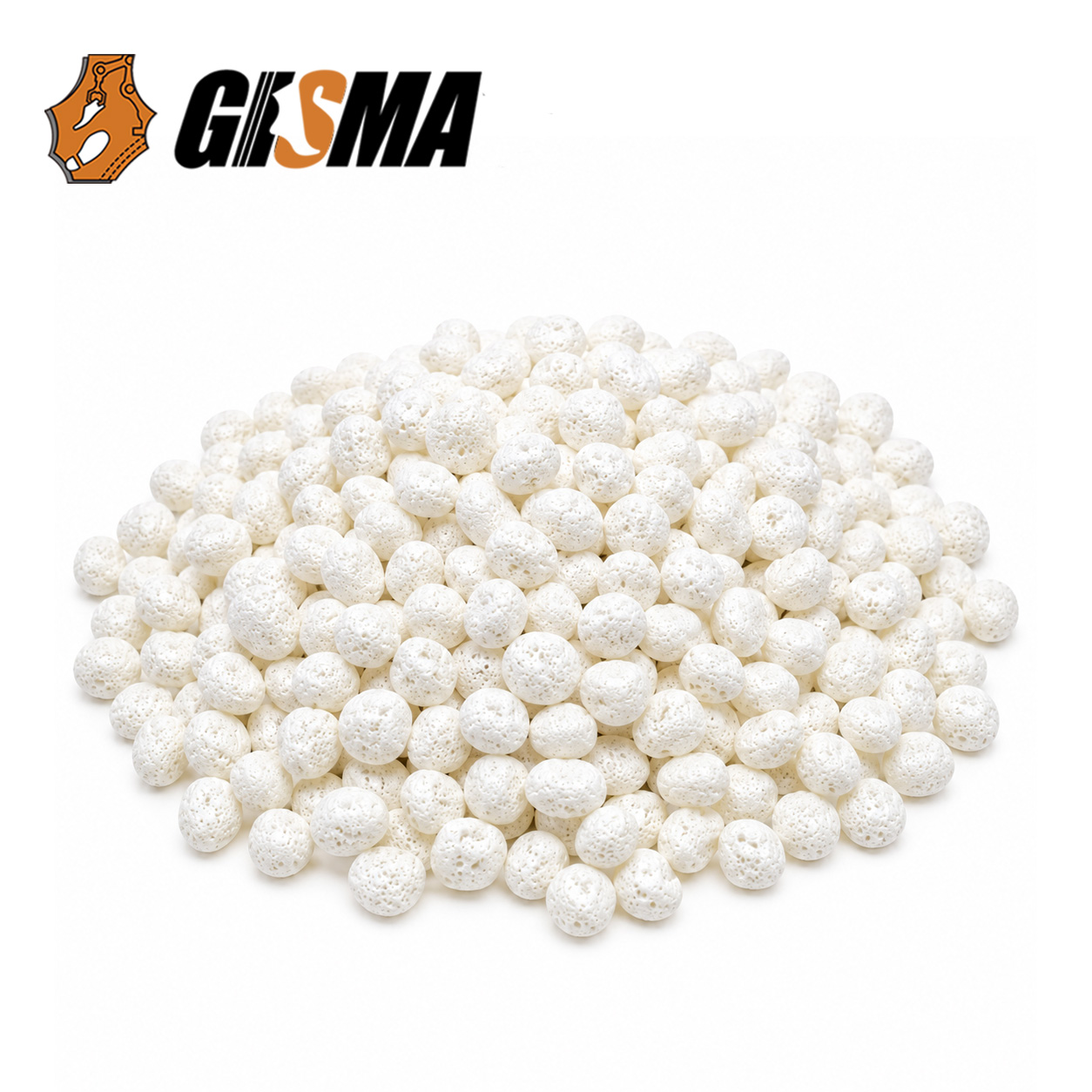
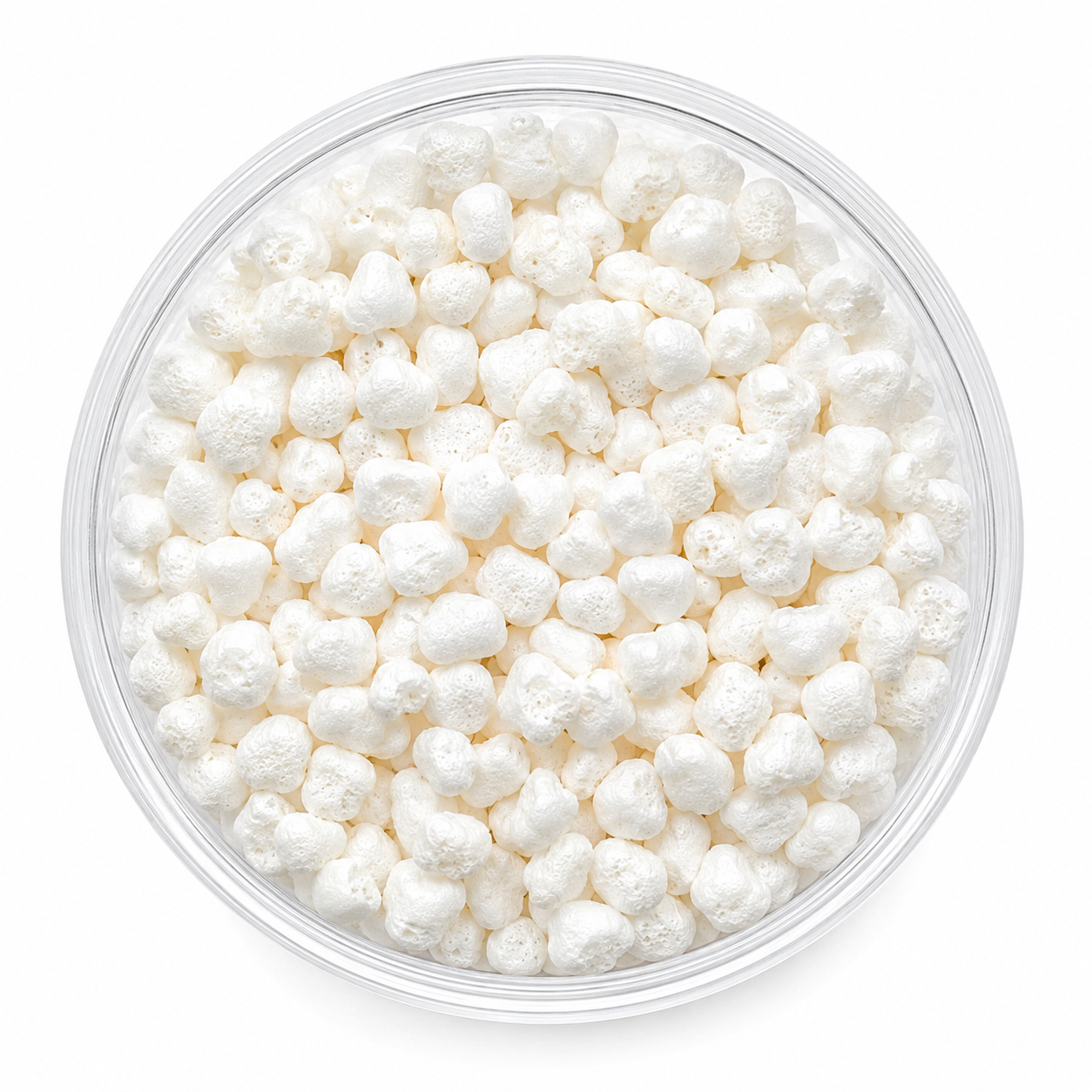
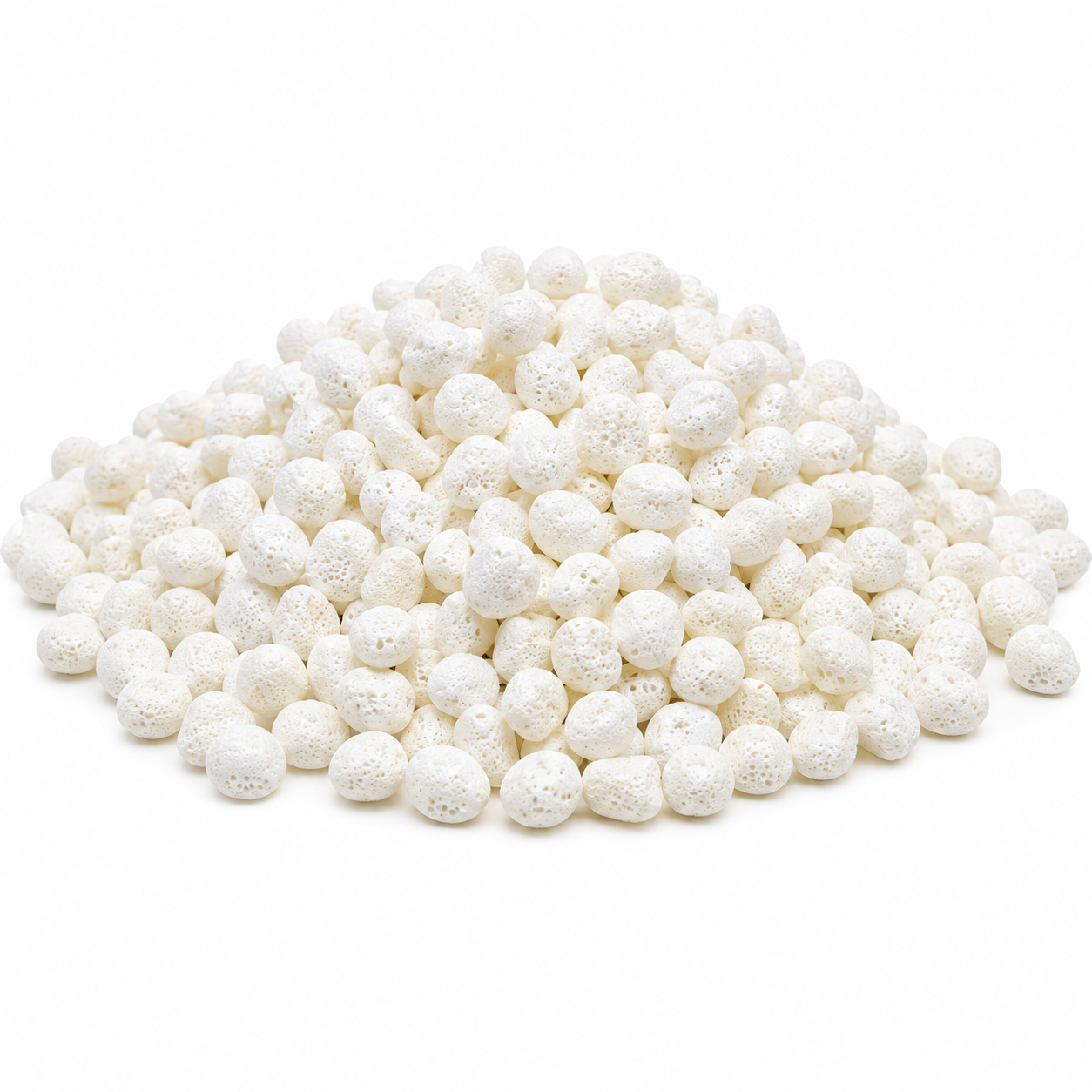
| Appearance & Color | Off‑white porous spherical pellets | Off‑white porous spherical pellets |
| Rebound Rate | ≥ 60% | ≥ 70% |
| Compression Set | ≤ 25% | ≤ 18% |
| Temperature Resistance Range | Stable performance from ‑20℃ to 80℃ | Stable performance from ‑20℃ to 80℃ |
| Packing Method | 25 kg moisture‑proof woven bag with inner PE liner | 25 kg moisture‑proof woven bag with inner PE liner |
| Net Weight Per Bag | 25 kg | 25 kg |
| Bag Dimension(L×W×H) | 700×450×180 mm | 700×450×200 mm |
| Gross Weight Per Bag | 26.2 kg | 26.5 kg |
Supercritical Foaming E-TPU Pellets
This E‑TPU popcorn pellet is manufactured by supercritical carbon‑dioxide physical foaming process. No chemical foaming agent is added during production, leaving no foaming‑agent residue, and all parameters comply with footwear‑material environmental requirements. Fine and uniform internal cell structure delivers prominent lightweight performance together with excellent shock‑absorbing cushioning and energy‑return resilience. It maintains outstanding compression‑recovery capacity under repeated foot‑loading and effectively prevents permanent midsole collapse after long‑term wear.
Broad temperature‑resistance range ensures stable resilience from ‑20℃ to 80℃ with minor property fluctuation under all‑climate conditions. Firm interfacial fusion during hot‑press moulding reduces delamination risks for molded midsole blanks. Strict batch control guarantees consistent particle size and density with stable molding shrinkage, well‑suited for continuous mass production in shoemaking factories. Low water‑absorption avoids excessive weight gain under humid and rainy conditions and keeps consistent lightweight wearing feel.
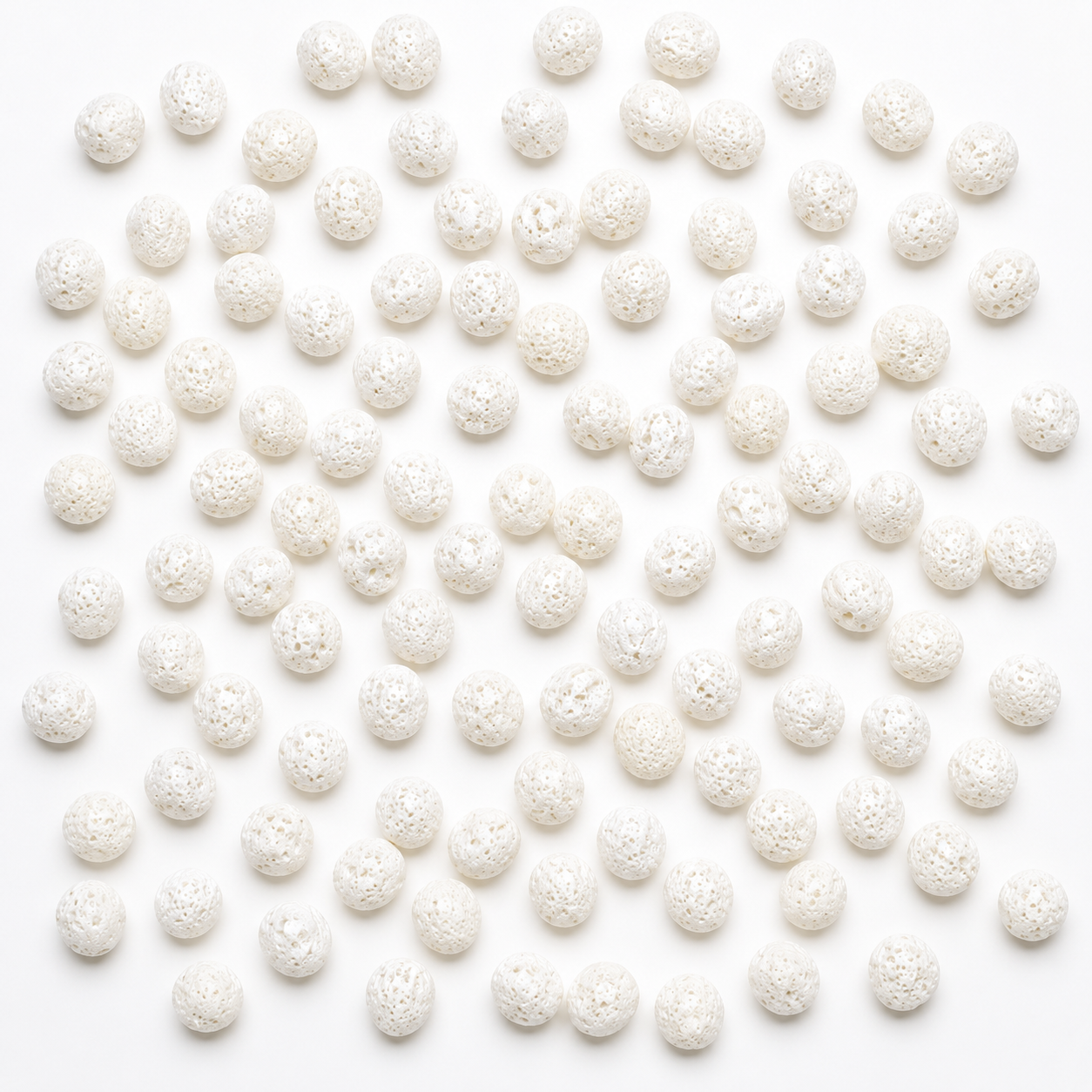
Excellent anti‑fatigue performance adapts to long‑time stress conditions such as long‑distance running and frequent daily walking. Blending of different‑density pellets is allowed to flexibly adjust midsole hardness for diversified footwear design. Pure impurity‑free raw material greatly cuts reject rates caused by air holes and material shortage during hot‑press and compression moulding. Widely supplied to footwear‑material processors, midsole moulding workshops, sneaker brands and footwear R&D laboratories. Mainly used for compression‑molded midsoles of running shoes, casual shoes and training shoes; also applicable for high‑resilience shock‑absorbing insoles and sports protective cushion components. Two density grades are available for lightweight soft‑elastic midsoles and high‑performance rebound midsoles respectively.
Standard processing guidelines: keep bags sealed before processing to prevent moisture absorption. Set proper hot‑press temperature, pressure and holding time according to selected density. Spread pellets evenly inside mould cavity for balanced midsole density. Fully cool and stabilize pressure before demoulding to minimize product deformation. Residual pellets shall be sealed in moisture‑proof packages on the same working day. Store in dry and ventilated warehouse with relative humidity ≤65%. Keep away from direct sunlight, heat sources and oily corrosive substances. Do not stack bags over 8 layers to avoid particle crushing under heavy load.
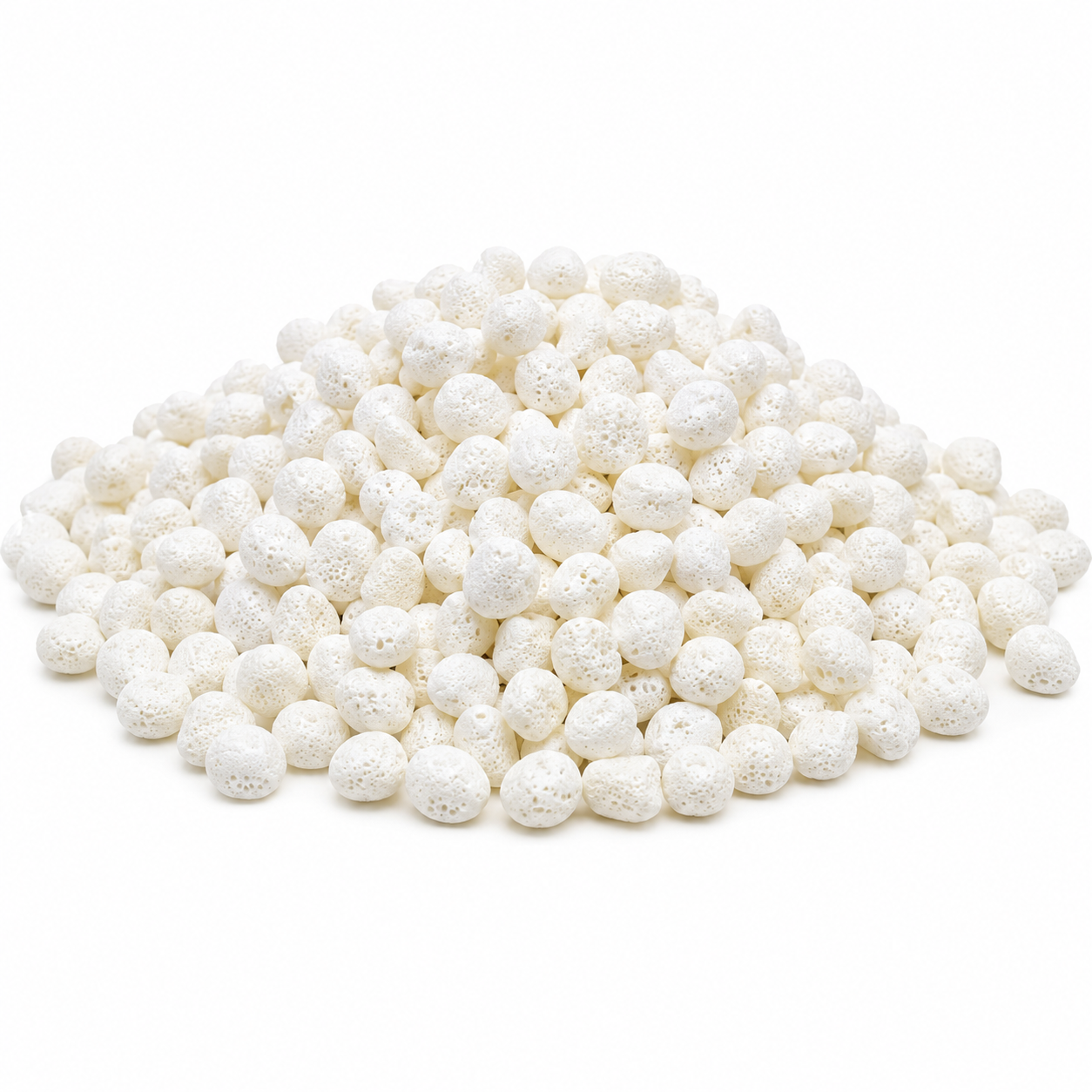
Complete routine warehouse inspection system: check package sealing status daily for damp‑induced caking; sample‑test particle flowability monthly. It is recommended to process within 12‑month shelf‑life for optimal moulding performance. Do not arbitrarily blend E‑TPU with other plastic pellets without formulation validation. Defective midsole scraps can be professionally re‑pelletized for material recycling. Featuring premium raw‑material performance, reliable mass‑production consistency and recyclability, it serves as a high‑performance core foaming material for sneaker midsole manufacturing complying with green‑production systems.